
EF EPI 2025: Adding Speaking and Writing Moved Scores by 26 Points
The EF EPI 2025 published each country's score with and without speaking and writing for the first time. Between them, one country moves 26 points.

នៅលើទំព័រនេះ
The 2025 edition of the EF English Proficiency Index added speaking and writing to a test that had previously covered only reading and listening, and it published a second number for every country: the score recalculated without the new sections. Comparing the two columns shows how much the change of test moved each country. Across the 117 countries and regions with a complete score pair, 62 scored lower once speaking and writing were included, 41 scored higher and 14 did not move. Cyprus loses 15 points and Uzbekistan gains 26. The comparison is between two versions of the same country score, not between years, and the report warns that the impact was small because fewer than one in five test takers in most countries chose the new sections.
Key findings
- Of the 117 countries and regions with a complete score pair in the EF EPI 2025 appendix, 62 scored lower when speaking and writing were included, 41 scored higher and 14 were unchanged.
- Cyprus falls furthest, from 552 to 537, a drop of 15 points, followed by Zimbabwe and Ethiopia at 11 points each and Bulgaria and Brazil at 10.
- Uzbekistan moves furthest in the other direction, from 403 to 429, a gain of 26 points, more than twice the size of any other gain; Cambodia gains 9 and India and Rwanda 8.
- The median country shift is 1 point, which is why the report describes the overall effect on country scores as small for this edition.
- The Netherlands, at the top of the index, drops 7 points, from 631 to 624, while China and Japan do not move at all.
Background
The EF English Proficiency Index ranks countries and regions by the results of the EF SET, a free online test that classifies test takers against the Common European Framework of Reference [1]. Until 2024 the test covered only reading and listening, so every published country score rested on receptive skills alone. Speaking and writing sections were added in the first half of 2024, and the 2025 edition is the first to report them [1]. Adding a skill to a test can move a country's score in either direction, depending on whether its test takers perform above or below their own reading and listening average, which is why the two columns are worth reading together rather than as a single ranking.
Data and method
The source is Appendix E of the EF EPI 2025, "EPI Country Scores With and Without Productive Skills", which lists each country and region with three values: the published 2025 score, the score recalculated without the productive skills, and the difference between them [1]. The appendix prints 117 rows across 123 countries and regions in the index; every row used here satisfies the identity that the published score minus the score without productive skills equals the printed difference, which is how the extraction was checked.
The shift for a country is the published 2025 score minus its score without speaking and writing, so a negative value means the country scores lower when the productive sections are included. The sample for this report is the 117 country rows, not individual test takers; the median and the counts in this report are computed across those rows, with each country weighted equally regardless of how many test takers it contributed. Ties are counted as printed, and no country is reweighted by population or by test-taker volume.
All values are aggregated country scores published by EF; no individual test record is used. EF builds national scores as a three-year rolling average and requires at least 400 test takers for a country to appear [1]. Scores are whole numbers and the shifts are exact differences between them. Because the productive sections were available for only part of the 2024 testing window and were optional, the shift measures the effect of a test change on a country average rather than a change in that country's English.
Results
Most countries moved down, but only modestly. Sixty-two of the 117 score lower with speaking and writing included, 41 score higher and 14 do not change, and the median shift is one point in the negative direction. Thirty-two countries lose five points or more and 16 gain five or more, so the middle of the distribution is narrow while the edges are not.
Figure 1. Largest falls in the EF EPI 2025 country score when speaking and writing are included, in points, n = 117 countries and regions. Source: EF EPI 2025, Appendix E [1].
Cyprus is the outlier at the bottom, moving from 552 without the productive sections to 537 with them. Zimbabwe falls from 613 to 602 and Ethiopia from 510 to 499, and both Bulgaria (604 to 594) and Brazil (492 to 482) lose 10 points. Croatia follows at 9 points, from 626 to 617. In each case the country's speaking and writing results sit below its own reading and listening results, which pulls the combined score down.
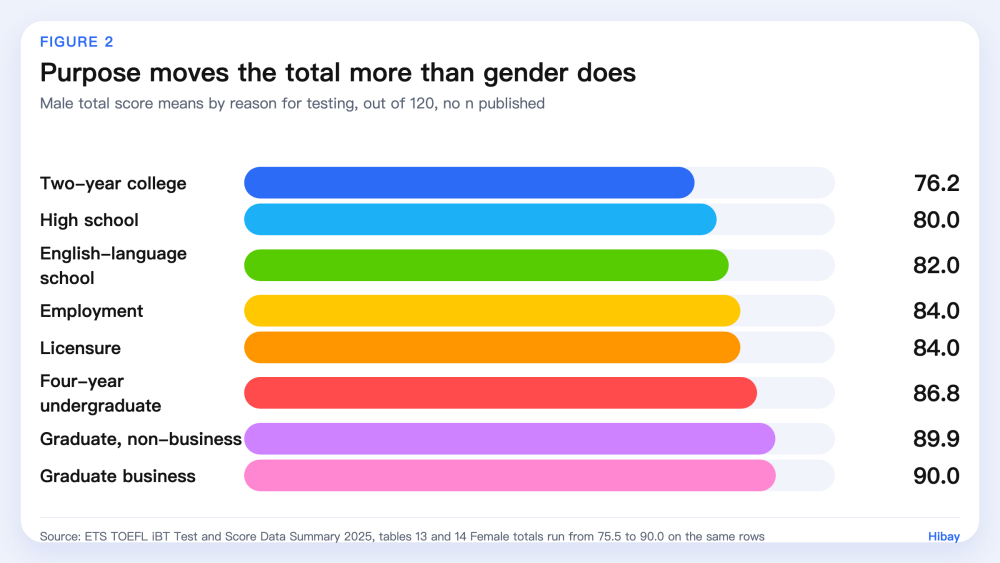
Figure 2. Largest rises in the EF EPI 2025 country score when speaking and writing are included, in points, n = 117 countries and regions. Source: EF EPI 2025, Appendix E [1].
The gains are more concentrated. Uzbekistan moves from 403 to 429, a 26-point rise that is more than twice the size of any other gain, and Cambodia follows at 9 points, from 381 to 390, with India and Rwanda at 8 and Yemen at 7. A shift of that size changes a country's position in the table without any change in who took the test, which is the practical hazard of reading a ranking across a redesign.
| Country or region | Score 2025 | Without speaking and writing | Shift |
|---|---|---|---|
| Uzbekistan | 429 | 403 | +26 |
| Cyprus | 537 | 552 | -15 |
| Zimbabwe | 602 | 613 | -11 |
| Ethiopia | 499 | 510 | -11 |
| Bulgaria | 594 | 604 | -10 |
| Brazil | 482 | 492 | -10 |
| Netherlands | 624 | 631 | -7 |
| China | 464 | 464 | 0 |
| Japan | 446 | 446 | 0 |
Read the last column as the effect of adding two skills to the test, not as a year-on-year change: a negative value means the country does worse on speaking and writing than on reading and listening, weighted by how many test takers chose those sections.
The top of the ranking is not immune. The Netherlands, first overall at 624, would score 631 without the productive sections, so even the strongest country in the index is pulled down by speaking and writing. China and Japan are unchanged at 464 and 446, which can mean either that their productive results matched their receptive ones or that too few of their test takers took the optional sections to move the average; the appendix does not say which.
Limitations
Four limits matter. First, the productive sections were optional and available for only part of 2024, and EF reports that fewer than one in five test takers in most countries chose them, so each country's shift rests on a self-selected subgroup rather than on all its test takers. Second, the two columns are not two years: this is a test-design comparison within one edition, and it cannot be read as a trend. Third, country scores are three-year rolling averages, so a single year's speaking results are diluted by the two earlier editions that contained no productive testing at all. Fourth, EF's sample is self-selected and skewed toward people who seek out an English test, the index requires at least 400 test takers for a country to appear, and the appendix mixes countries of very different sizes without publishing per-country counts, so equal weighting across 117 rows is a choice rather than a neutral fact.
What this means for learners
If a country's score falls when speaking is added, the gap it reveals is usually invisible in a reading-and-listening result, and it is the gap that shows up in a meeting or an interview rather than on a certificate. Practise the skill you are least often tested on: speaking is the one that most self-study routines skip, because it needs a partner, a recording or a tool that will respond. Treat any single score, ours or EF's, as a description of one test on one day rather than a verdict on your English. Hibay offers spoken practice with feedback between sessions, though that feedback is not an EF SET score and does not predict one.
Frequently Asked Questions
Did the EF EPI 2025 scores go down because of the new speaking and writing sections? For most countries the direction was down but the size was small: 62 of 117 scored lower, the median shift was one point, and EF itself describes the impact on country scores as small for this edition (see Results).
Which country's score changed most in the EF EPI 2025? Uzbekistan, which moves from 403 without speaking and writing to 429 with them, a gain of 26 points. At the other end, Cyprus falls 15 points, from 552 to 537 (see Key findings).
Can I compare EF EPI 2025 with earlier editions? Only with care. The 2025 edition is the first to include speaking and writing, the sections were optional, and fewer than one in five test takers in most countries took them, so a country's move between editions mixes a real change with a change of test (see Limitations).
How to cite
Hibay Product Team. (2026, November 2). EF EPI 2025: Adding Speaking and Writing Moved Scores by 26 Points. Hibay. https://www.hibay.ai/en/news/ef-epi-2025-productive-skills-impact
Figures are from the public sources listed below and may be cited with attribution.
References
- EF Education First. EF English Proficiency Index 2025: A Ranking of 123 Countries and Regions by English Skills. https://www.ef.com/assetscdn/WIBIwq6RdJvcD9bc8RMd/cefcom-epi-site/reports/2025/ef-epi-2025-english.pdf. Accessed 2026-11-02.