
Shadowing Practice: News Clips, Podcasts or TV Shows?
A news clip trains clarity, an unscripted podcast trains connected speech, and an acted scene trains turn-taking. Compare the three by speed, vocabulary and register, then rotate one goal a week and pick a shadowing english app that lets you loop, record and compare the same 90 seconds.

On this page
You shadowed a news clip every morning for a week, then sat in a real conversation and spoke at exactly your old speed. The clip was not too easy; it was training a skill the conversation never asked for.
BBC radio news averages about 168 words per minute, pausing roughly every 18 words; adult English averages 150 to 190, and conversation can reach about 200. News is not harder than talk, it is cleaner, and clean is not fast. So the question is which material trains what you are missing. Below, news clips, unscripted podcasts and acted TV dialogue are compared by speed, vocabulary and register, each labelled with what it trains, plus a four-week rotation and a way to cut a 60 to 90 second segment. A shadowing english app can loop the clip; choosing the material decides the week.
Why a week of news clips does not make you faster
News is built to be understood once, on first hearing. The script is written to be read aloud, so sentences are short and clauses arrive in order, and there are almost no false starts or repairs. Its hard parts are segmental rather than interactive: final consonants, clusters in names and numbers, stress on the point of the sentence.
Conversation asks for something else. Turns arrive before you are ready, speakers reduce sounds a reader pronounces in full, and nobody waits for you to finish. A week of broadcast register does not touch speaking at conversational tempo while somebody else prepares to speak.
The three materials, side by side
| Material | Delivery and speed | Vocabulary and register | What it mostly trains |
|---|---|---|---|
| News clip | Scripted, read aloud; about 168 wpm | Formal, topic-specific | Consonant clarity, sentence stress |
| Unscripted podcast | Spontaneous talk; 150-190 wpm, up to 200 | Wide, idiomatic; restarts | Connected speech, real-time tracking |
| Acted TV dialogue | Scripted, performed as talk; turns every few seconds | Everyday collocations | Turn-taking, reaction timing |
Train one row only and you get its habits: row one leaves you precise and slow, row three can leave you fluent in a scene and lost in a meeting.
What each material actually trains
Clarity: news clips
The reader's job is to make every word arrive intact. In Heavy rain is expected across the north tonight., notice the released final consonants, the stress on content words, and the fall that marks the end. Use news when people ask you to repeat single words: mark each stressed syllable, shadow, then record only those words. If the beat drifts, the clip is too long, not too fast.
Connected speech: podcasts
Unscripted talk is where words stop behaving like words. Speakers link a final consonant to the next vowel, so Not at all is heard as one run of sound; they drop the /t/ and /d/ in clusters, so must be loses its middle. That is the normal economy of effort, and it is why transcript and recording do not match. Use podcasts when fluent speech arrives as one long blur: write one line by sound, not spelling, as in So, yeah, I mean, I kind of figured it out on the way over.
Turn-taking: acted dialogue
Drama is scripted but written to sound like people cutting in. Wait, you actually did that? is a complete turn, and the reply starts before your mouth is ready. Vocabulary repeats inside the scene: you keep the collocations and never meet the range of real talk. Use it when you understand the words but cannot get into the conversation: shadow the short turns, then answer each before the next line.
Choose the material by target, not by taste
Choosing by interest is how a year disappears into politics podcasts when the missing skill was timing. Ask three questions: does your listener more often ask you to repeat a word, do you lose the middle of a sentence, or can you not start speaking in time? Do you need a presentation, a client call, or a table of friends? How much vocabulary can you carry for a week? Take the answers to the table and pick one material per goal; if two answer differently, rotate.
A four-week rotation, one goal per week
Twelve minutes a day, five days a week. Change the material when the week changes, not when you get bored.
- Week one, clarity: news clips. Ninety seconds at 160 words per minute is about 240 words, so stay under that; shadow it three times a day and on Friday record the stressed words.
- Week two, connected speech: podcasts. Take one 60-second stretch, write the joined words by sound, shadow at 0.9 speed then full speed; on Friday, shadow an unheard clip and count your guesses.
- Week three, turn-taking: acted dialogue. Shadow the short turns, answer each aloud before the next line; on Friday, speak your side of a two-minute scene unpaused.
- Week four, integration: a conversation you already have. Record 60 seconds on Friday and compare words per minute and pauses with week one. Rate moves slowly; turn length moves first.
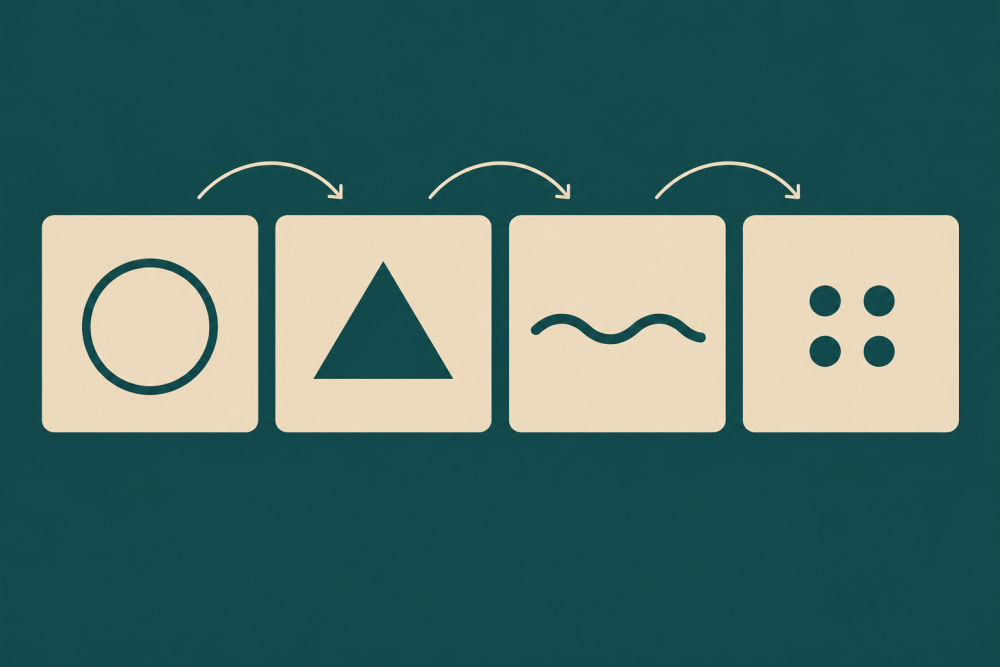
Cutting a 60 to 90 second segment from any source
Ninety seconds holds a complete idea and lets you hear your own version in one session.
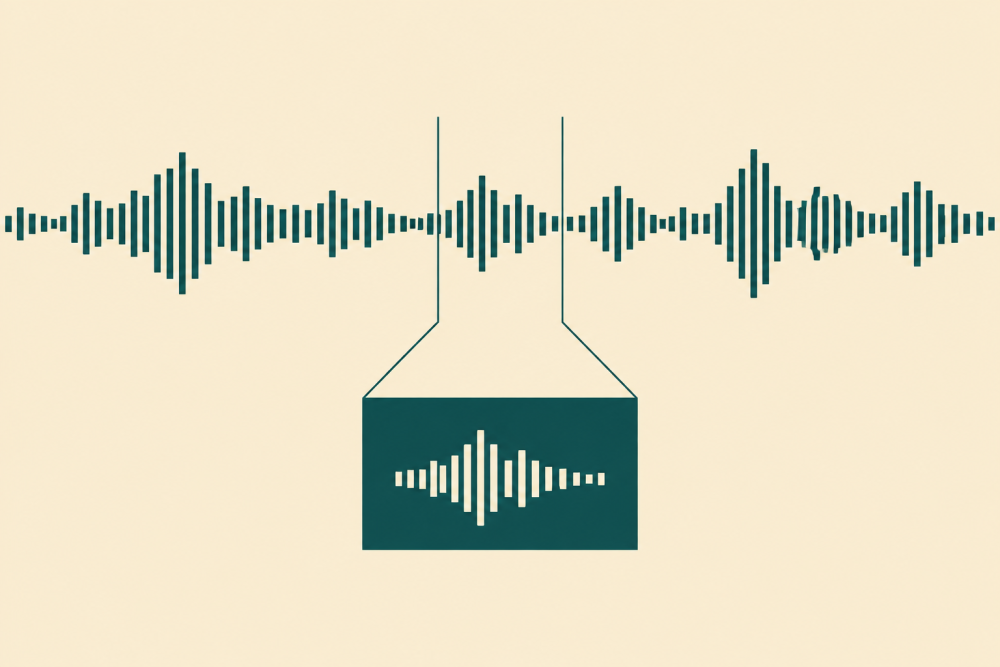
- Choose a passage with a beginning and an end, not a montage or highlight reel.
- Start at a sentence opening, never mid-clause, or shadowing begins with a guess.
- Estimate first: 60 seconds at 160 words per minute is about 160 words, 90 seconds about 240. If the candidate is 500 words, take its first or last third.
- Cut at a pause. Readers pause about every 18 words, so a clean seam sits inside any 15-second window.
- Keep the audio and a transcript slice for the first and last ten seconds only; a full transcript turns shadowing into reading aloud.
Frequently asked questions
how to do shadowing in english step by step
Four passes over one clip. Listen once without speaking and stop where meaning slips. Then read a transcript slice for the first and last ten seconds only. Third, shadow at 0.9 speed with the audio running, trailing the speaker by about one syllable rather than repeating after them; when a line such as I have been working here for two years. collapses, rewind ten seconds instead of restarting. Fourth, shadow at full speed, then almost inaudible, which shows what your mouth kept.
what does shadowing in english actually train
Shadowing is speaking along with a recording, at the same time as you hear it, about one syllable behind. It came out of interpreter training, where the point is to hold meaning and sound in the ear at once, and it is not repeating: repetition waits for the speaker to finish, shadowing does not. It loads perception, hearing how words join, because Not at all and must be do not sound like their spelling, and articulation, producing connected speech at the tempo you heard.