
English Shadowing Practice for Beginners: Choose a Clip, Shadow It, and Check Your Recording
Learn what shadowing is, how to practice it with one short English clip, and what to look for in a shadowing English app. A beginner routine based on published research, with its limits noted.


On this page
Shadowing in English means listening to a speaker and repeating what you hear almost at the same time, a fraction of a second behind. It is a short, focused sound-matching exercise rather than a conversation. This guide explains what shadowing is, gives a beginner routine you can run with any short clip or a shadowing English app, and notes what published research does and does not show.
What Shadowing Is, and What It Is Not
Yo Hamada's teaching guide to shadowing quotes a standard definition from interpreting research: a paced listening task in which you immediately speak what you hear (Lambert, 1992). Like a shadow that follows you down a street, you copy the speaker as closely and as simultaneously as you can.
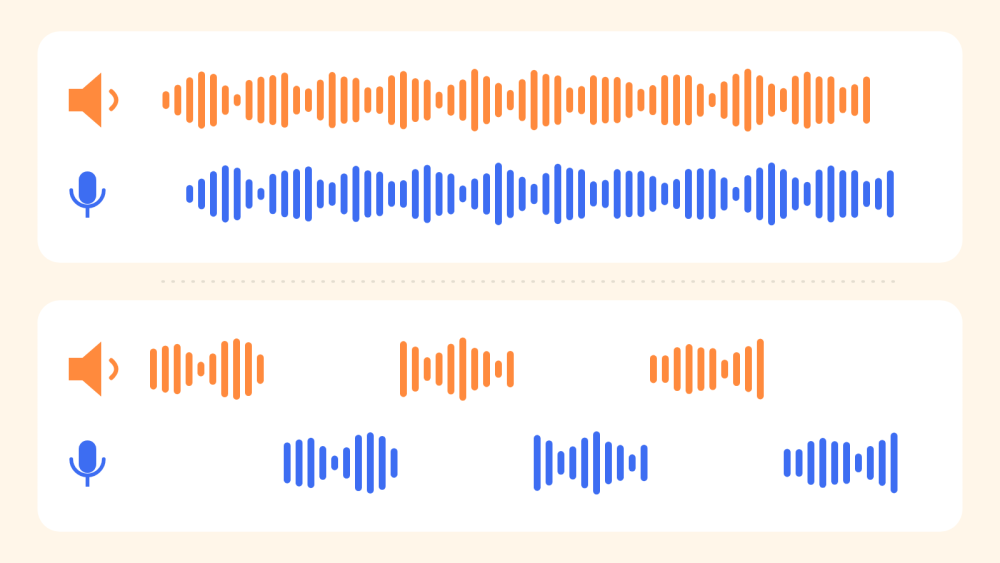
Shadowing can look like a repetition drill, but the two differ in timing and in where your attention goes.
| Feature | Shadowing | Repeating |
|---|---|---|
| When you speak | While the audio is still playing | After you hear a chunk |
| Where attention goes | Mostly on catching the incoming sounds | Often on the meaning of each chunk |
Hamada attributes the attention difference to Kadota (2007): shadowing directs most of a learner's attention to sounds, so learners may not access the meaning of each word while doing it. Experts in the language can sometimes do both at once, but students often cannot.
Check Whether Shadowing Fits Your Level
Hamada gives a general rule. If you cannot yet catch the sounds you hear, use shadowing as listening practice. Once you can catch them, it can also serve as speaking practice, because doing both at once is demanding. For a beginner, that means choosing a clip you can follow and treating the first weeks as ear training.
The evidence has limits. The JALT Journal paper by Hashizaki and colleagues reviews listening studies that include work with Japanese university learners. In one study of 43 students, the lower-proficiency group improved on a basic listening test and the intermediate group did not. Hamada's pronunciation example reports advanced learners shadowing television programs (Foote and McDonough, 2017). Treat shadowing as a promising practice to test, not a guaranteed fix.
A Beginner Routine for One Short Clip
You do not need special software to begin. Any short audio clip you are allowed to use and the voice recorder on your phone are enough. The steps below follow Hamada's rules, with a few practical suggestions marked as such.
- Choose a short clip. Pick one with a clear speaker and a speed you can mostly follow. A clip under a minute is practical (a suggestion, not a research figure). If you want to practice American English, choose an American speaker; you do not have to change your accent to benefit from the exercise.
- Understand it first. Listen once or read the transcript so you know what the speaker says. Hamada recommends knowing the content beforehand so you can concentrate on the sounds.
- Put the transcript away. Hamada advises shadowing without the written text, because reading splits your attention between sounds, letters, and meaning.
- Shadow along. Start speaking as soon as you hear the first word. Do not stop to fix a mistake. If you lose the thread, rejoin at the next phrase (a suggestion).
- Repeat a few times, then move on. Hamada cites research suggesting five or six repetitions of the same passage are enough. The Hashizaki paper reviews earlier studies that found four to five repetitions enough. Once you reach that number, choose a new clip.
- Record and compare once. Record one attempt, then listen to the model and your recording. The British Council's guidance on recording yourself suggests comparing features such as stress and rhythm.
A small example, written for this guide and not taken from a real learner. Suppose the clip says, "I'd like a table for two, please." After recording, ask three questions. Did I keep every word? Did I stress table and two the way the speaker did? Did the ending of please disappear? Write down one answer and aim for that one detail on the next round.
On how long to practice, Hamada reports that one study found a noticeable change after two sessions of 10 to 15 minutes a week for a month. That describes one group of learners, not a timetable for you.
Make It Easier or Harder
- Change the speed. Hamada suggests that changing playback speed can keep practice interesting: after practicing at 1.5 times speed, the original speed feels slower. As a beginner, start at the original speed or slower.
- Use a recording, not another learner. Hamada notes that having one learner shadow another does not work well as listening practice, because the source sounds are often very different from the target sounds.
- Step down if you need to. If speaking along is too fast, try listening and repeating each phrase after the speaker. That is repeating, not shadowing, and it is a reasonable stepping stone before you return to the clip (a suggestion).
What to Look For in a Shadowing English App
A shadowing English app is only a tool for the routine above. This guide has not tested or ranked any shadowing app, so use these questions to inspect the ones you try.
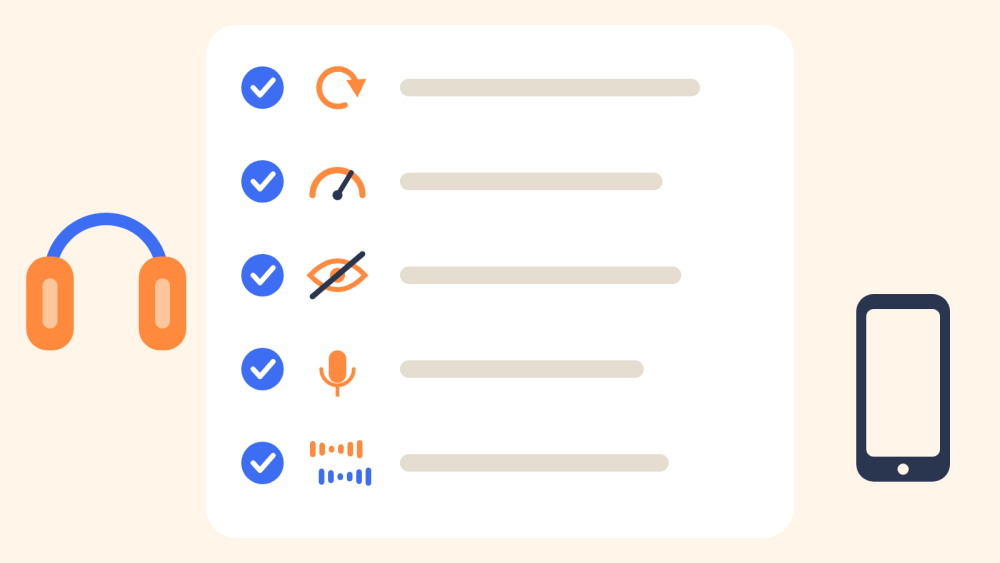
- Short, loopable segments. Can you replay a short passage instead of the whole video?
- Speed control. Can you slow the audio down and return to the original speed?
- Hidden transcript. Can you shadow without the text and check it afterward?
- Recording and playback. Can you hear your own attempt next to the model?
- Audio in the English you want. Is it clear who is speaking and which variety of English it is, for example American English?
- Feedback you can check. If the app gives a score or a highlighted word, does it say what it measured? Compare it with your own listening, as described in our guide to using pronunciation feedback.
For a broader comparison of tools, see our guide to choosing English speaking apps.
Move From Shadowing to Your Own Sentences
Shadowing trains you to match sounds. It does not teach you what to say. After a few rounds with a clip, pick one phrase from it and use it in a sentence about your own day. For more ideas on that step, read about how to practice speaking English with AI and how to choose an English speaking practice app. If one sound keeps causing trouble, our common English pronunciation mistakes guide can help you pick what to investigate.
Frequently Asked Questions
What is shadowing in English?
Shadowing is a practice in which you listen to English audio and repeat it almost at the same time. Unlike repeating after the speaker, you speak while the audio plays. Most of your attention goes to catching the sounds, so it is mainly used for listening and pronunciation practice.
How do I do shadowing in English?
Choose a short clip, make sure you understand it, then play it without the transcript and speak along from the first word. Repeat the same clip a few times, record one attempt, and compare it with the speaker. Then move on to a new clip.
How many times should I shadow the same clip?
Research cited by Hamada suggests five or six repetitions of the same passage are enough, and the Hashizaki paper reviews earlier studies that found four to five enough. Treat this as a guide. If you can follow the speaker comfortably after fewer rounds, move on.
Should I read the transcript while shadowing?
Check the transcript before you start, then put it away. Hamada advises shadowing without it, because reading changes the task by splitting your attention between sounds, letters, and meaning. After you finish, you can check what you missed.
Is English shadowing practice suitable for beginners?
It can be, if the clip is slow and clear enough for you to follow. Hamada's rule is to treat shadowing as listening practice until you can catch the sounds. Studies suggest benefits may differ by level, so start with short clips and watch how your own listening changes.
Hibay's public app description refers to speaking practice with AI partners and feedback on pronunciation, grammar, and vocabulary. Check which exercises the current app offers before you build a routine around one. You can shadow with any audio you are allowed to use, then practice the same phrases in your own answers. This guide has not measured any app's accuracy or set an improvement timetable.