
American Accent Training App
Looking for an American accent training app? American English vs British English pronunciation differs in specific, checkable ways, and a dictionary entry shows them one word at a time. This guide compares what three widely installed apps state, then gives a four-step drill you can run today.
On this page
If you are comparing American English vs British English pronunciation because you are looking for an American accent training app, the first useful move is to separate two different goals. One is being understood by the listener in front of you; the other is sounding like a particular region. Apps help much more with the first than with the second, and a dictionary is often the better tool for the details.
This guide uses public developer descriptions and one dictionary entry you can check yourself, all read on 27 October 2026. It does not rank apps, it does not report hands-on testing, and it does not promise that any app will remove an accent.

What "American" and "British" Actually Describe
Pronunciation differences between the two reference accents are not a single switch. Dictionary entries show them one word at a time, which is why a dictionary is the practical starting point.
Take a common word. The Cambridge Dictionary entry for "water" gives UK /ˈwɔː.tə r / and US /ˈwɑː.t̬ɚ/, with a sound-by-sound breakdown for each. Three separate differences sit inside one short word: the vowel, the treatment of the letter t between vowels, and whether the final r is pronounced. A learner who says "the American accent" as one block will miss all three.
That is also why exaggerated claims are a warning sign. A description that promises a complete accent in a fixed number of days is describing marketing, not the several specific changes a dictionary entry lets you verify for yourself.
What an Accent App Can and Cannot Do
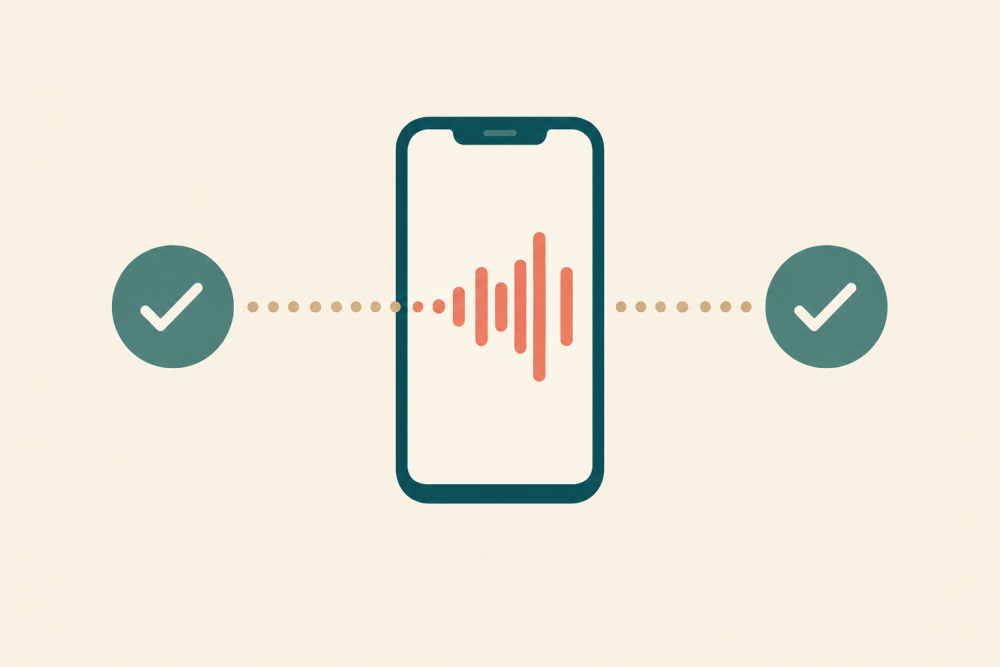
An app that listens to your recording and marks a word can tell you that a sound did not match its reference. That is a real use: it turns a vague feeling into a specific target, and it lets you repeat the same word until the second attempt is closer than the first.
What it cannot do is decide whether the difference matters in your situation. A listener who is used to your first language may understand you perfectly while the app still flags the vowel. Treat the score as a signal to investigate, not as a verdict on your speech, and check the word in a dictionary entry with audio before you rebuild a habit around it.
What Three Widely Installed Apps State
The ELSA Speak listing describes pronunciation, grammar and vocabulary feedback, word-stress guidance, career-specific vocabulary and exam preparation for IELTS, TOEFL, TOEIC and EIKEN, together with conversation practice. The pronunciation feedback is the part relevant to a single-sound question; the description does not state how accurately it detects a given accent, so test it on words you can already check in a dictionary.
The HiBay listing describes conversation practice with AI partners across more than a hundred scenarios with tasks at several difficulty levels, plus IELTS preparation tools such as a mock speaking test, essay review and listening practice. Scenario practice is useful once you have a target sentence, because it puts the sound back into a real exchange instead of a word list.
The Duolingo listing describes short lessons across more than forty languages that practise speaking, reading, listening and writing with vocabulary and grammar. It is a habit builder rather than a pronunciation checker, which is useful to know before you judge it against a feedback tool.
Free Material You Can Use for One Sound
You do not need a paid plan to work on a single difference. The Cambridge Dictionary publishes UK and US audio for most entries next to the transcriptions, so you can hear the pair you are comparing and record yourself against both.
For longer connected speech, BBC Learning English publishes free six-minute episodes with transcripts, and a transcript lets you mark the word you are practising before you replay the line.
A Four-Step Drill You Can Run Today
Pick one word, not a whole accent. Run these four steps once, then repeat the word on three separate days.
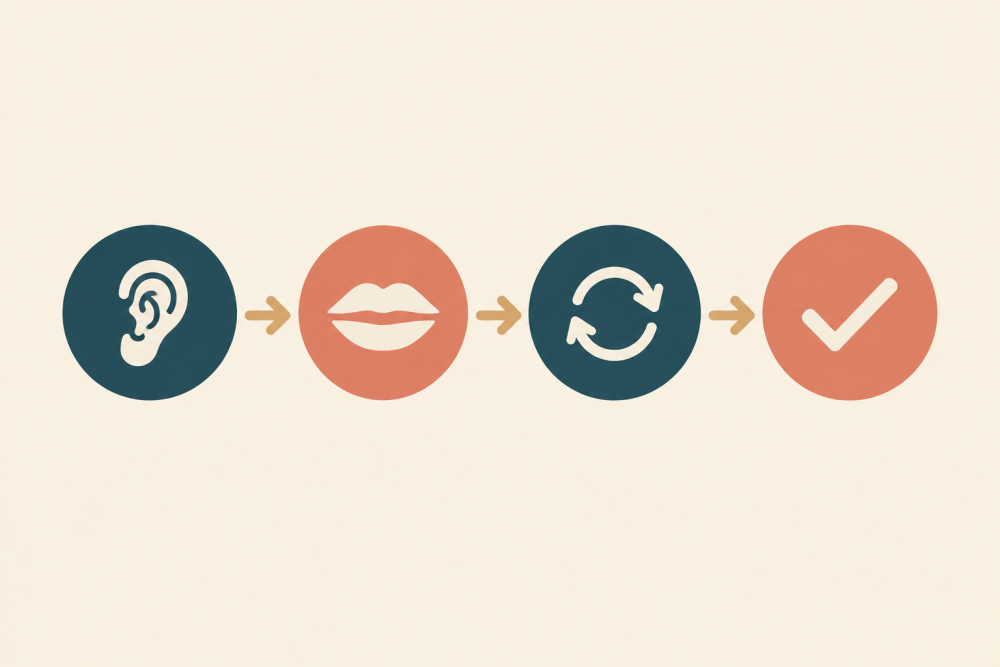
First, read both transcriptions in the dictionary entry and say the difference out loud, for example the vowel in water and the final consonant. Then listen to the audio twice: once for the sound you are changing, once for the rhythm of the whole word. Next, record yourself saying one full sentence that contains the word, such as I would rather walk than take the bus. or Could you say that again more slowly? Finally, compare your recording with the dictionary audio and write down one difference only.
One difference per session is the point. If you change three sounds at once, you cannot tell which change the listener noticed, and the practice stops being checkable.
Frequently Asked Questions
Is there an app to improve my English accent?
Yes, several apps described above include pronunciation feedback, and the ELSA Speak listing describes the most specific pronunciation features of the three. The honest limit is that no listing states how accurately it detects a given accent or whether a flagged word would actually confuse a listener. Use an app to find a target, then verify the word against dictionary audio, because that pair is public and checkable.
How do I speak English without an accent?
You do not need to. Every English speaker has an accent, including speakers from the United States and the United Kingdom, and the practical goal is being understood rather than erasing where you come from. Work on the specific sounds that carry meaning in your situation, keep the ones that do not, and let a listener tell you which is which. If you want the best American accent apps for a particular sound, choose one that lets you repeat a single word and hear your own recording, then check that word in a dictionary with UK and US audio.
Reading one dictionary entry and repeating one sentence is a smaller step than most accent advice suggests, and it is the step you can verify today.