
English Pronunciation for Indian Speakers: Fix What Listeners Mishear, Keep Your Accent
A ten-minute listener test for Indian-English speakers, the features that actually cost comprehension, and a priority order of consonant contrasts before vowel colour. What to look for in the best English speaking app in India is a record of your own tests, not a score.


On this page
If you speak English fluently and still get asked to repeat yourself on calls, the useful question is not which accent you have but which specific features cost you comprehension. This guide gives a listener test you can run in ten minutes, a priority order backed by published research on Indian English, and a personal list to re-test in a month.
Accent and Intelligibility Are Two Different Targets
Research on Indian English describes a recognisable variety with its own features rather than a set of errors: a reduced vowel inventory compared with British Received Pronunciation, retroflex stops in place of alveolar ones, and timing patterns that differ from most other Englishes (The effects of native language on Indian English sounds and timing patterns, accessed 28 October 2026). None of that has to be removed. What matters is which of those features make a particular listener mishear a particular word.
That distinction saves you effort. Changing an accent is a years-long project; changing one contrast that costs you a room number on a call is a week.
What Listeners Actually Get Asked to Repeat
A study of how South Asian Englishes are understood by listeners from another first-language background found systematic comprehension failures concentrated in a few areas: diphthong reduction, retroflex articulation, and simplified consonant clusters (The intelligibility of South Asian Englishes, accessed 28 October 2026). Fifteen of the test words were misheard more than half the time. That is a short list, and it is worth testing rather than assuming.
| Feature often named for Indian English | Why it can cost comprehension | What to test in a sentence |
|---|---|---|
| /v/ and /w/ | A merger makes vet and wet, or vote and wrote, ambiguous | Two sentences where the /v/ word carries the meaning |
| th and t | Three and tree collapse | A number in a work sentence, not in isolation |
| Retroflex /t/ and /d/ | Sounds shifted back can be heard as a different consonant | A name and a date in one sentence |
| Word endings (-s, -ed, -t) | Dropped endings lose plural, tense and agreement | A sentence where the ending is the information |
| Syllable-timed rhythm | Unstressed syllables stay full-length, so the stressed word stops standing out | One sentence with three unstressed words around a key noun |
A study of the /v/ to [w] pattern specifically notes that intelligibility problems and listener stereotyping are the two consequences usually reported for this contrast (Cambridge, Language in Society, abstract, accessed 28 October 2026). Stereotyping is not something pronunciation practice fixes, and it is worth separating from the part you can act on.
A Test With Real Listeners, Not a Checklist
Five sentences, two listeners, ten minutes.
- Write five sentences you actually say at work, each containing one item from the table above plus a name or a number.
- Record them once on your phone at normal speed, in one take.
- Play the recording to two colleagues who do not share your first language, and ask only: what did you hear?
- Mark the words that came back wrong. Two listeners agreeing on the same word is your first target; one listener alone may be an accident of that pairing.
- Re-record the same five sentences after a week of practice and ask the same question.
If you are looking for the best English speaking app in India to record and store these tests, the feature that matters is not a score. It is a stable place for a reference recording, your attempt, and a note about which word the listener heard — so the two attempts can be compared.
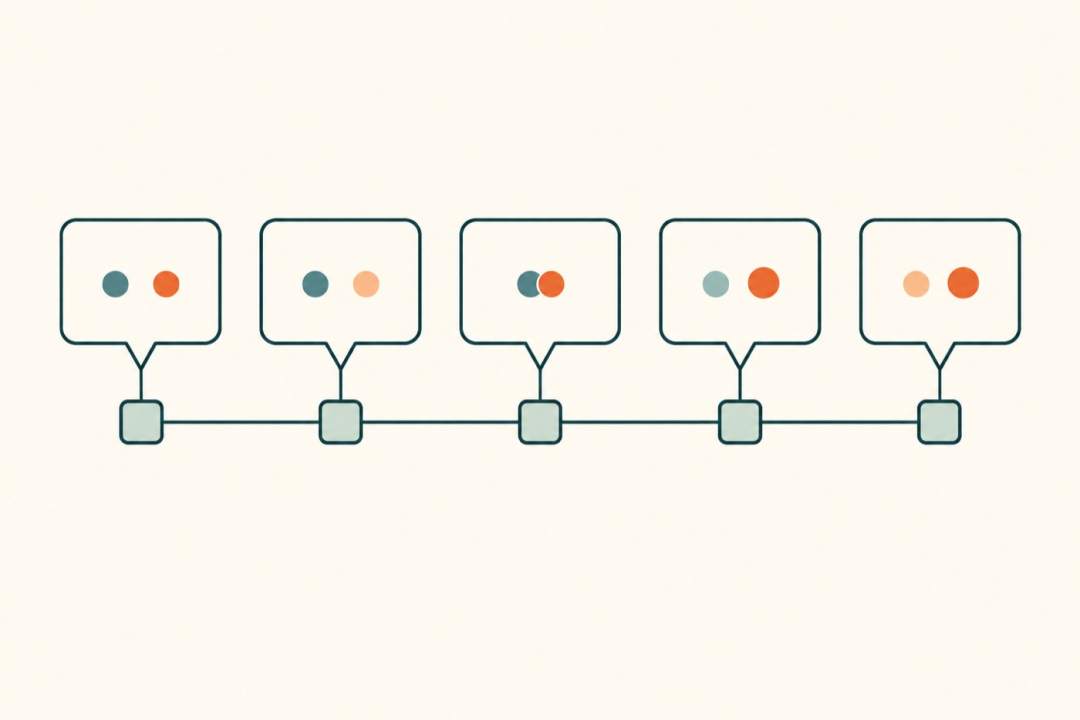
Fix Consonant Contrasts and Word Endings First
Two categories repay practice more than vowel colour. Consonant contrasts collapse meaning in a single sound: very and wary are different words, and so are three and tree. Word endings carry grammar: a dropped -s turns three files into one file, and a dropped -ed moves a task from last week to next week.
Vowel colour, by contrast, is where accents differ most harmlessly. A listener who expects British vowels can still follow an Indian-English vowel system once the consonants and endings arrive intact.
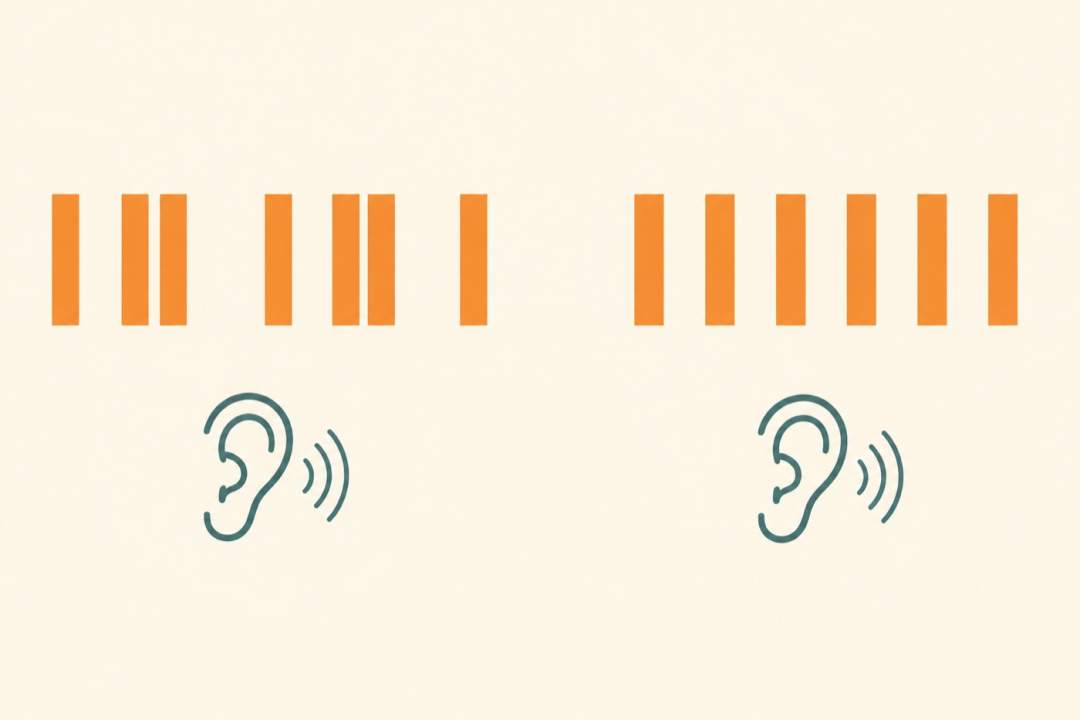
Rhythm: Why the Unstressed Words Matter
Indian English is often described as more syllable-timed than stress-timed English: syllables arrive at more even intervals, so the stressed syllable does not stand out as far. The practical effect on a call is that your listener cannot tell which word in the sentence is the important one.
The fix is small and specific: in one sentence a day, deliberately reduce the small words — articles, prepositions, auxiliary verbs — and let one content word carry the emphasis. This is a sentence-level habit, not a sound-level correction, and it usually shows up in comprehension faster than a new consonant does.
Your Own Misheard-Word List, Re-tested in a Month
Keep a single page: the word, the sentence you said it in, the listener's language, and what they heard instead. After a month, the page tells you which features are actually costing you — usually two or three, not fifteen. Re-run the five-sentence test with new sentences, and keep the old page as evidence of what changed.
Frequently Asked Questions
Do I need to remove my accent to be understood?
No. Intelligibility work changes a small number of features that cause mishearing, and accent features that nobody mishears can stay. The published work on Indian English treats the variety as a system with its own regularities, not as a set of deviations to be erased.
What if my colleagues say they understand me but still ask me to repeat numbers?
Numbers, names and dates are the most frequently misheard items in any second-language call, because they carry no context to recover from. Test them deliberately: five numbers in one sentence, played to one listener, and record which ones come back wrong. Then practise only those.
Is it worth practising with an app if I already speak fluently?
It is worth it for the record-keeping rather than the scoring. A fluent speaker needs a stable reference, a place to keep attempts, and a way to see whether a specific contrast improved; an app can hold all three. What it cannot do is tell you what a human listener understood.