
Disputing a Card Charge in English: A Phone Script
A charge you do not recognize is a phone call you can rehearse: the five facts the agent will ask for, the sentences to use at each stage, what arrives in writing afterwards, and how to escalate if the answer is no.

On this page
The charge is small enough to ignore and strange enough to keep you awake. On the statement it reads like a string of letters, a city you have never lived in, and an amount close to something you might have spent: 9.99, 47.20, 112.00. You did not buy anything from that name. You are not sure whether it is a mistake, a subscription you forgot to cancel, or someone else using your card. The banking app opens a dispute form with six empty fields and no explanation, so you close the form and decide to call instead. Then the line connects, a person says hello, and you realize you have not planned a single sentence.
That is the gap this guide closes. What follows is a complete phone script: what to check before you dial, the five facts the agent will ask for, the sentences to use at each stage, what arrives afterwards, and how to escalate if the answer is no. Every line of dialogue below is an original example written for this article, and it is labelled as one. Real banks use their own wording, and what transfers is the structure rather than the exact phrases. Where a legal timescale appears, it is the published United States rule and the article says so; if your account is somewhere else, the shape of the process is still useful, but the numbers are not yours.
What to do before you call
Most disputes are decided before the call, in the ten minutes you spend reading the statement properly.
First, rule out the boring explanations. A charge can look unfamiliar because a family member used a second card on the account, because a shop bills under its parent company's name, because a free trial quietly turned into a paid subscription, or because the line is an annual fee, a foreign transaction fee or a hold for a hotel deposit. None of those is fraud, and naming them before you dial saves a call.
Second, get the merchant's real name. A statement descriptor is squeezed into a fixed width, so the text on the page is often a compressed code plus a city plus a phone number. Search the letters together with the number, and check your email for a receipt from that week. If nothing turns up, the agent can usually decode the descriptor, so this is a question to ask on the call rather than a reason to delay it.
Third, decide which problem you have, because the words differ. A charge you did not make, and that nobody you allowed made, is an unauthorized transaction. A charge with the wrong amount, a duplicate charge, or a refund that never arrived is a billing error. Something you bought that arrived broken or never arrived is a quality problem, and the FTC's consumer guidance is explicit that for the quality of something bought you should contact the seller before the card issuer. Using the wrong label does not usually kill a case, but it sends the call down the wrong corridor and wastes the first five minutes.
Fourth, gather the five facts in the next section on one sheet of paper, or in a notes file you can read from. Fifth, choose your door: the number on the back of the card, the dispute button in the app, or both. A phone call gets you a person and a reference number; a written notice protects your legal position. The published CFPB guidance recommends both, in that order, so the app is not a substitute for the call and the call is not a substitute for the letter.
One timing fact matters more than the rest. For a US credit card, the CFPB advises sending a written billing-error notice no later than 60 days after the card company sent the statement on which the error first appeared, and the FTC publishes the same 60-day figure. That is the outer edge, not a target. Calling in the first week leaves you room to follow up in writing and to fix a letter that goes to the wrong address. The address for billing disputes can be different from the address you send payments to, which is one of the quiet reasons people lose cases they should have won.
The five facts the agent will ask for
Almost every dispute call comes down to the same five questions, in roughly the same order. Having the answers ready turns a nervous conversation into a two-minute transaction, and it also makes you sound like someone who has done this before, which changes the tone of the call.
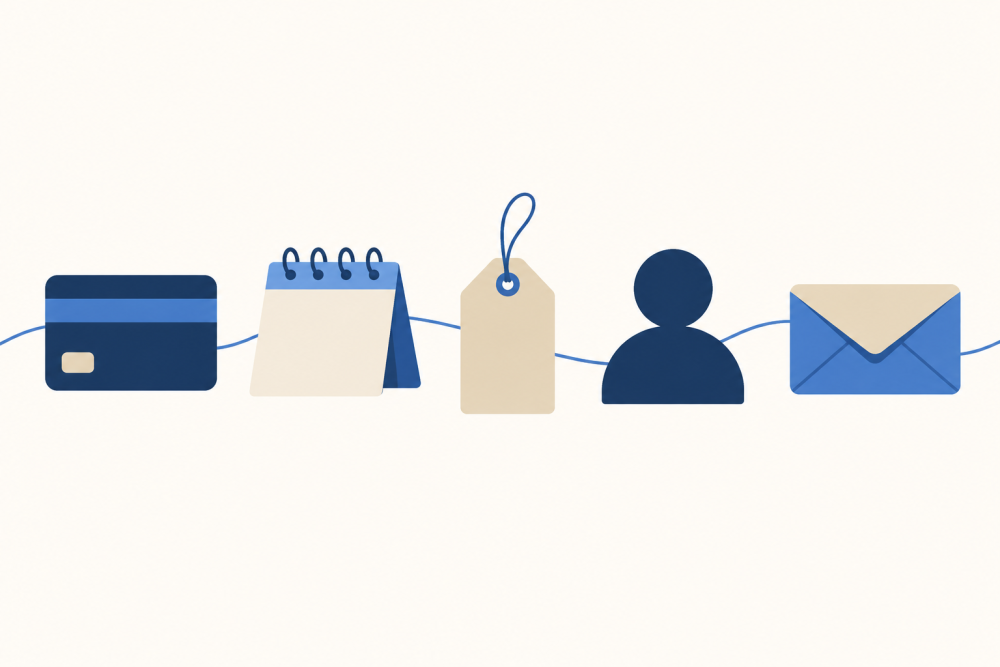
| Fact | Where to find it | A sentence you can use |
|---|---|---|
| The last four digits of the card | On the card itself, or under the card image in the app | The card ends in four four two one. |
| The date and the amount | The statement line; use the posted date if it differs from the purchase date | It posted on the twelfth of March, for forty-seven dollars and twenty cents. |
| The merchant name exactly as printed | Copy it letter by letter, including the asterisk and the city code | The statement says NXL Digital, and I don't recognize it. |
| Whether you authorized it | Your memory, plus anyone who holds a second card on the account | I did not make this payment, and nobody else uses my card. |
| What you have already done | Any email, chat or call to the merchant, and whether the card has been cancelled | I emailed the merchant on Monday and got no reply. |
The fourth fact is the one people fumble. A sentence such as I think it might be mine, but I am not sure sounds honest and feels safe, and it hands the agent a reason to file the case as a billing question rather than as fraud. Decide before you call. Either you made the payment, or an authorized user did, or neither is true. Say the version that is true, in one sentence, and do not narrate your doubts.
The fifth fact decides the route. If you have not contacted the merchant, and the problem is about what you bought, the agent may ask you to do that first, because that is the order the published guidance describes. If the charge is unauthorized, say so and skip that step. You are not expected to negotiate with a stranger who used your card number, and being asked to try is a sign the case has been misclassified.
Watch how the numbers are said. Card agents read digits one at a time, so four four two one is clearer than any attempt at a full number, and amounts are confirmed in dollars and cents. Ask the agent to slow down if you need to. That request is routine, it costs nothing, and it is a better use of the call than guessing at a figure you did not hear.
A full call script with likely replies
The script below is a template rather than a transcript. It assumes a card issuer in an English-speaking country, a charge you genuinely do not recognize, and a first call made from a quiet room with the statement open.

Opening the call
The menu is the first test, and it is designed to be survived rather than understood. Say representative or agent when it asks what you want, and press zero if it offers that. Once a person answers, lead with the reason for the call before your name:
I'd like to dispute a charge on my card.This one sentence sets the whole call, and it is worth practising until it comes out without a pause.It's a charge I don't recognize.Add it if the menu or the agent asks for a category.Could you put me through to the disputes team?Use it when the first person can only read balances.
The agent's questions, one by one
| What the agent says | What it means | A reply you can use |
|---|---|---|
Can you confirm the last four digits on the card? | A security check, not a test of your English | Four four two one. |
What's the date and the amount of the transaction? | They are locating the exact line on the statement | March twelfth, forty-seven dollars and twenty cents. |
Do you recognize the merchant name? | The key question of the call | No. I've never used that name, and I don't have an account with them. |
Was the card in your possession at the time? | Fraud triage: lost card, or number only | Yes. It's in my wallet now, and I still have it. |
Have you contacted the merchant? | Routing: merchant first, or straight to a dispute | I emailed them on Monday. No reply, so I'm calling you. |
I'm opening a dispute. You'll get a letter in seven to ten days. | Acceptance, and the start of the paper trail | Could you give me a reference number for this call? |
That last line matters more than it sounds. A reference number is what turns someone told me on the phone into a record you can quote in a letter and in a later call. It costs one sentence, and it is the single most useful thing to ask for.
Then there are the lines that keep the call moving when your English runs out:
Sorry, could you say that again more slowly?
I didn't catch the reference number. Could you repeat it digit by digit?
Could you spell the merchant name for me?
Can you send me that in writing, to the email on the account?
Three phrases are worth avoiding. I think it might be mine, but I am not sure weakens a fraud report more than any grammar mistake will. I want a refund describes a merchant decision, while what you are asking the bank for is a reversal of a charge, so say dispute or reverse instead. And just cancel the card is reasonable when the number has been used, but it should come after the dispute is filed rather than instead of it, because a cancelled card does not by itself create a case.
If you cannot answer on the spot
Not knowing something is normal; leaving the call without a record is the mistake.
I don't have the statement in front of me. Can I call back with the details?
Could you note on the file that I called today, and what we discussed?
What's the deadline for sending the written notice?
Ask for the note, write down the time and the reference number, and send the written follow-up while the call is still fresh in your mind. This is where a phone script meets a paper trail, and the second half is what the letter is for.
What the bank will send you afterwards
A phone call opens a case; paperwork decides it. The published US process has a shape worth knowing before the first envelope arrives.
- Within 30 days of receiving your written complaint, the card company must acknowledge it in writing, unless the problem has already been resolved.
- It then has another two billing cycles to finish investigating, and the disputed charge may keep appearing on your statement with a note that you do not have to pay it yet.
- While the investigation runs you do not have to pay the disputed amount, or the finance charges on it, but you do have to pay the rest of the bill on time.
- During that period the card company cannot report your payment as late, cannot charge interest on the disputed amount, and cannot make you pay it.
If the company decides that all or part of the charge is correct, it has to tell you why it thinks you owe the money, how much you owe, and when the payment is due. Ask for copies of whatever it says proves the charge. The FTC's consumer pages add a 90-day outer limit for resolving a complaint, and they describe an appeal you make in writing within the payment period the issuer gives you or 10 days after you receive the explanation, whichever is later.
Debit cards work differently, and the difference is large enough to change what you do in the first hour.
| How quickly you report a lost or stolen ATM or debit card | Your maximum loss |
|---|---|
| Before anyone uses the card | Nothing |
| Within 2 business days of learning about the loss | $50 |
| After 2 business days, but within 60 calendar days of the statement being sent | $500 |
| More than 60 calendar days after the statement was sent | All the money taken, and possibly more |
For a credit card the FTC's figures are simpler. If the loss is reported before someone uses the card, you are not responsible for charges you did not authorize; if it is reported afterwards, the maximum is $50. If only the card number was used and the card itself was never lost, the FTC says you are not responsible for charges you did not authorize. Many issuers advertise stronger protection than the legal floor, which is good news, but the floor is the number to know when a call goes badly.
If the charge is not resolved: the escalation line
No is rarely the end, but it is also rarely overturned by repeating the same phone call louder. Escalation is a sequence of documents.
- Ask for the decision in writing:
Could you send me the decision in writing, with the reason? - Ask for the evidence:
I'd like copies of the documents the investigation relied on. - Ask for a supervisor once, with a specific request rather than a complaint:
I'd like to speak to a supervisor about a dispute decision I was given in writing. - Appeal in writing inside the window, naming the amount and the reason:
I am writing to appeal the decision on my dispute. I still do not owe this amount because... - Use the regulator. In the United States that means a complaint to the Consumer Financial Protection Bureau and, for fraud, a report to the FTC at ReportFraud.ftc.gov. Neither promises an outcome; both create a record with a date on it.
- Keep everything in one folder: dates, names, reference numbers, letters, screenshots of the app. A dispute that fails once often succeeds on appeal because the file is complete.
If your account is not in the United States, the same six steps apply in outline, and the regulator changes. Look up the consumer-protection or financial-ombudsman body for the country where the account is held, and check its time limits before you write anything, because the deadlines are shorter in some places than the US figures quoted above.
Frequently asked questions
What do I say when the agent asks if I authorized the charge?
Answer with one clear sentence and then stop: No, I did not authorize this charge, and nobody else has permission to use my card. Do not add guesses, and do not soften it with probably or maybe. If you genuinely are unsure, say what you do know instead — for example, I don't recognize the merchant, and I have never given them my card details. That is still a clear statement, and it leaves the investigation to do its job.
How long do I have to dispute a card charge?
For a US credit card, the CFPB and the FTC both point to 60 days from the statement that first showed the error for a written billing-error notice. For a lost or stolen debit card, the FTC's liability tiers turn on 2 business days and 60 calendar days, which is why the first call should happen the day you notice the charge rather than at the end of the month. Call early, then put the same facts in writing.
What if the bank says the charge is correct?
Ask for the reason and the documents in writing, then appeal inside the window the bank gives you. If the appeal fails, a complaint to the CFPB in the United States creates an independent record, and so does a fraud report to the FTC. What you should not do is ignore the bill: the disputed amount still needs to be paid once the investigation ends, and the rest of the statement was always due on time.
Where to practise next
The script is short enough to rehearse out loud in ten minutes, and the rehearsal is the part that makes the real call calm. Read the five facts onto one page, say the opening sentence until it stops feeling strange, and keep the three rescue lines — slower, repeat, in writing — where you can see them.
If the conversation you are preparing for is a different one — how to open a bank account in English rather than how to dispute a charge — the full guide to opening a bank account in English covers the branch and phone language around accounts, and the phone-call practice guide rehearses three complete calls from greeting to goodbye. HiBay's AI conversation practice lets you run a dispute call as a spoken drill, with a partner who will repeat the question instead of hanging up on you.