
保護者面談で使う英語の質問と、英語 で銀行口座を開く 言い方
保護者面談の最初の1分、報告書の表現、追加支援の聞き方、そして英語 で銀行口座を開く 言い方まで、短い面談を計画に変える実用フレーズをまとめます。
目次
最初の1分でわかること
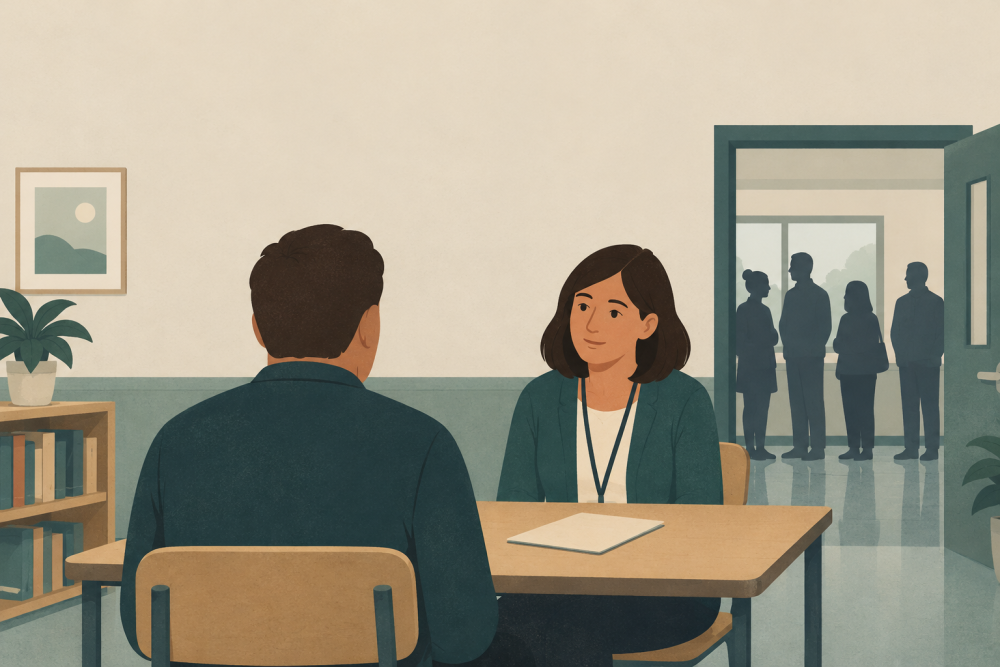
多くの保護者面談は同じ形で進みます。先生が挨拶し、報告書を開き、子どものことについて一般的なことを言い、それから質問はありますかと尋ねる。この冒頭には、拾う価値のある3つの情報があります。進歩の方向、具体的な例が1つ、そして学校が次に取り組みたいことです。
温かい口調と慎重な言い回しは矛盾しません。娘はよくやっていると先生が言うことと、報告書が書く力についてworking towardsと書いていることは、同じ子どもを2つの角度から描いています。口調と争うのではなく、その表現の背後にあるものを尋ねましょう。
面談は短く、オックスフォード・オウルの保護者会ガイドでは10分が一般的だとされているので、書いておいた質問こそが実際に聞ける質問になります。早めに遮りましょう。Could you say that again more slowly? と Sorry, I want to make sure I understand — can you give me an example? です。
聞く価値のある10の質問
白紙のページは計画ではありません。来た理由に合う質問を選び、先生が答えたら消していきましょう。
| 知りたいこと | 使える質問 |
|---|---|
| 前回の報告書からの進み具合 | How has my child's reading changed since the last report? |
| 報告書の表現の意味 | What does working towards mean for my child in practice? |
| 行動と友だち関係 | How does my child get on with the other children at break? |
| 授業への参加 | Does my child put a hand up and join in discussions? |
| 努力か能力か | Is the issue effort, or is something specific hard for my child? |
| 最も得意な教科 | Which subject is going best at the moment, and why? |
| 宿題の実情 | How long should the homework take at this stage? |
| 家庭でできること | What is one thing we can do at home this month? |
| 次のチェックポイント | What will you be looking for by the next report? |
| ほかに話す相手 | Is there anyone else in the school I should talk to about this? |
10個は短い面談には多すぎます。前もって選んだ2つか3つが現実的で、残りはメールに回すべきです。
責めずに懸念を伝える
先生の注意を最も早く失う方法は非難です。最も早く未回答のまま終わる方法は沈黙です。3部分の文が役に立ちます。あなたが観察したこと、それが子どもに与えている影響、そしてあなたが求めていることです。
Since the start of term, my son has said he does not want to come to school on Mondays. これは観察であって判決ではありません。He is quiet on Sunday evenings and I am worried he is unhappy. これは影響を、あなた自身の言葉として述べたものです。Could you tell me what you have noticed in class? これで会話を先生に返します。
自分にはできない診断や、知りようのない動機を避けましょう。いじめられている、先生が気にかけていないと言うことは、質問を防衛に変えてしまいます。以前に伝えて何も変わらなかったなら、We spoke about this in September. What can we try now? と聞きましょう。
報告書の表現が実際に意味すること
報告書の言葉は、知らせそのものより悪く聞こえることがよくあります。イングランドのキーステージ2の法定教師評価では、英語の書く力に3つの判断を使います。working towards the expected standard、working at the expected standard、working at greater depth です。最初のものは尺度上の位置を示すのであって、子どもの評価を下すものではありません。
学校は needs support with reading のような独自の言い回しも使いますし、それは標準化されていないので、尋ねる必要があります。
| 表現 | 通常の意味 | 聞くこと |
|---|---|---|
working towards the expected standard | 途中で、まだ到達していない | Which specific skills are still missing? |
working at the expected standard | その学年の基準を満たしている | What would greater depth look like in class? |
working at greater depth | 確実で、より難しい課題にも応用している | What keeps the work at this level next term? |
needs support with reading | 学校がすでに注視しているギャップ | What support is in place, and who runs it? |
1つの質問で4つすべてをカバーできます。Can you show me an example of the work behind this judgement? です。作品を1つ示せる先生は答えています。示せない先生は、その判断が暫定的だと認めているのです。
追加支援を頼む
支援は予算を伴う交渉です。ラベルを求めるより、何があるかを聞きましょう。What support is available in class if my child needs more help with reading? 次に、Who leads support for children with additional needs? です。イングランドでは通常、特別支援教育コーディネーター(SENCO)と呼ばれる人です。
日付を尋ねましょう。When would we review this, and how will I know if it is working? 学校は読みのグループを変えたり、子どもを評価に回したりできますが、診断や他のサービスの日程を約束することはできません。そうした限界を書き留めることは敗北ではなく、何をフォローアップすべきかがわかります。
面談全体で使える15のフレーズ
Thanks for seeing me. I have three questions.— 時間の長さを決める。Could you say that again more slowly?— 最後ではなく最初の1分に。Sorry, I did not catch that.— 長い文で聞き取れなかった箇所に。What does that mean in practice?— ラベルを具体例に変える。Can you show me an example?— その場で最も役立つお願い。Is that the same as last term?— 方向性を確かめる。How is my child getting on with the other children?— 報告書にはあまり書かれないこと。I have noticed something at home. Can I describe it?— 懸念を切り出す。I am not asking you to solve it today.— 場の温度を下げる。What can we do at home this month?— 具体的な行動で終える。What will you be looking for by the next report?— チェックポイントを決める。Who else should I speak to?— 答えを持つ人を探す。Could you write that down for me?— 書いた表現は残る。Can I email you to confirm what we agreed?— 会話を記録に変える。Thank you. I will follow up by email.— 面談をきれいに締める。
教師のように答える相手と一度練習し、フォローアップの質問が考えずに出るようにしましょう。
10分を計画に変えるフォローアップメール
同じ日に、5文で送ります。感謝、合意した3点、家庭ですること、記憶違いの訂正依頼、次の確認日の5つです。
Dear Ms Ahmed, thank you for meeting me on Tuesday about Yusuf's reading. As I understood it, we agreed that he will read with a partner three times a week, that you will tell me if the group changes, and that we will speak after the half-term break. At home we will read for ten minutes each evening and write it in his reading record. Please correct me if I have any of that wrong. I will email you again in the week beginning 3 November.

口頭の合意は消えやすいものです。メールは次回の面談で双方が確認できる版になります。
学校事務の英語:費用、書類、そして英語 で銀行口座を開く 言い方
面談だけが用事ではありません。事務室では同意書、制服の支払い、欠席連絡を扱います。短い文が役に立ちます。I would like to pay for the school trip. Can I pay by card? と Could you write down the payment reference for me? です。
多くの学校では現金ではなく銀行振込や口座振替で集金するため、新しく来た人には、英語 で銀行口座を開く 言い方という第二の用事が生まれます。予約を取り、身分証明書と住所証明を持参し、口座の用途について簡単な質問に答えます。最初に聞くのは Do I need an appointment, or can I open an account today?、次に Which documents do you accept as proof of address? です。必要な書類は銀行と国によって変わるので、銀行自身のウェブサイトで確認しましょう。
よくある質問
保護者面談には何を持って行くべきですか?
事前に送られていれば報告書、短い質問リスト、ペンとノートを持って行きましょう。家庭での子どもの作品を示すもの、たとえば読書記録も持参しましょう。速い英語がまだ難しいなら、事前に学校へメールし、通訳を手配できるか尋ねてください。通訳を提供する学校もあります。
その後、先生へのフォローはどうすればよいですか?
1日以内に短いメールを1通送り、合意したと理解したこと、誰が何をするか、次にいつ話すかを書き、間違っている点があれば訂正を頼みます。約5登校日たっても返信がなければ、新しいメールを書くのではなく、同じメールを学校事務室に転送しましょう。元のメールならスレッドと日付が残ります。