
IELTS Writing Task 2 Sample Answer Under the Clock: A Forty-Minute Plan
A minute-by-minute ielts writing task 2 sample answer plan with three hard checkpoints, so the essay is finished before the clock decides for you.

On this page
You know how to write a Task 2 essay. What you cannot do is finish one. Twice now the introduction has been excellent and the conclusion has not existed, and the band score reflects an unfinished argument rather than weak English.
Time in Task 2 is not evenly spent; it is spent in a fixed order with three points where you must be somewhere specific. This is a ielts writing task 2 sample answer plan built around those checkpoints.
Why Task 2 essays fail on time rather than language
Planning is where most lost minutes go, because planning has no natural end. A candidate who plans for fifteen minutes writes a better plan and a shorter essay.
The second leak is the middle paragraph. Candidates polish the first body paragraph because it is going well, then discover there are eleven minutes left and two paragraphs to write.
The third is the conclusion, which is the easiest paragraph in the essay and the one most often missing.
None of these is a language problem, which is why more vocabulary practice does not fix them.
The budget: five, thirty, five
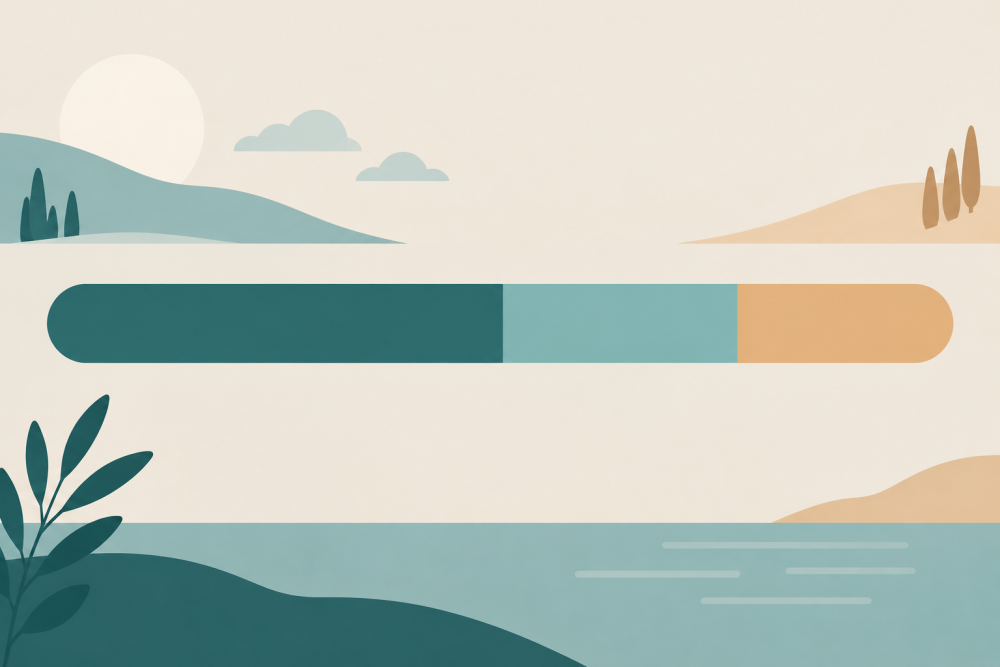
Five minutes planning. Thirty minutes writing. Five minutes checking.
Inside the thirty, the split is roughly seven minutes for the introduction, eleven for body one, nine for body two and three for the conclusion. Those numbers are not sacred; the order is.
Write the conclusion early if you are behind. A conclusion written at minute twenty-eight has the same value as one written at minute thirty-eight, and writing it early removes the failure mode that costs most marks.
Checkpoint one, minute twelve: body two must be started
At minute twelve you should have finished the introduction and be inside body one. If you are still planning, cut the plan.
At minute twenty you should be finishing body one. This is the checkpoint that matters most, because it is the last moment when a shorter body two can still save the essay.
The rule: when a checkpoint is missed, shorten the next paragraph rather than speeding up the current one. Speed produces errors; shortening produces a finished essay.
Sentences that keep you inside the budget
For the introduction, two sentences: paraphrase the question, state your position. Do not build a third.
Some people argue that remote work harms team cohesion, while others see it as the only realistic option for many families. This essay argues that the effect depends on how much of the work is collaborative.
For each body paragraph, one topic sentence, one explanation, one example. If the example is taking more than three sentences, it has become a second example.
For the conclusion, two sentences and no new ideas: restate the position, name the condition. Overall, remote work weakens cohesion only where collaboration is the core of the job, which suggests that hybrid arrangements rather than fully remote ones are the practical answer.

What to cut when you are five minutes behind
In this order: the second example in each body paragraph, then the qualifier sentence in the introduction, then the counter-argument paragraph if you wrote four.
Do not cut the conclusion. Do not cut the topic sentences, because without them the paragraph stops being a paragraph for the coherence criterion.
A sample answer with timestamps
Minute 0 to 5, plan: position (hybrid is the answer), two reasons (collaboration, commute), one example (a design team), one counter (junior staff learn by overhearing).
Minute 5 to 12, introduction as above.
Minute 12 to 23, body one: collaboration benefits from being in the same room; example of a design team that lost momentum; 130 words.
Minute 23 to 32, body two: fully remote disadvantages junior staff; example of onboarding; 110 words.
Minute 32 to 35, conclusion, two sentences.
Minute 35 to 40, checking: articles, plurals, the word count, and whether the position appears twice.
That is a full essay in the budget, with five minutes to spare for checking, which is the difference between a 6.5 and a 7 for many candidates.
Frequently asked questions
How should I split 40 minutes in Task 2?
Five minutes planning, about thirty writing and five checking. Inside the writing, roughly seven minutes for the introduction, eleven for the first body paragraph, nine for the second and three for the conclusion. Write the conclusion early if you fall behind, because a finished short essay scores better than an unfinished strong one.
What if I run out of time in Task 2?
Stop and write the conclusion in two sentences, even mid-paragraph, because an essay without a conclusion loses marks on both Task Response and coherence. Then check the last thing you wrote, not the first, because the final paragraph is the one with the least attention and the most errors.