
TOEIC Reading Part 7: Working Through Double and Triple Passages
The five linked sets in TOEIC Reading Part 7 carry 25 items and look like five cross-reference questions each. How to role-map the texts, which items never need the second document, and the five-minute budget for a toeic listening and reading practice test.

On this page
Part 7 is where a careful reader runs out of road. A single notice is manageable: read it once, answer two questions, move on. Then a set arrives with an advertisement, an e-mail and five questions that look as if they need both texts at once, and by the time the advertisement has been read twice the set has taken nine minutes and three sets are still waiting.
The linked sets deserve their own method, because they are the only place in the Reading section where the answer can sit in the gap between two documents instead of inside either one. The read order below is written for a full toeic listening and reading practice test.
What a double or triple set actually contains
ETS's published score user guide splits Part 7 into 29 questions on ten single passages, with two to four questions on each, and 25 questions on five sets of double or triple passages, with five questions on every set. The same guide gives the Reading section as 100 questions in 75 minutes, so the linked sets are expensive: almost half of Part 7's items sit in five places that each need more than one text open.
The directions are short: Each text or set of texts is followed by several questions. Nothing asks you to read the texts in printed order, and nothing forbids going back to Part 5. The order is yours.
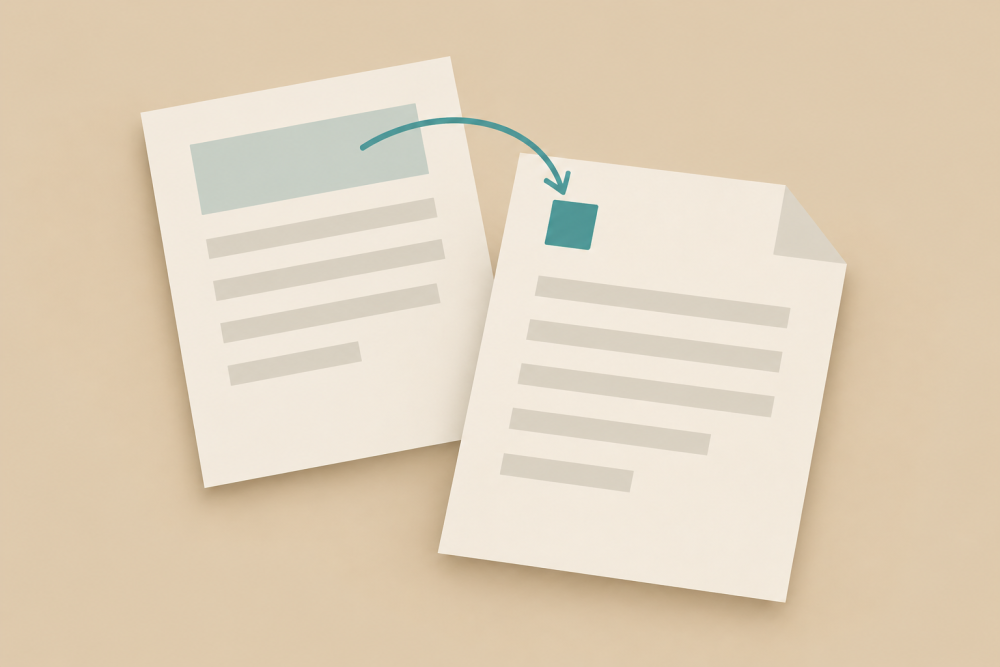
Reading both texts from the first line is the common choice and the wrong one, for a reason that is not about speed. In a double set the second text usually restates the situation the first one established, so reading it in full buys a second copy of the context. What the questions need is the sentence where the two documents disagree or amend each other.
The role map: one word per text
Before reading a sentence, give each text a job title. It takes ten seconds, and most candidates skip it because it feels like planning rather than working.
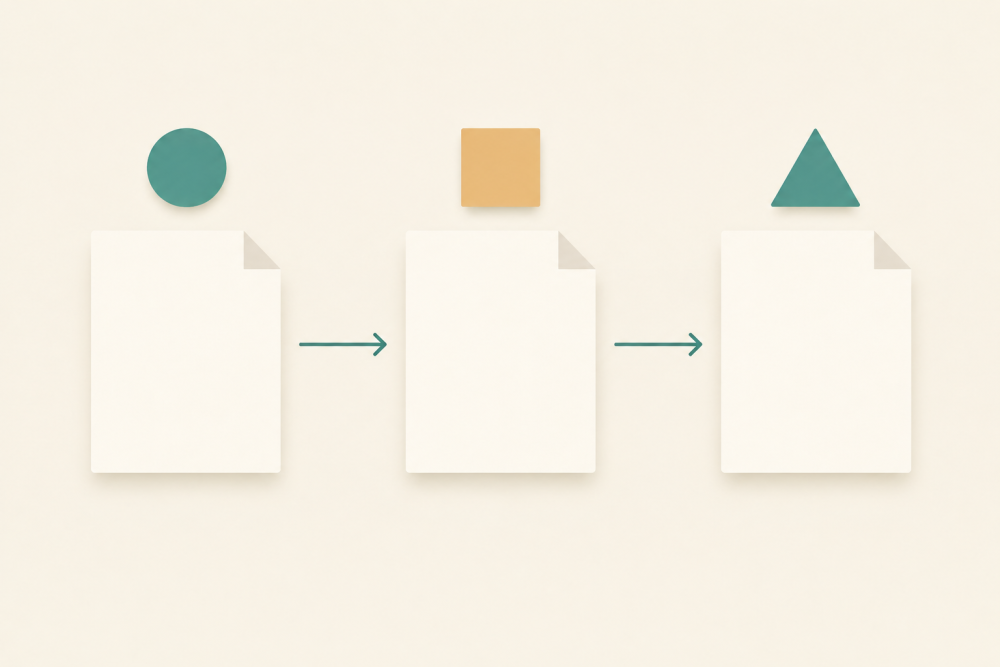
The labels are functions, not topics: request, policy, schedule, complaint, confirmation. An advertisement with a covering e-mail is a source plus a response; a notice with a timetable is a rule plus its application; a complaint with a reply is a claim plus a decision. A three-text set runs source, reaction, record.
| Set | Typical pairing | What the set tests |
|---|---|---|
| Two texts | request plus policy | whether the request is allowed |
| Two texts | notice plus schedule | which date survives |
| Three texts | advertisement, order, e-mail | what was actually bought |
| Three texts | policy, application, approval | who still has to act |
The label changes what you read. If the first text is a policy, the sentence you need is the exception; if it is a request, it is the condition attached to it.
Reading order: the stems first, then the text that names itself
Read the five stems before either text and sort them into two piles.
According to belongs in the first pile. Those items name their own document — according to the notice, according to the e-mail — and they can be answered without any cross-reference at all.
The second pile is everything else: what is suggested, what changed, who should act, what happens next. Those items need both documents and deserve the slow read.
Then read in the order the questions arrive, not the order the texts are printed. If three stems point at the second text, start there; in a triple set that is often the middle document, which reacts to the first and sets up the third.
Five worked questions on one simulated pair
The pair below is invented for this exercise, but the shape follows ETS's own sample papers, where a five-item set is introduced as two or three linked documents.
Text A: e-mail from the operations manager. It moves every induction session to the second-floor training room from 12 March, notes that the room seats twelve, and asks teams to write if they need another date. The clause that matters later is sessions with more than twelve attendees will run twice.
Text B: notice from building management. The north lift is out of service on 13 and 14 March, and staff are told to use the south lift or the stairs. Then one sentence that changes the first text: the second-floor training room will be closed on 14 March.
| Item | What it needs | The line that settles it |
|---|---|---|
| What is indicated about the induction sessions? | text A only | the move to the second floor from 12 March |
| Why will some sessions run twice? | text A only | the room seats twelve |
| What problem does the notice create? | both texts | the room closes on 14 March |
| Who should a team leader write to? | text A only | the operations manager |
| What will most likely happen to the 14 March session? | both texts | it moves again or changes room |
Three of those five items never need the second document. That is the correction most candidates need: a five-item set is not five cross-reference questions, but two or three single-document items plus two or three that need the relationship.

Why the answer is usually the amendment
In a two-text set the pair is built as a statement and a change: the first document sets a rule, a price, a date or a plan, and the second contradicts it, limits it or adds a condition. The answer to a cross-reference item is almost always that difference, which is why a fact repeated in both texts is rarely the key. When an option is stated plainly in both documents, treat it as setup and keep reading. The answer is the date that moved, the price that was raised, the room that closes on the day the first text sends people there.
The words that announce a cross-reference
Five signals do most of the work in these sets, and each one tells you what kind of sentence is coming.
regardingmarks the topic line, which is where the contradiction usually starts.persends you to a schedule, a rate or a policy that another text holds.as agreedrefers backwards, so the decision it points at is in the earlier document.unlessintroduces the exception, and the exception is very often the answer.subject toflags a condition that one of the other texts supplies.
Five minutes per set, and when to leave one
Twenty-five items in five sets is five items a set, so the linked sets get a minute an item and five minutes a set, with a six-minute ceiling this guide sets on any one set.
Three checkpoints make the budget visible. At two minutes the two or three single-document items should be answered; at four, the cross-reference items; at five, every item carries an answer, even a guess; at six you leave whatever is left.
The skip rule is one sentence: if you cannot point at the line that answers an item within forty-five seconds, mark it and move. A triple set that absorbs two normal sets is the most common way a Reading section is lost, and it always feels reasonable.
Rehearsing linked sets inside a toeic listening and reading practice test
Four weeks, one change a week: make the role map automatic before the clock is real.
- Week one: three linked sets, no timing. Write a one-word role above each text before reading a line.
- Week two: five questions in six minutes; log which item first needed the second text.
- Week three: five minutes a set, hard ceiling, all five answers marked whether or not they are certain.
- Week four: a full Part 7 under the section clock, compare the per-set times with week three, and change one thing only.
Reading is trained by reading; the explanation habit is trained out loud. HiBay's AI conversation practice can rehearse that: saying in one sentence why an answer is right, and hearing where the sentence goes vague.
Frequently asked questions
How many questions are in TOEIC Reading Part 7?
Part 7 carries 54 of the Reading section's 100 questions. ETS's score user guide divides them into 29 questions on ten single passages, two to four per passage, and 25 questions on five sets of double or triple passages, five per set. Part 7 is the last reading part, and all 100 questions share the same 75 minutes.
Should I read all the texts before answering Part 7?
No. Give each text a one-word role, read the five stems, then read the document each stem names. Reading both texts in full first costs sixty to ninety seconds a set and often returns a second copy of the context, because the second document usually restates the situation before it changes one detail.