
TOEIC Reading Parts 5, 6 and 7: A 75-Minute Time Budget That Survives the Last Passage
A 75-minute budget for TOEIC Reading Parts 5, 6 and 7, with the marks-per-item logic behind it, a two-pass rule for Part 5, the Part 6 sentence-insertion trap, and the skip rule that protects your last ten minutes. One timed TOEIC Listening and Reading practice test rehearsed this way is worth a third re-read of a textbook chapter.


On this page
If you finish the Listening section with time to spare and then lose the clock in Reading, the problem is rarely reading speed. The Reading section is three different tests sharing one 75-minute timer, and each one fails in its own way: Part 5 punishes hesitation, Part 6 punishes re-reading, and Part 7 punishes the one long passage you refused to leave. This guide sets a fixed budget for each part, a skip rule that protects your last ten minutes, and a rehearsal log that records where the time actually went.
The numbers here are ETS's, not folklore. The Reading section is 100 items in 75 minutes: Part 5 Incomplete Sentences with 30 items, Part 6 Text Completion with 16, and Part 7 Reading Comprehension with 54, of which 29 items sit on ten single texts and 25 sit on five sets of double or triple passages (TOEIC Listening and Reading Examinee Handbook, accessed 28 October 2026). Each item is worth one correct answer in the raw score, so a minute spent on one item is a minute taken from another. That exchange rate is the whole argument for a budget, and it is also the reason a timed TOEIC Listening and Reading practice test is worth more than a third re-read of a textbook chapter (About the TOEIC Listening and Reading Test, accessed 28 October 2026). Sit one before you change anything, and write down the clock.
Three Sections, One Clock
| Part | Task type | Items | Budget | Seconds per item |
|---|---|---|---|---|
| Part 5 | Incomplete Sentences | 30 | 10 minutes | 20 |
| Part 6 | Text Completion | 16 | 8 minutes | 30 |
| Part 7 | Reading Comprehension | 54 | 52 minutes | about 58 |
| Reserve | Transfer answers and one review pass | n/a | 5 minutes | n/a |
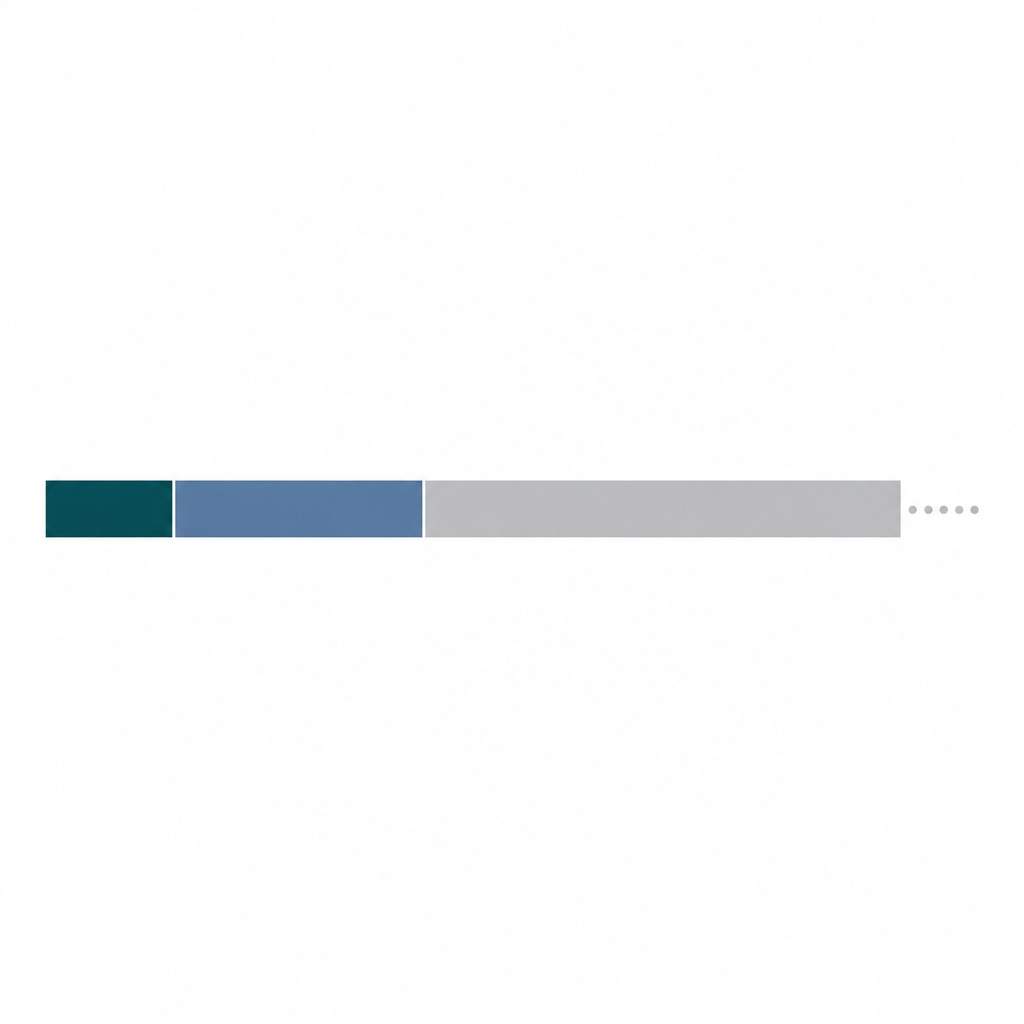
The budget is not a target to beat. It is a contract you make with the last page: Part 5 may not borrow from Part 6, and Part 7 may not borrow from the reserve. The reserve exists because transferring answers badly, or leaving four questions blank in the final thirty seconds, undoes more marks than any single item you could have solved with that time.
Part 5: Two Passes, Grammar First
Part 5 is thirty single sentences with one gap each, and it is the only part where an item can be settled without reading anything else. That makes it the one part where a pace rule, rather than a comprehension rule, does the work. Split the ten minutes in two.
First pass, seven minutes. Answer every item that grammar alone settles: word class, subject-verb agreement, the preposition a particular verb takes, the connector the logic of the sentence forces. If an item needs the sentence's meaning, put a dot beside the number and move on. Seven minutes for roughly twenty-two items is twenty seconds each, which is fast enough that you will not have time to talk yourself out of a correct answer.
Second pass, three minutes. Return to the dotted items and decide them on meaning instead of form. Two examples of the difference between the passes:
The invoice must reach us ___ the end of the month.—bysets a deadline anduntildescribes a state that continues, so the item is settled by the preposition pattern alone, in the first pass.The manager asked for a ___ explanation of the delay.—brief,shortandquickare all grammatical, so form decides nothing here; only the collocation that goes withexplanationnarrows it, and that is a second-pass decision.
The cost of ignoring the split is visible in most score reports: candidates who treat all thirty items as vocabulary questions spend forty seconds on the first six and reach item 130 with two minutes gone from Part 6.
Part 6: What a Blank Is Really Testing
Part 6 gives you four questions on one short text, four times over. The ETS sample form shows the shape plainly: questions 131 to 134 all refer to a single internal email about training sessions (TOEIC Listening and Reading sample test, accessed 28 October 2026). Two of those four blanks are grammar or collocation inside a sentence. One is usually a connector or a reference word. One is a whole sentence to insert, and that last type is where the minutes disappear.
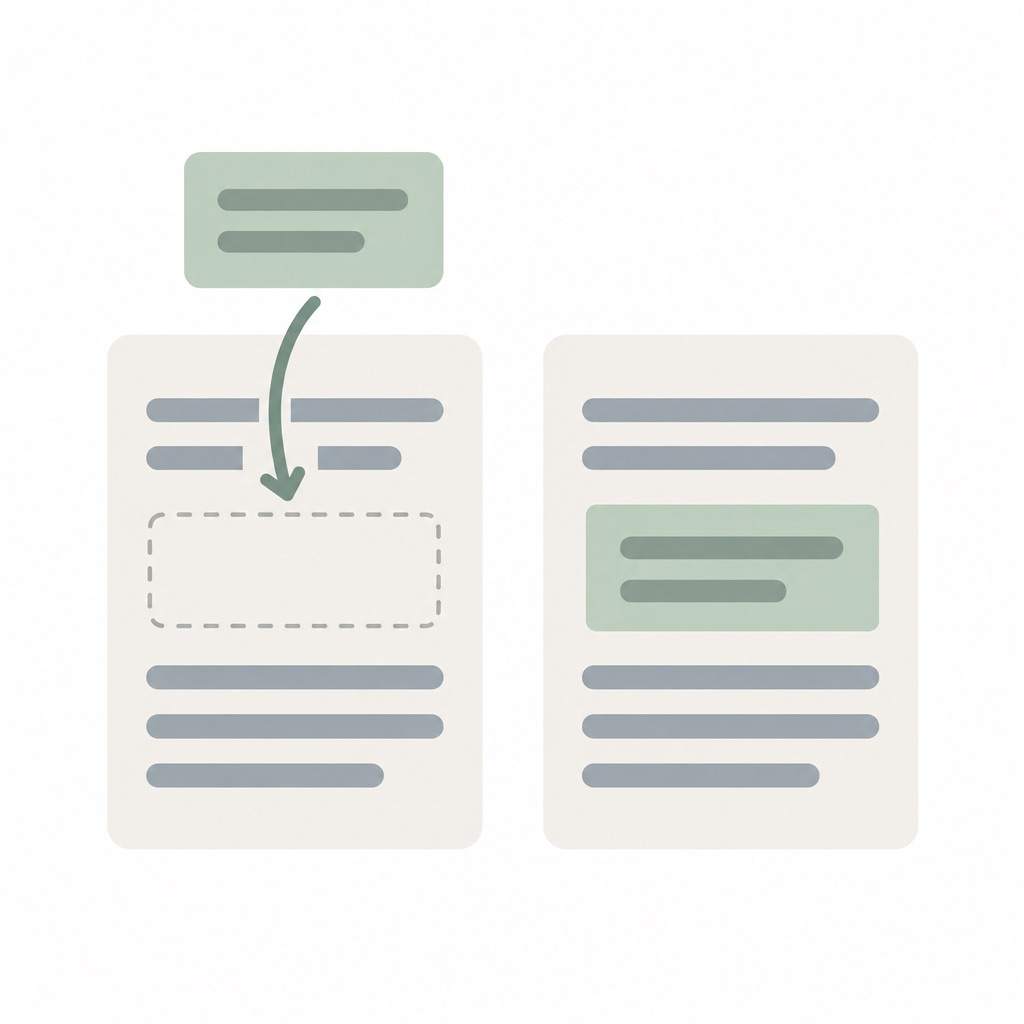
The insertion blank is not a comprehension question about the text. It is a question about the joint between two sentences, so the evidence sits in the sentence immediately before the gap and the sentence immediately after it, and nowhere else. Three checks settle almost every one:
- Read the sentence after the gap first. An opening such as
This,These,Such,HoweverorAs a resultneeds either something to point at or a direction to continue. - Ask what the gap must add. If the paragraph already establishes that the shipment is late, a sentence confirming that the shipment is late adds nothing, however fluent it sounds.
- Match the connector's direction rather than its tone.
In additionpromises a second point of the same kind;Insteadpromises a replacement for the first.
Here is the trap in its usual costume. The text reads: The warehouse will close for inventory on 3 November. ___ . Orders placed after 1 November will therefore be held until 6 November. A candidate sentence like The closure affects all regional depots as well. is fluent, relevant and wrong for this gap: it widens the scope of the closure and says nothing about orders, so the therefore in the next sentence has no cause to lean on. The sentence that fits names the delay itself. Reading the sentence after the blank before you read the options turns this from a judgement call into a check.
Part 7: The Skip Rule That Protects Your Last Ten Minutes
Part 7 is 54 items in 52 minutes: ten single texts carrying 29 items, and five sets of double or triple passages carrying 25. As a rate that is about 58 seconds an item, which is why this part is won by leaving things rather than by reading faster. Two rules carry most of the value.
- Any item you have not located after 45 seconds gets marked and left. You come back only if the clock still allows it.
- A five-item triple-passage set gets a hard ceiling of five minutes. At the ceiling, mark every remaining item, take the best available answer, and move.
The second rule matters more than the first, because the triple passages near the end are where a single set absorbs ten minutes and two questions. The last ten minutes of the section should contain no new reading at all: transfer every answer to the sheet, return to marked items you can settle in under a minute, and make sure that no question is left blank anywhere on the sheet.
A Rehearsal That Logs Where the Clock Went
A budget you never measured is a hope. One timed rehearsal turns it into data, and it takes one sitting rather than one month.
- Sit a full Reading section from a timed TOEIC Listening and Reading practice test: Parts 5 to 7, 75 minutes, no pauses, one sitting.
- Write the clock time at three points: when you finish Part 5, when you finish Part 6, and when you open the first triple passage.
- Beside every item you left, write how many seconds you spent on it before leaving it. Under 45 seconds means you left correctly; over a minute means the item was a trap rather than a hard question.
- Compare the three stamps with the budget above. One part will be over budget, and that single part is the only thing worth changing next attempt.
- Change one variable at a time — the Part 5 split, the Part 7 ceiling, or the reserve — and re-run the same test. Two changes at once and you will not know which one moved the clock.
Frequently Asked Questions
How much time should I spend on each TOEIC Reading part?
Ten minutes on Part 5, eight on Part 6, fifty-two on Part 7, and five minutes in reserve for transferring answers and one review pass. Those four numbers add to 75. The reserve is not spare time: it is the only part of the budget that protects marks you have already earned.
Is it better to guess or leave a TOEIC Reading item blank?
Answer it. The ETS directions encourage you to answer as many questions as possible within the time allowed, and a blank earns nothing while a guess can still be right. On the items you cannot solve, eliminate the two options you know are wrong before you mark, and record nothing else about them.
Can I raise my TOEIC Reading score in a month?
What a month changes is not your vocabulary but your distribution of time: you can move from losing Part 7 to reaching it, and that alone is worth several items. What a month does not change is comprehension speed on a dense triple passage, so expect the gain to come from the parts you currently do not reach rather than from the parts you already find easy.