
How to Order Food in English When the Wrong Dish Arrives: Fixing a Restaurant Order
What to say when the wrong dish arrives, the food is cold or the bill is wrong: four repair dialogues with the server's lines, and the eight sentences that make how to order food in English easier when it goes wrong.

On this page
The plate lands in front of you, the table goes quiet, and it is not what you ordered. The vocabulary you rehearsed for how to order food in English covered the calm version of the moment, not the thirty seconds after it, and those seconds decide whether the meal recovers. This is the repair.
Why the plate lands wrong thirty seconds before you react
Two things fail together. The menu words disappear, because you learned them as names on a page rather than as things you can say out loud. And most learners own one repair sentence, which names the fault and leaves the fix to be guessed: Sorry, this isn't what I ordered. The guess is where meals go wrong, because a server who hears only a fault picks the cheapest option still open to them.
The three-move repair: problem, fix, answer
Every repair that works has three moves, in this order.
| Move | What you say |
|---|---|
| 1. Name the problem | This is the lamb, but I ordered the chicken. |
| 2. Name the fix | Could you remake it, or take it off the bill? |
| 3. Accept the offer | That works — I'll wait. Thank you. |
The second move is the one people skip, and it decides how fast the answer comes. Describing a fault invites an apology; naming a fix invites a decision. Two outcomes you already accept turn a complaint into a negotiation: the server stops defending the kitchen and starts choosing.
Wrong dish, cold main, missing side: three dialogues
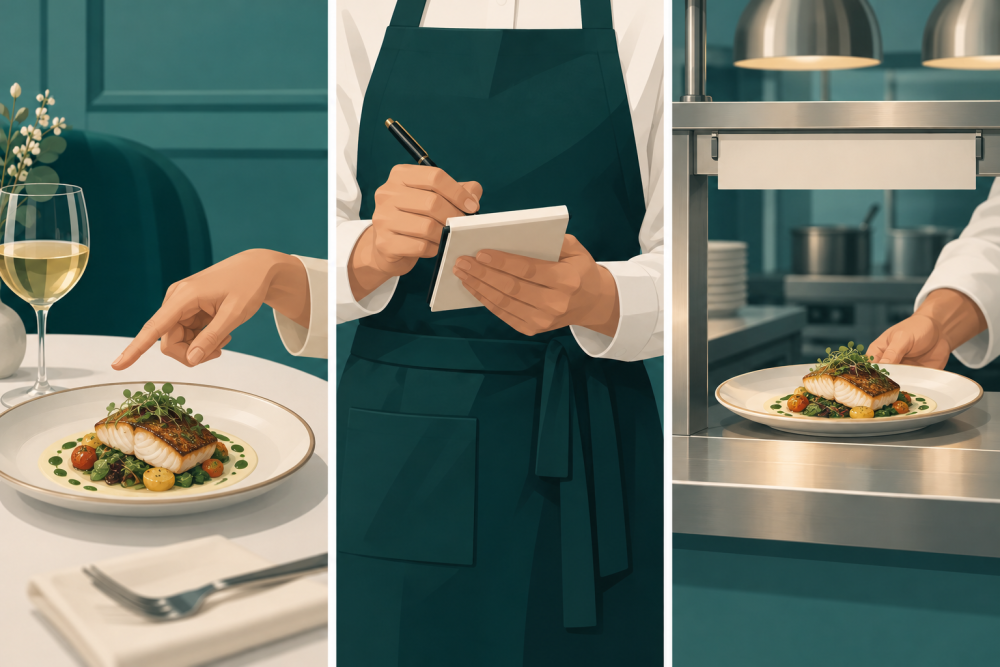
Wrong dish: two facts, then the fix.
Guest: Sorry — this looks like the lamb, but I ordered the chicken.Server: I'm sorry. Let me check the ticket.Guest: Thank you. Could you remake it, or take it off the bill?
Cold food is the fault nobody argues with, so keep to the clock.
Guest: Sorry to stop you — the soup is cold in the middle. Could you heat it up, or bring a fresh one?Server: Of course. I'll bring a new one out.Guest: Thank you. If it comes back cold, could we take it off the bill?
A missing side is an absence, not an error: name it.
Guest: Hi — the burger came without the fries. Could you bring them, or take it off the bill?Server: Sorry about that. I'll bring them straight out.Guest: Thanks. If it's more than five minutes, the bill is easier.
When the fix is slow: a time, then something in return
Two sentences keep a slow repair from swallowing the evening. The first asks for a number, because a number can be checked: How long will the new one take? The second protects the table: Could you bring everyone else's food first?
If the number is too long, say so before the kitchen starts: That's too long for us — could you take it off the bill instead?
Asking for something in return works the same way: Since the main is being remade, could you take the dessert off the bill? Ask once, name one item, accept the answer. Consumer guidance names the same two remedies, a redo or a price reduction, and notes a repeat is not always reasonable when it takes too long (Citizens Advice; ACCC; accessed 2 November 2026).
Speaking to a manager without turning it into an accusation
Escalate for a reason, not for volume: a bill that is still wrong, a fix that failed twice, a server who has stopped answering. The request is one sentence, and it separates the person from the problem: Could I speak to the manager, please? It's about the order, not about you.
Then stay factual, in five parts: the time, what you ordered, what arrived, what you have already asked for, and what you want now.
The bill: check the items, split it, decide the tip
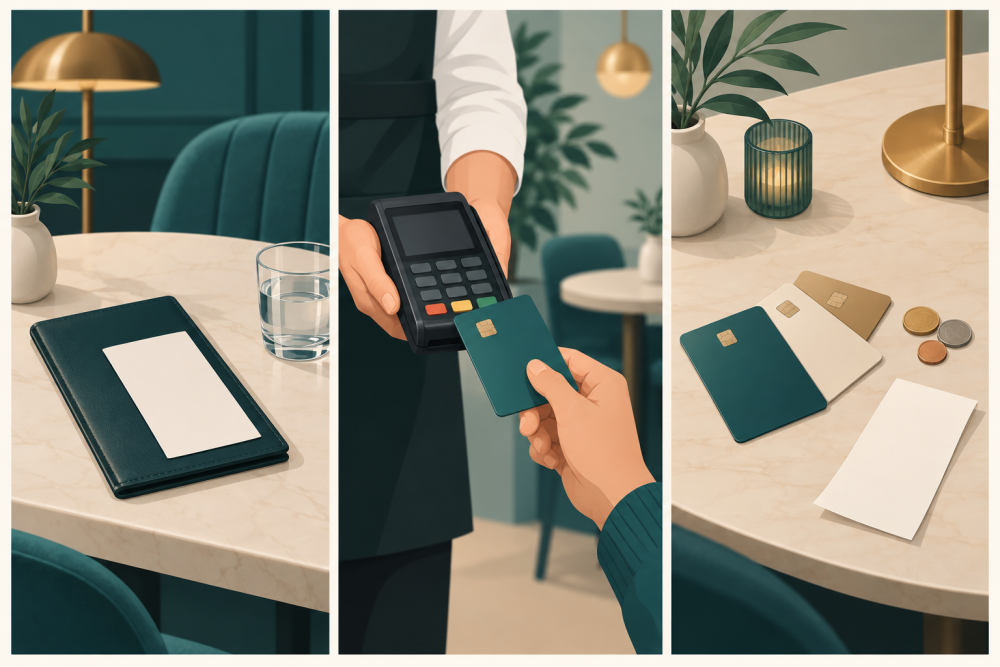
Wrong bills are common and rarely deliberate: a dish from the next table, a drink entered twice, a charge nobody mentioned.
Guest: Sorry — we didn't order a second bottle of wine. Could you take that line off?Server: Let me check with the bar.Guest: Thank you. Everything else is right.
Splitting has two versions: Could we pay separately? means each pays for what they had, while Could we split it three ways? means equal shares. Not every place will put a bill across several cards, so ask early. For payment, Do you take card? is enough.
Conventions are local. In the United Kingdom, tips and service charges have had to be passed on to workers without deductions since 1 October 2024 (GOV.UK). In Japan, tipping in restaurants, bars, cafes, taxis and hotels is not common, and a service charge is usually on the bill (JNTO). In the United States, a tip is a discretionary payment that counts as the worker's income (IRS). All three accessed 2 November 2026. Find the service charge first.
Takeaway and delivery: the same three moves, without a table
On the phone, the opening line carries the first move: Hi, I collected an order twenty minutes ago — the bag is missing one of the two mains. Give the order number, then name the fix: Could you make it now for collection, or refund that item?
Apps add a step: the request usually has to be made inside the app before the restaurant acts: One of two mains was missing and the seal was intact. Please refund this item or send a replacement. Photograph the bag before you unpack it.
A pocket card: eight sentences, and how to order food in English with confidence next time
These eight cover the whole repair. Put them in your notes and say them twice.
This isn't what I ordered — I asked for the chicken.Could you remake it, or take it off the bill?Sorry, this is cold in the middle.How long will the new one take?Could you bring everyone else's food first?Could I speak to the manager, please?Could we pay separately?Could you take this line off the bill?
Rehearse in four minutes. Cover the guest lines above and rebuild them from the situation: wrong dish, cold main, missing side. Answer your own lines as the server, out loud, apology included: the half you have never practised is the half you will hear. Then rebuild the card from memory.
Frequently asked questions
What does a full order-food conversation in English sound like?
A full exchange from the door to the bill runs about six turns: a table, the order, one follow-up about drinks or how you want the dish cooked, a check-back when the food arrives, the bill, and the payment. The other turns are shorter than learners expect, and Just water, please is a complete answer.
How do I ask for the manager without sounding like a complaint?
Ask about the order, not about the person: Could I speak to the manager, please? It's about the order, not about you. Then give the five facts in order and stop. Managers hear complaints all evening; a short factual summary is the unusual version that gets a decision.