
Minimal Pairs: A Ten-Minute Self-Test for the Word Pairs People Mishear
A minimal pair is two words that differ by one sound. Test twenty English pairs with one real listener in ten minutes, then sort a failure into sound, rhythm, recording or vocabulary before you practise.
On this page
A minimal pair is two words that differ by exactly one sound, and a ten-minute test with one real listener tells you which pairs your own speech puts at risk. This guide gives twenty pairs to test, the test itself, and a rule for deciding whether the problem is the sound, the speed or the recording.
What a Minimal Pair Is, and What It Is Not
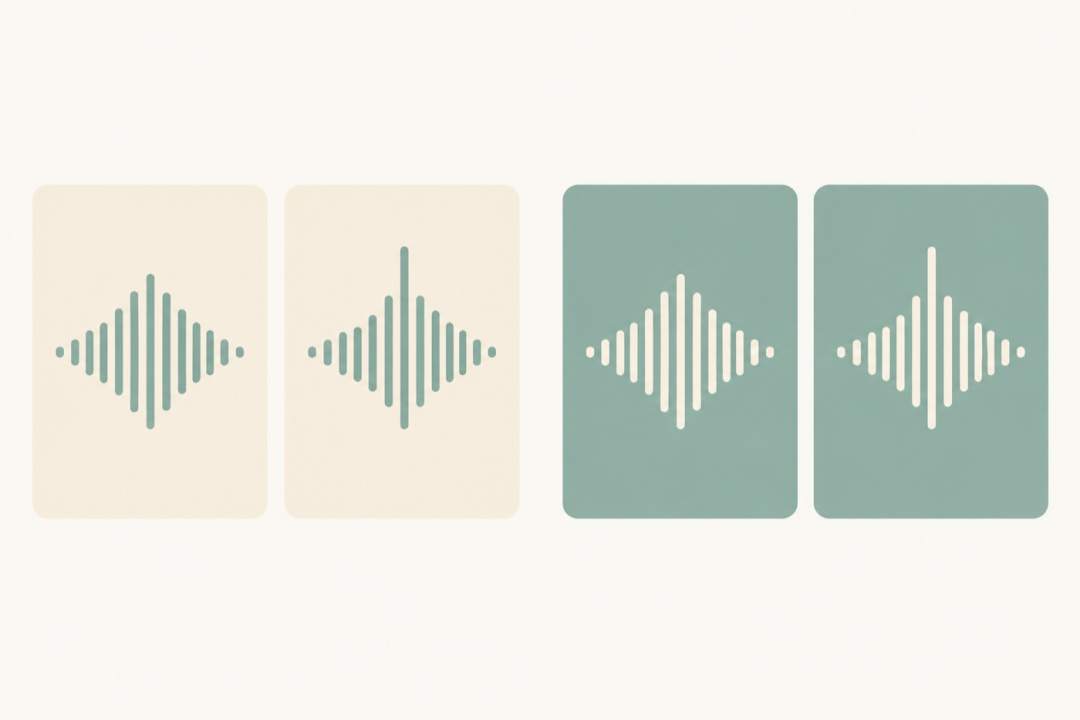
The British Council's teaching glossary defines a minimal pair as a pair of words that only have one sound different, used to contrast sounds, with but and bat as the example (Minimal pair, accessed 28 October 2026). The condition is about sound, not spelling: light and right differ in one consonant, while through and rough look similar and share no vowel at all.
That definition gives your practice a shape. If two words differ by one sound, then a listener who hears the wrong word has told you something specific about one sound in one place. You do not need a phonemic chart to use it; you need a listener and two words.
Why a Pair That Fails for Another Learner May Pass for You
Which sounds are hard depends on the sound system you already speak, so a list of "typical mistakes" written for another first language is a poor use of your practice time. The British Council classroom activity for this problem starts by testing whether the learner can hear the contrast at all before drilling it (Sound discrimination, accessed 28 October 2026), and that order is the one worth copying: hear it, then say it, then use it.
Your own list of failing pairs, produced below, is worth more than any published list of errors. Test first; practise second.
Twenty Pairs to Test, Grouped by What Changes
Ten pairs below turn on a vowel, eight on a consonant and two on the ending of a word. The pairs are drawn from the contrast lists British Council materials use for classroom listening work (Sound Bingo, accessed 28 October 2026) and from dictionary entries; the meanings are the ordinary ones.
| Pair | The one sound that changes | What changes in meaning |
|---|---|---|
| ship / sheep | short i sound → long ee sound | a vessel / the animal |
| live / leave | short i → long ee | to reside / to go away |
| full / fool | short u → long oo | filled / a silly person |
| pull / pool | short u → long oo | to drag / water to swim in |
| bad / bed | a as in cat → e as in bed | not good / furniture for sleeping |
| pen / pan | e → a | writing tool / cooking dish |
| cat / cut | a → u | the animal / to slice |
| hut / heart | u → ar | small building / the organ |
| walk / work | aw → er | to move on foot / your job |
| coat / caught | long o → aw | clothing / past tense of catch |
| light / right | l → r | not heavy or a lamp / correct, or the opposite of left |
| rice / lice | r → l | grain / insects |
| very / wary | v → w | to a great degree / careful |
| vest / west | v → w | garment / direction |
| thin / tin | th → t | not thick / metal container |
| three / tree | th → t | the number / the plant |
| wash / watch | sh → ch | to clean with water / to look at |
| zoo / shoe | z → sh | place with animals / footwear |
| bag / back | g → k | container / the rear part |
| hard / heart | d → t | difficult / the organ |
Two of these pairs change a grammatical signal rather than a word: walk against walked, and bag against bags. Add them as a third column of your own if a listener keeps losing your past tense or your plural.
The Ten-Minute Self-Test
Testing all twenty pairs in one sitting produces fatigue, not data. Pick ten and run this.
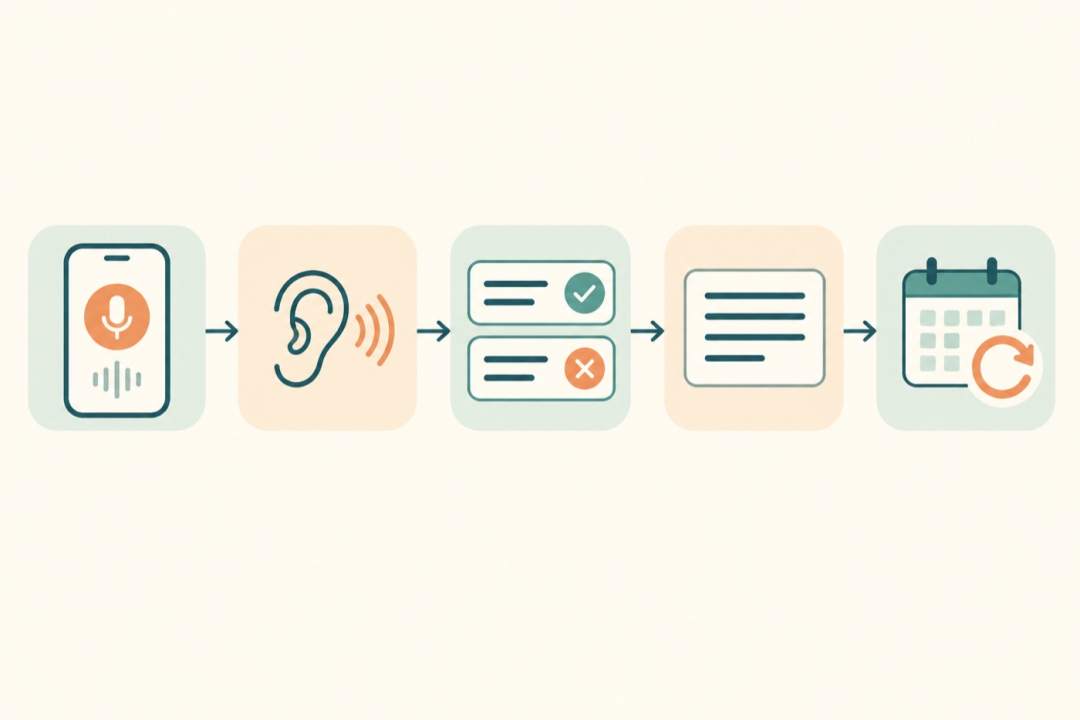
- Choose ten pairs from the table — the ones you suspect, not the ones someone else found hard.
- Write one short sentence for each word, so that the two sentences differ in meaning as well as sound: I need to ship this today against The sheep is in the field.
- Record all ten sentences in one take, at your normal speed, with the phone on the desk rather than close to your mouth.
- Play it once to one real person and ask only "which one did you hear?" A speech-to-text tool can act as a second opinion, but a transcript is a machine's decision, not a listener's understanding.
- Mark pass or fail per pair, then re-test each failing pair once, later the same day, using a longer sentence.
Reading the Result Honestly
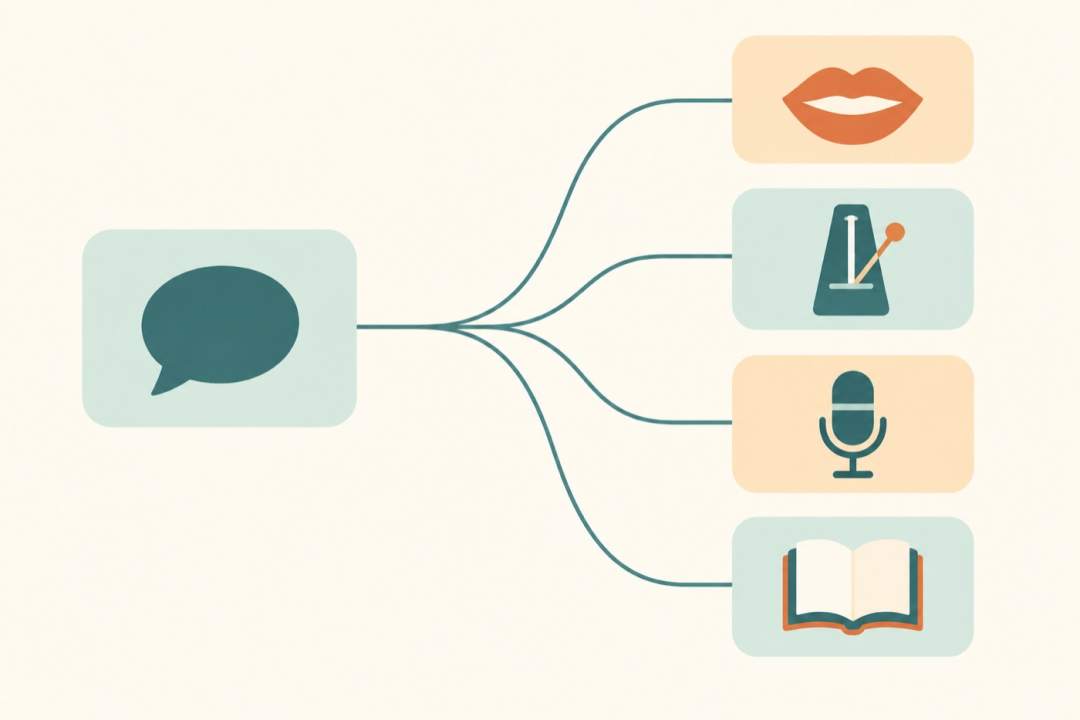
A failure is only a pronunciation target if it survives a change of conditions. Sort what you heard into these four cases before you spend weeks drilling.
| What happened | What it probably is | What to do next |
|---|---|---|
| The pair fails in both the short and the longer sentence | A sound contrast your listener cannot yet separate | Drill this pair, in sentences, two to three pairs maximum |
| It fails only in the longer, faster sentence | Rhythm, linking or word endings, not one sound | Slow the sentence, mark the stress, then rebuild speed |
| The listener cannot tell when you replay the same recording | Recording quality, distance or background noise | Re-record somewhere quiet and re-test before drawing conclusions |
| The listener hears the word but hesitates about your meaning | Vocabulary or collocation, not pronunciation | Practise the phrase you actually need, not the sound |
A Three-Sentence Drill for the Pairs You Failed
Keep the drill small enough to finish. Two or three pairs, three sentences each, is a full session.
- Slow pair reading. Say each word three times, with one beat of silence between them, and check that both vowels or consonants are still distinct when you slow down.
- Contrast sentences. Alternate the two sentences and have your listener point at the word they heard. This is the step that turns hearing a difference into producing one.
- A changed context re-test. One week later, put the same two words into different sentences and repeat the test in step 4 above. A pair that passes in new sentences has moved into your ordinary speech.
When a Pronunciation App Helps, and What Its Score Cannot Tell You
An app is useful for the boring parts: a stable reference recording, a slow-down control, and a place to keep your attempts. If you arrive here looking for an English pronunciation app free of a subscription, the feature list that matters for this test is exactly that short one. The British Council's guidance on recording yourself makes the same point about keeping an identifiable reference to compare against (Record yourself, accessed 28 October 2026).
What a score cannot do is stand in for a listener. A speech-to-text result shows what a recogniser produced; a mismatch may come from your delivery, the microphone or the recogniser itself. The HiBay app description states that it gives feedback on pronunciation, grammar and vocabulary — that describes a feature, not a promise that a given pair will stop being misheard for you.
Use the app to store your own pass/fail table and your recordings, and use people to decide what belongs on it.
Frequently Asked Questions
Which minimal pairs should I test first?
Start with the pairs your everyday speech already contains: names of people and places, numbers, and the words in your job. Test ten of those, and add vowel pairs such as ship and sheep only if they come up in the sentences you actually have to say. A pair that never appears in your speech is not your priority, however famous it is in textbooks.
Can a phone recording show a real pronunciation problem?
A phone recording can show a difference between two of your own attempts, and it can preserve a failure for you to listen to again. It cannot tell you what a person understood, because the recording does not include the listener. Treat the recording as the evidence you replay, and the listener as the evidence you act on.
How long should I practise one pair before re-testing?
One week, with two or three short sessions inside it, is enough to tell whether the pair is improving. If it still fails in new sentences after that, check whether the failure is really the sound: a pair that only fails at speed is a rhythm and ending problem, and drilling the isolated sound will not fix it.