
IELTS Listening Tips to Reach Band 8
Band 8 in IELTS Listening comes from a routine rather than a talent: one recording played once, forty questions, and ten minutes to transfer answers. These ielts listening tips for band 9 cover the official test format, the mark ranges behind each band, and a twenty-minute review loop worth running after every practice test.


On this page
Band 8 in IELTS Listening rarely comes from a gift for languages. It comes from a routine: one recording played once, forty questions, ten minutes to move answers onto a sheet, and a small set of decisions that quietly decide marks. The ielts listening tips for band 9 on this page are the ones that move a raw score out of 40, and most of them are about how you practise rather than how much.
Everything about the test below is taken from the British Council and official IELTS pages linked in the text, all read on 27 October 2026. This page reports no personal score, ranks no website, and promises no band.
What the Listening Paper Rewards
The British Council's Listening section page sets out four sections of ten questions each, forty questions in total and one mark for every correct answer, and names what each section holds: Part 1 a social conversation, Part 2 a social monologue, Part 3 an educational or training conversation and Part 4 an academic lecture. The same page states that the Listening section is identical for IELTS Academic and IELTS General Training, so your choice of test changes nothing in this half of the exam.
The free online Listening practice tests add the working details. The test takes about thirty minutes; in the paper-based test you are then given ten minutes to copy your answers onto the answer sheet; you write your answers on the question paper while the audio plays and hand that paper in at the end. Candidates are told to move quickly between the four parts so the run feels like the real thing.
The British Council's Listening pages group the questions into six task types, among them choosing the correct option from three, deciding which statements are true, labelling a visual with information from the recording, and completing a summary, notes, table or flow chart. Two expert tips printed on the same page are worth copying into your own routine: make notes as you go, because the audio is not replayed, and listen for signpost words such as "firstly" or "however", which usually mark the start of the next point.
Work Backwards From the Band You Need
IELTS scoring in detail publishes the average number of marks scored at different levels in Listening: Band 5 at 16 marks out of 40, Band 6 at 23, Band 7 at 30 and Band 8 at 35, with the caveat that the precise number needed "will vary slightly from test version to test version". Two consequences are easy to miss. The step from Band 7 to Band 8 is five marks, the same size as the step from Band 5 to Band 6, so one section lost to careless spelling can hold a strong listener at 7. And the published list stops at Band 8, which means no official mark figure is attached to Band 9 at all; the practical target is the top of the published range held with a margin, not an unpublished number.
The same page supplies the wording behind the levels: Band 9 is "Expert", Band 8 is "Very good" and Band 7 is "Good". The British Council's assessment page describes those bands in user terms, with the Band 8 row promising a full operational command of the language and use of English that is appropriate, accurate and fluent, while Band 7 allows occasional inaccuracies and misunderstandings. Listening is marked on correct answers alone, so those descriptions reach this section through the raw score rather than through an examiner's impression of you.
That arithmetic is worth running once on your own numbers, because section scores travel. Both official pages give the overall band as the average of the four section scores rounded to the nearest half band, and the IELTS scoring page adds the rule behind the rounding: an average ending in .25 rounds up to the next half band, while one ending in .75 rounds up to the next whole band. A Listening score two half-bands above your weakest section changes the total that a university sees.
Three Habits That Raise a Raw Score
Write while you listen, and treat the question paper as your working answer sheet. The instructions for the transfer are explicit, and the examiners' page notes that spelling is considered when your answers are marked but capitalisation is not. That combination rewards a short, unambiguous form written on the question paper the first time you hear it, copied once, carefully, during the transfer minutes.
Answer every item, including the ones you believe you have already lost. Wrong answers are disregarded and only correct answers score, so a guessed plural costs nothing while an empty box can never be recovered. The British Council's preparation page makes the related warning about word limits concrete: if a question says write no more than three words, an answer of four or more words is marked wrong even when the content is factually correct. Reading the instruction before the audio starts is part of listening.
Expect the speaker to change their mind. The same page warns that a speaker may give an answer and then change the decision, or slip a negative into a sentence, and it advises listening for meaning rather than for isolated words. Two lines worth rehearsing with a partner are the correction Take the second turning on the left and follow it past the library. and the confirmation question Sorry, did you say fourteen or forty?. Both patterns reward a listener who waits half a second for the sentence to end before writing anything down.
A Review Loop That Beats More Practice Tests
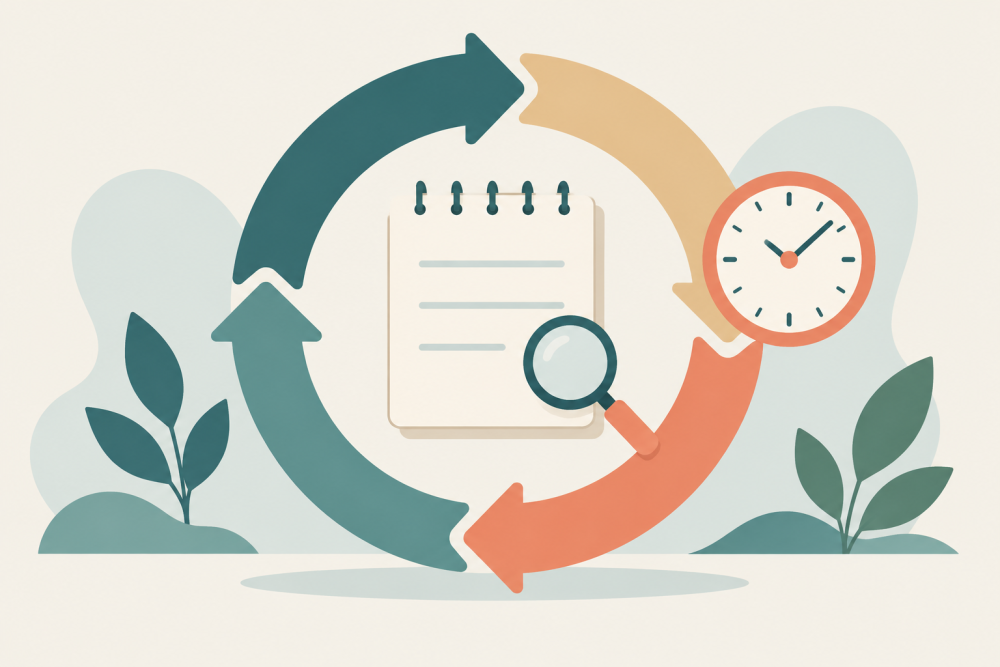
Most candidates spend their time on new tests and almost none on the answers they already hold. Twenty minutes of review after each attempt is usually the cheapest source of marks.
Mark every item and count the raw score first, because that single number is the only fair comparison between two attempts. Then read the answer key for the items you got wrong and ask a narrow question about each one: was the missing word a plural, a number, a place name, or a time? Grouping errors by type turns a disappointing score into a short list of habits to change, and it shows you which of the six task types is really costing you marks.
Return to the audio only for the two or three items that still make no sense, and slow those down instead of replaying the whole recording. Keep one line per attempt in a log: the date, the raw score, and the two error types that appeared most often. After three attempts one type usually repeats, and that one is worth a week of attention.
There is a limit to how often a test can be reused. Redoing a test you have already marked measures your memory of the answers rather than your listening, so rotate through different official sets and keep repetition for short sections that you play slowly to catch exact wording.
Practice Material Worth Your Time
The British Council practice tests provide two complete Listening tests, each presented across four web pages, with the question paper and a blank answer sheet to download before you start and the answers published afterwards. The official IELTS sample test questions page holds a further set covering all four skills, which is useful once the first one feels familiar. If you want the timed-run routine written out step by step, this guide to a free IELTS Listening practice test online explains how to set one of those sets up at home and how to mark it once the audio stops.
For the days when you are away from a desk, the HiBay App Store listing describes the app's IELTS preparation tools as including listening practice, review of your writing essays and a mock speaking test, alongside conversation scenarios with AI partners. Read any store listing the way it should be read: as the developer describing the product, not as an independent measurement of it. If the speaking test is also on your list, an IELTS Speaking mock test covers how that section is run and scored.
Frequently Asked Questions
How can I improve my IELTS Listening score to Band 8?
Start from the mark range rather than from a feeling about your listening. The official scoring page puts Band 8 at about 35 marks out of 40, so the question is narrow: which handful of items do you lose, and why? Review every practice test in the same order — mark and count the raw score, read the key for the wrong items, group them by type, then rehearse that one type for a week. Numbers, spelled-out names and self-corrections account for more lost marks than difficult vocabulary does.
how to practice ielts listening at home
You need official audio, a clock and a blank answer sheet. Download the question paper and answer sheet from the British Council's free practice tests, play the audio once without pausing, and transfer your answers in a single ten-minute block at the end. Sit away from a screen so you write on paper as you listen, wear headphones, and keep the phone in another room. Save the noisiest hour of your home for review and transcript reading; keep the timed run for the quietest half hour, because a test taken in comfortable conditions measures your comfort rather than your listening.
how to apply for a homestay ielts listening
A homestay enquiry appears in Part 1 of the Listening test, and the British Council describes that part as a transactional conversation about an everyday situation, where you are asked for specific details such as names, dates, times, prices or addresses. The skill tested is not knowledge of how to book a room; it is catching and writing down what the speaker says. Treat it like any Part 1 recording: revise accommodation and meal vocabulary, practise writing names as they are spelled out letter by letter, and copy the exact form the answer key uses.
how to score 9 in ielts listening
Nobody can promise a 9, and the official scoring page publishes no mark figure for it — its Listening table stops at Band 8 at 35 marks. What you can control is the shape of your mistakes: a 9 needs a raw score near the top of the range with almost no avoidable losses. That means the boring errors go first. Drill spelling until weekdays, prices and postcodes are automatic, keep a log, and refuse to repeat an error type twice.
how to improve listening skills in english for ielts
General listening and IELTS Listening are two projects that should share one diet. For the test, use the official materials, because the accents, pacing and task types are the real thing. Outside the test, listen often rather than intensely: fifteen minutes of English audio that interests you, with subtitles used only to check what you missed, builds tolerance for fast natural speech in a way that one weekly test cannot. Close the loop by summarising a short clip from memory, then checking it against the transcript.
how to practice listening for ielts
Use three settings deliberately. The timed setting is a full official test: audio played once, no pausing, ten minutes to transfer answers at the end. The diagnostic setting is the review, where you count the score and label each error by type. The slow setting is for two or three hard items, where you replay a short stretch and find the exact sentence that carries the answer. Rotate the sets you use, because a test you remember measures memory rather than listening, and keep one log line per attempt.