
IELTS Listening: What to Do in the Three Seconds After You Miss an Answer
One missed answer costs more than one mark, and the recoverable part is a three-second decision. This guide gives the write-look-wait rule, the words that signal a new item, a worked minute of a Part 3 conversation, and a drill you can run inside an IELTS Listening mock test with answers.


On this page
Question 24 has gone past. You heard a number and were not sure whether it belonged to the deposit or the coach fare, and by the time you decided, the conversation had moved to the deadline for the consent forms. Now you have two problems: the mark you lost, and the next one.
The second is the expensive mistake, and nobody practises it, because it happens while you are not listening. What follows is a rule for abandoning an item, a way back in, and a drill that makes recovery automatic.
Why One Missed Answer Costs Three
Three is the usual shape of the loss, not a fixed price; only the first part is unavoidable.
The first loss is the item: you were in the right place, heard the answer begin, and did not commit. The second is the sentence you spend going back for it. Replaying the last eight seconds feels like listening, but it runs in your head while the live audio keeps going, and the format is explicit that the questions follow the order of the information in the recording, so nothing brings question 24 back. The third is the panic: two items behind, you read three stems at once and finish the part a question out of step.
| What you do | Which mark it costs | Whether it comes back |
|---|---|---|
| hear the answer and fail to commit | question 24 | only by a guess at the end |
| replay the last sentence | question 25 | never, the audio has moved on |
| guess while still behind | questions 25 and 26 | never, those boxes stay unvisited |
The Three-Second Rule: Write, Look, Wait
Three seconds is not arbitrary: the gap between answers is usually a sentence, sometimes two, so the budget is about the length of the sentence you have just failed to use.
- Write a placeholder, not a word:
?in the gap on paper, a single?typed into the box on screen. - Look at the next stem, not the last thing you heard. If question 25 reads
deadline for consent forms, that phrase is now the only thing you are listening for. - Wait for the marker that starts the next item, and take that answer as if the part had just begun.
Order matters more than speed: writing the placeholder while still reading backwards is only step one, and looking ahead without it leaves you guessing which boxes are empty.
Where the Recording Lets You Back In
Recovery needs a landing place, and it is printed on your paper: because answers arrive in the order of the questions, the next unanswered stem says what the next answer is about before you hear a word. Do not wait for the question number; the recording does not read your paper aloud.
| What you hear | What it signals | What to do |
|---|---|---|
Right, the second thing is... | a new item starts | read the next stem while it is said |
Now, about the... | a topic shift inside the part | take the next noun as your subject |
| a new voice | a turn change in a conversation | expect the answer from the new speaker |
Sorry, no, I meant... | a correction, not a new item | stay, the answer is still this question |
So, just to confirm... | a repetition for confirmation | stay, a second hearing of the answer |
Markers are not words to hunt for: Right and so appear everywhere. The reliable signal is a change of topic just after a stem you have read, which is why step two comes before step three.
A Worked Minute: Question 24 Goes Past
The exchange below was written for this article, so no real test material is reproduced. Question 24 asks for the deposit per student; question 25 asks for the deadline for the consent forms.
TUTOR: The deposit is forty pounds a head, which covers the coach and the entrance fee.
STUDENT: And when do the consent forms have to be back?
TUTOR: The fourteenth of March. That is the deadline for the forms.
A candidate applying the rule hears forty pounds a head, cannot commit, writes ?, and is reading question 25 while the tutor is still on the deposit. The student's question names the topic almost word for word, so the fourteenth of March lands in a slot already waiting. A candidate chasing question 24 hears it as background noise and loses the second mark too.
The re-entry came from the student, not the speaker giving the answer: in a conversation that person often announces what comes next. The wording matched the stem here; in a lecture, listen for the idea.
Guess Late, Not Now: What Goes in the Placeholder
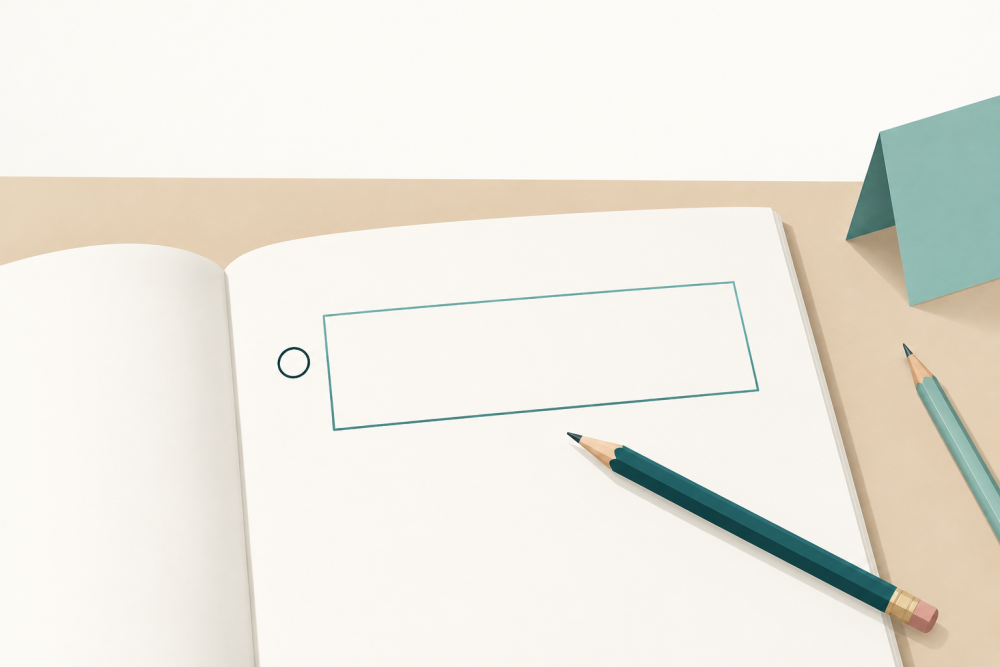
A placeholder has one job: to tell your future self that the box is empty on purpose. It is not a guess.
- On paper, write
?in the gap and circle the question number in the margin. - On screen, type a single
?so the row is easy to find again. - Never write a half-heard word: a wrong word looks like a decision, and you will not revisit it.
Then leave it. The recording ends and you get a short check window outside the audio: two minutes on computer delivery, ten on paper, where it is still offered. That is when you guess, with the stem, the instruction and the gap's grammar in front of you.
Guessing there is free: each correct answer is worth one mark, and IDP's guidance states there is no negative marking, so a guess has an upside and no downside while a blank cannot score. What a guess must still do is fit the gap, because spelling and grammar errors lose marks even when the idea is right.
A gap after the ______ takes a singular noun, by ______ a time or a method, ______ students a number, two ______ a plural.
When the instruction says NO MORE THAN TWO WORDS AND/OR A NUMBER, a recovered answer of three words scores nothing, so shorten it at the end. accomodation scores nothing either, though it is the right word badly spelled.
The One Exception: When the Answer Comes Back
One situation makes staying correct: the speaker corrects themselves, or repeats the figure for confirmation, in the same turn.
Sorry, not forty, thirty-five.
So thirty-five pounds each, then? Yes, thirty-five.
The test is one question: are the words you are waiting for still about the item you missed? If they are, stay one more clause. If the next stem's topic has started, leave, because you are chasing rather than waiting. A correction sits inside the same answer zone and costs nothing extra; a chase costs a whole item.
Rehearsing Recovery in an IELTS Listening Mock Test with Answers
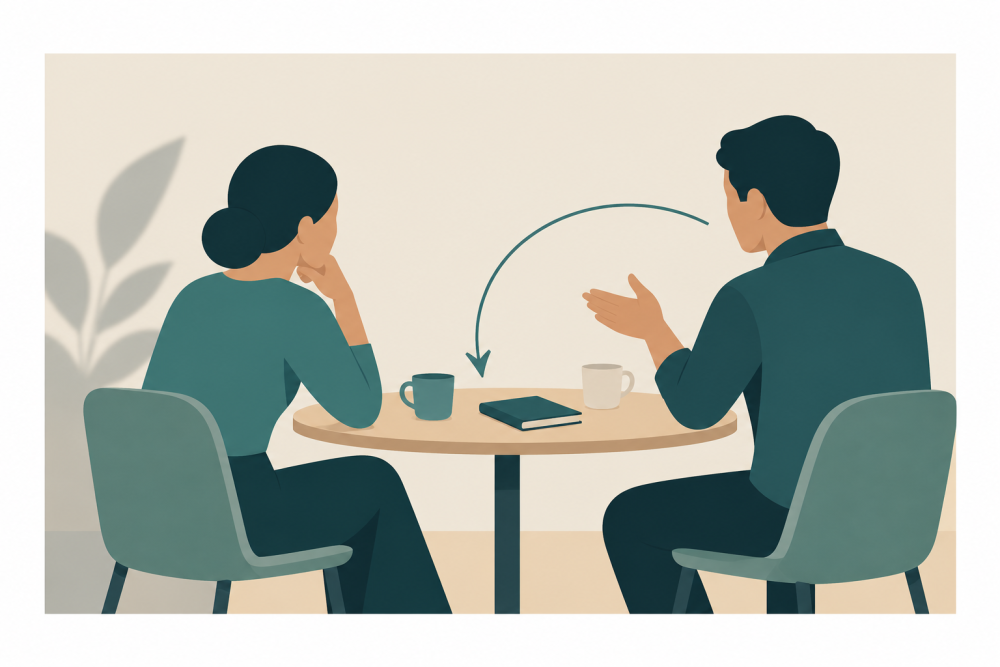
A recovery drill works only if the abandonment is deliberate. Most candidates never practise it, because a mock is where they try to answer everything, which produces the three-mark loss. Use any IELTS Listening mock test with answers, provided the recording plays once and the key is separate.
- Sit the paper as a test: four parts, forty questions, no pausing.
- Before you start, choose one item per part as your abandon target and mark it now.
- When its zone arrives, do not answer it. Write
?, read the next stem while the marker is spoken, and take the next answer. - Mark the paper and count one number: how many items immediately after your abandoned ones are correct. That measures recovery; the band score does not.
When the number is stable across four runs, abandon two items in the same part, because the consecutive case is where the panic lives.
The Miss Log That Changes Your Next Run
Keep five columns per lost item: question number, part, item type, what broke, and whether the next item was right. Item type is one of form completion, table completion, map labelling, matching or multiple choice. What broke is heard and lost, never heard or distractor taken.
Four rows with the same item type is a listening problem with that task. Four rows marked heard and lost followed by wrong answers is a recovery problem, which more listening practice will not fix.
Frequently asked questions
Should I guess when I miss an IELTS Listening answer?
Yes, but not in the three seconds after you miss it. A guess made while the recording runs is paid for with attention the next question needs. Guess at the end, when a wrong answer costs nothing and a blank cannot score.
What do I write if I miss an answer completely?
A placeholder rather than an answer: ? in the gap with the number circled on paper, or a single ? in the box on screen. Then read the next stem and wait for its marker. At the end, replace it with a best guess in the right word class, or accept the mark as lost.