
Free IELTS Speaking Mock Test Online with Score: How to Practise Under Real Exam Pressure
A free IELTS speaking mock test online with score only works when it copies the real exam. Here is how to sit an IELTS speaking mock test for free in about fifteen minutes, read the four criteria behind the band estimate, and repair the weakest one over four weeks.


On this page
A free IELTS speaking mock test online with score is only useful when it copies the real exam: the same three parts, the same timings, an examiner who will not rescue you, and a band estimate built from the four official criteria. Thousands of learners look for an IELTS speaking mock test for free and then end up with a stopwatch, a list of random questions and no feedback at all. This guide shows how to sit a full mock test for free, what each part is really measuring, and how to turn one session into a four-week improvement loop.
What a mock test with score should actually measure
An examiner does not score your opinions. Four criteria carry equal weight, and the band estimate you receive is an average of those four marks, so a single number without a breakdown tells you almost nothing about what to fix first.
- Fluency and coherence: can you keep going at a natural speed, link one idea to the next, and recover from a slip without abandoning the answer?
- Lexical resource: do you reach for precise, topic-appropriate words instead of repeating the same three adjectives?
- Grammatical range and accuracy: do you mix simple and complex structures, and do errors appear only when you attempt something difficult?
- Pronunciation: are stress, rhythm and individual sounds clear enough for a listener to follow without effort?
Listen to your own answer and notice which of the four gives way first. A learner who says I usually get up at seven. in a flat, even rhythm loses pronunciation marks before the examiner has time to notice the grammar.
How the three parts differ
| Part | What happens | Time |
|---|---|---|
| Part 1 | Short questions about familiar topics such as home, work, study and hobbies | 4 to 5 minutes |
| Part 2 | One topic card, one minute to prepare, then a talk of up to two minutes | 3 to 4 minutes |
| Part 3 | Discussion questions that follow on from the Part 2 topic | 4 to 5 minutes |
Part 1 rewards short, natural answers rather than speeches. Part 2 is the only section where you speak alone at length, so it exposes hesitation, repetition and missing linking words. Part 3 pushes you into abstract territory, and that is where grammatical range is usually judged.
How to sit a mock test at home without a teacher
- Put the phone in another room, or open a recorder and leave it alone for the whole session.
- Start with Part 1 questions on four familiar topics and answer each one in two or three sentences.
- Move to a Part 2 card such as
Describe a place you like to visit.and use the full minute to write down six keywords. - Speak for the full two minutes and keep going even when you repeat yourself.
- Answer Part 3 without preparation, without notes and without asking anyone for help.
- Stop the clock, then write down what you remember going wrong before you listen back.
A session run this way takes about fifteen minutes, including the preparation minute. The aim is not to feel comfortable; it is to collect evidence about your own habits under pressure.
How to answer when you have nothing to say
Silence is the only answer that cannot earn marks, so build two or three habits that fill the gap. Buy thinking time with an honest filler, ask for a repeat when a question moves too fast, and reframe an unfamiliar topic in terms of your own experience.
- Open with a planning phrase:
Let me think for a second. - Ask politely once:
Sorry, could you repeat the question? - Hedge when you are unsure:
It depends on the season. - Extend with a reason and an example rather than stopping:
I would say my hometown has changed a lot in the last ten years. - Disagree with a linked clause:
That is a fair point, although I think the opposite is also true.
Why a score without an explanation cannot help you
A number is only actionable when it arrives with evidence. After a mock test you should be able to point at the exact moment where fluency dropped, name the structure you avoided, and hear the two words you consistently mispronounce. Feedback that lists a score, two lines of praise and no examples cannot do that, however quickly it arrives.
Seven mistakes that quietly cost marks
- Answering Part 1 with a single word and then waiting for the next question.
- Preparing a memorised answer and then delivering it to a different question.
- Stopping mid-sentence to correct a small verb ending.
- Reusing the same linking words in every answer.
- Speaking faster to hide uncertainty.
- Summarising the topic instead of answering it.
- Never recording yourself, so the same error survives for months.
A four-week loop with one mock test per week
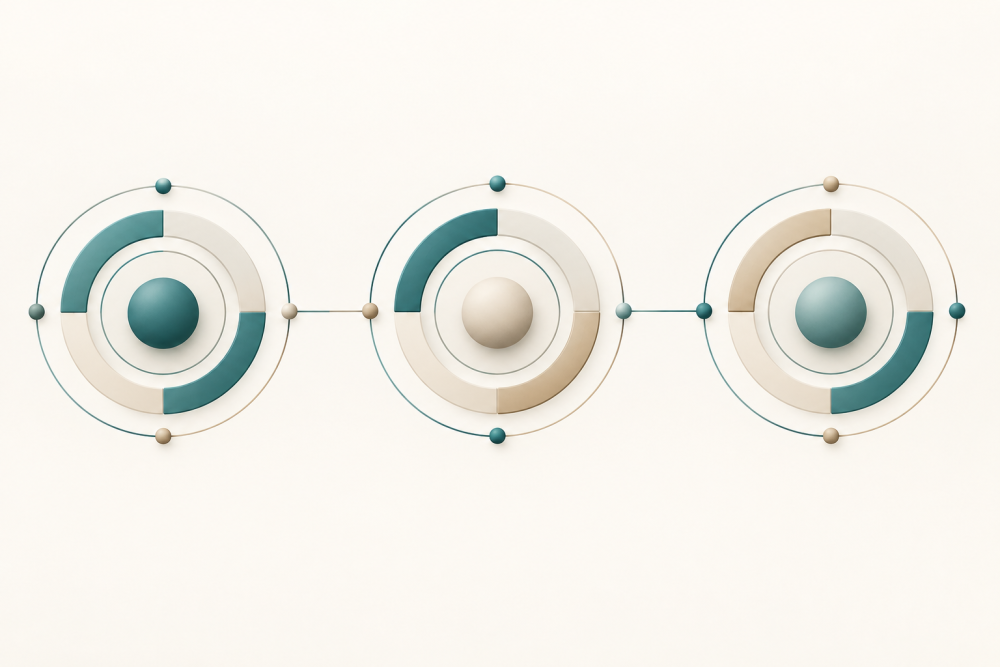
Treat the score as a diagnostic rather than a verdict, and give each week a single focus.
- Week 1: sit a full timed test, write down the four criterion marks and pick the weakest one.
- Week 2: rehearse that criterion in short daily sessions, then re-test only that part.
- Week 3: sit a second full test and compare the two recordings side by side.
- Week 4: repeat your best Part 2 answer until it runs for two full minutes without a pause.
Frequently asked questions
Where can I take a free IELTS Speaking mock test online and get a band score?
HiBay runs a free IELTS speaking mock test online with an AI examiner. You work through Part 1 questions, a Part 2 topic card and a Part 3 discussion in one sitting, and the session returns a band estimate with separate feedback on fluency, vocabulary, grammar and pronunciation. Every answer is scored against the IELTS speaking criteria, so you can see which of the four areas is holding your overall estimate down, and you can repeat the whole session as often as you like before exam day.