
Free English Speaking Test Online
A free English speaking test is most useful when you know what it scores. This page compares what a CEFR-aligned long test, a short level check and a scored speaking mock state on their own first-party pages, then gives a fifteen-minute self-test you can record today without paying for anything.

On this page
If you are looking for an English speaking test free of charge, the first useful question is not where to find one but what you want the result to tell you. A quick level check and a scored speaking mock look almost identical in a search results page, and they answer different questions. One gives you a rough band you can compare with other learners. The other tells you which part of your own speech cost you marks: a sound, a verb tense, a long silence, or a missing point in your answer.
This page describes what each kind of test measures, which public documents define the scales behind the scores, and how to run a scored speaking self-test on HiBay without paying for anything. Every link points to a first-party page, read on 27 October 2026, so you can check the wording yourself. Nothing here reports hands-on testing, a ranking, or a score you can expect.
What a Speaking Test Actually Scores
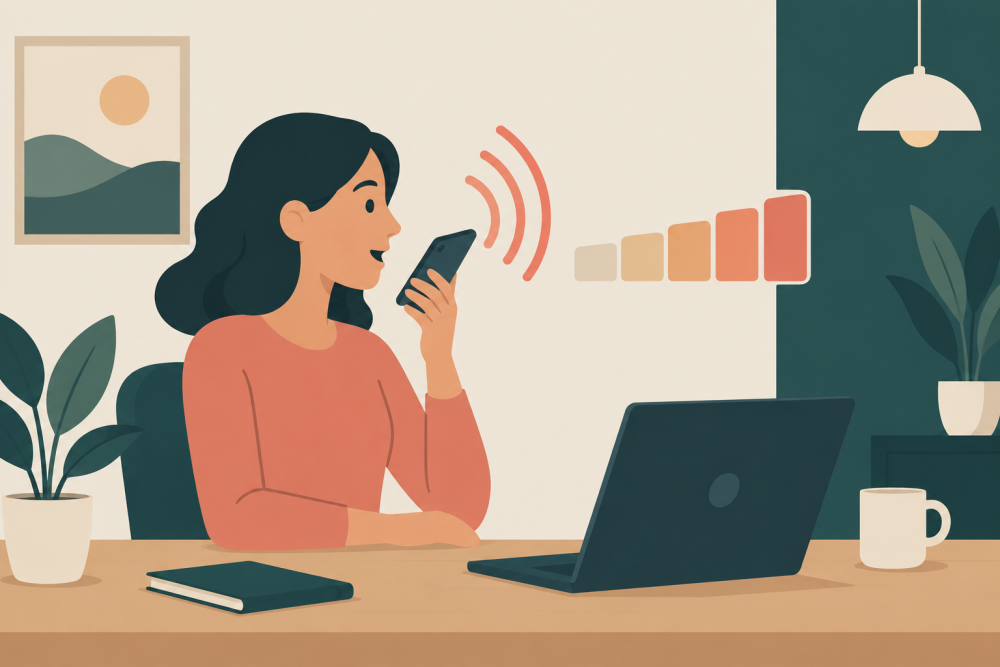
Almost every scored speaking test returns more than one number, because spoken performance is judged on several separate qualities at once. The broad ones are usually how clearly you pronounce, how much vocabulary you can reach for, how accurate your grammar is, and whether your answer stays on topic and stays moving.
HiBay's App Store listing is one example of that shape. It states that the app checks pronunciation, grammar and vocabulary while you speak, gives suggestions for improvement, and then assesses your performance and generates a report after the conversation ends. If you want to know whether a result will be actionable, look for that structure: a separate comment per quality, not one unexplained mark.
Why a Free Score Is Not Proof of a Level
Cambridge English states this plainly on its own Test your English page: the short test is not an official exam, the score is only a guide, and it is not proof of language ability. That sentence is worth reading twice, because it comes from the organisation that also sells the official qualifications.
So an English speaking test free of charge sits in a specific place. It is evidence about your own practice, not a credential. An employer, a university or a visa officer expects a named official test with a verified result.
Use them for what they are good at: measuring your own progress over weeks and finding the habits that hold your speech back. A free result is repeatable, and repeatability is what makes progress visible.
The Three Formats You Meet Online
An English speaking test online free of charge normally takes one of three shapes, and the differences matter more than the price.
The first is a long, structured test built around a published scale. EF SET states on its own site that its 90-minute test covers reading, writing, listening and speaking, that results are fully aligned with CEFR levels, and that a certificate is free. It also lists a 50-minute version that covers reading and listening only, so if speaking is your goal you need the version that includes it.
The second is a short level check. Cambridge English Test your English offers what its page calls a quick, free level check to see your English level and explore study options, with the caveat quoted above. It takes minutes rather than an hour and points you towards a level rather than diagnosing your speech.
The third is a scored speaking mock inside a practice app. HiBay's listing describes a mock speaking test, IELTS preparation material for Parts 1, 2 and 3 with sample answers, and scores and analysis on the answers you produce. This is the only one of the three that reacts to what you actually said, which is why it is the format worth repeating weekly.
Matching a Result to a CEFR Level
Scores from different tests are not comparable until you map them onto a shared scale, and in English teaching that scale is the CEFR. The Council of Europe publishes the CEFR global scale, which sorts users into Basic, Independent and Proficient across six levels from A1 to C2.
Two descriptions there predict what a self-test will expose. A B1 speaker can deal with most situations likely to arise while travelling in an area where the language is spoken. A B2 speaker can interact with a degree of fluency and spontaneity that makes regular interaction with native speakers quite possible without strain for either party.
If your own recording does not survive a normal two-way conversation, you are working below that B2 line whatever a single score says, and the useful training target is the sentence you could not complete, not the number.
What the HiBay App States About Speaking Feedback
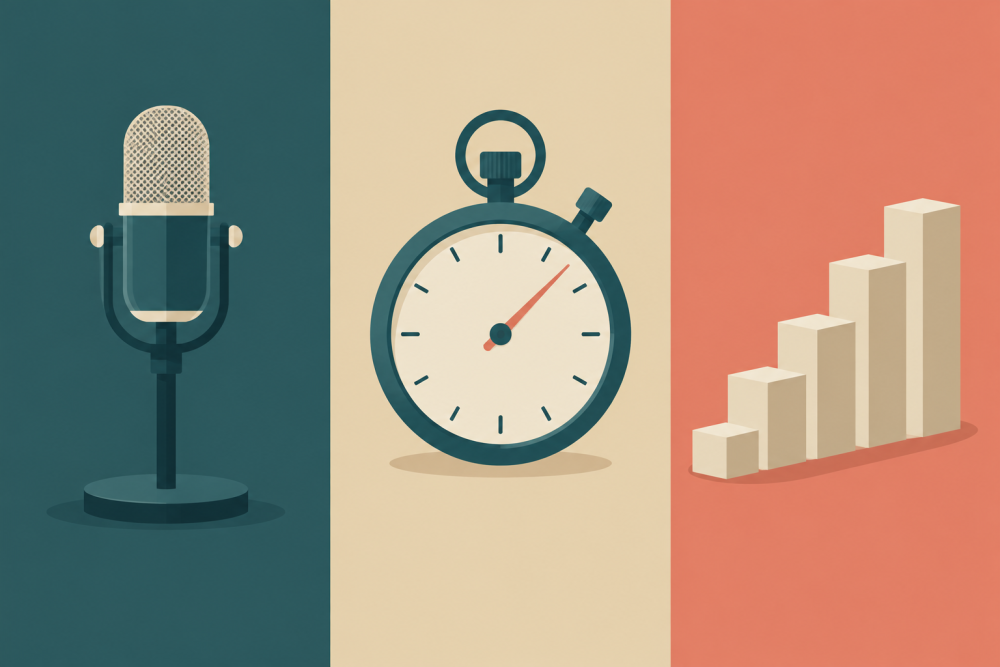
Because the point of a speaking test is the feedback, it is worth quoting what the app you use actually claims. The HiBay listing describes more than a hundred scenarios, from everyday conversation to travel and business English, tasks at several difficulty levels inside each scenario, live checks for pronunciation, grammar and vocabulary, and a performance report after the conversation.
It also describes an IELTS mode with classic and up-to-date questions from Parts 1, 2 and 3 plus sample answers, and it states that you can practise those questions and receive scores, analysis and polished answers. For a learner preparing an exam, that is the part of the description to test first, because a sample answer you can compare against your own is the fastest way to see what a higher band sounds like.
What Free Covers, and Where Limits Appear
Every free option above has a boundary, and the boundary is rarely the one advertised. EF SET's certifying tests are fixed-length attempts. Cambridge's free check is explicitly not an official exam. App tiers usually set their limits per mode or per course rather than per day, and those limits change.
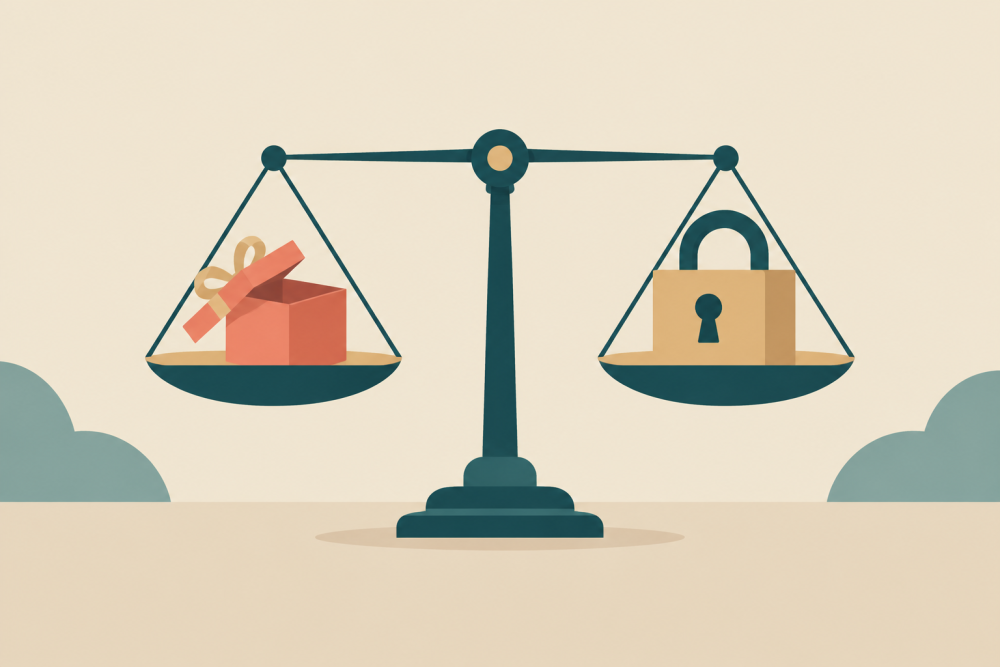
The reliable way to find your own boundary is to use the free tier three times on the same task, note where you stop, and plan around that note rather than the pricing page.
A Fifteen-Minute Self-Test You Can Run Today
Set a timer and keep the routine identical each time. Take one prompt you can answer from your own life, such as Describe a place you go to when you want to be alone. Record ninety seconds without stopping the recorder, even when you get stuck, because the stuck moments are the data.
Play it back once and listen for three things only: any pause longer than three seconds, any verb tense you know is wrong, and whether your answer had a clear ending.
Then fix the pauses with three phrases you can say without thinking: Let me think for a second., Could you say that again, please? and What I mean is... Say each one out loud five times, then record the same prompt again and use one of them when you stall.
Tomorrow, repeat the same prompt and change exactly one thing. Keeping the prompt fixed is what makes two recordings comparable, and comparison is the only reason to take a speaking test more than once.
Frequently Asked Questions
Does a free English speaking test give a real level?
It gives a real measurement of the task you performed and a rough placement, not a certification. Cambridge English says its free check is not an official exam and the score is not proof of language ability, and paid providers make similar statements about the practice modes inside apps. Treat the number as a position on a scale you are tracking yourself, and treat the per-quality comments as the actual result. If an official result is required for work, study or a visa, book the named official test; a free online check will not be accepted in its place.
Can I practise a scored speaking test online without paying?
Yes, and the most useful free practice is a scored mock that reacts to your own speech. HiBay's listing describes live checks for pronunciation, grammar and vocabulary plus a report after the conversation, and an IELTS mode with questions from Parts 1, 2 and 3, sample answers, scores and analysis. EF SET's certifying test is also free and includes speaking in its 90-minute version. Neither replaces an official exam, but both let you repeat a scored task as often as you need, which is what turns a test result into practice.