
English Word Stress and Suffixes: A Small Table That Works While You Speak
Four suffix patterns that predict where English word stress falls, the vowel reduction that follows, a ten-word marking drill, and an exception log for the words that refuse the pattern.


On this page
Long English words are lost at the stressed syllable, not at the sounds. This guide gives four suffix patterns that predict where the stress falls, the vowel change that follows, a ten-word drill, and a way to record the exceptions that refuse the pattern.
Stress Is What Makes a Long Word Audible
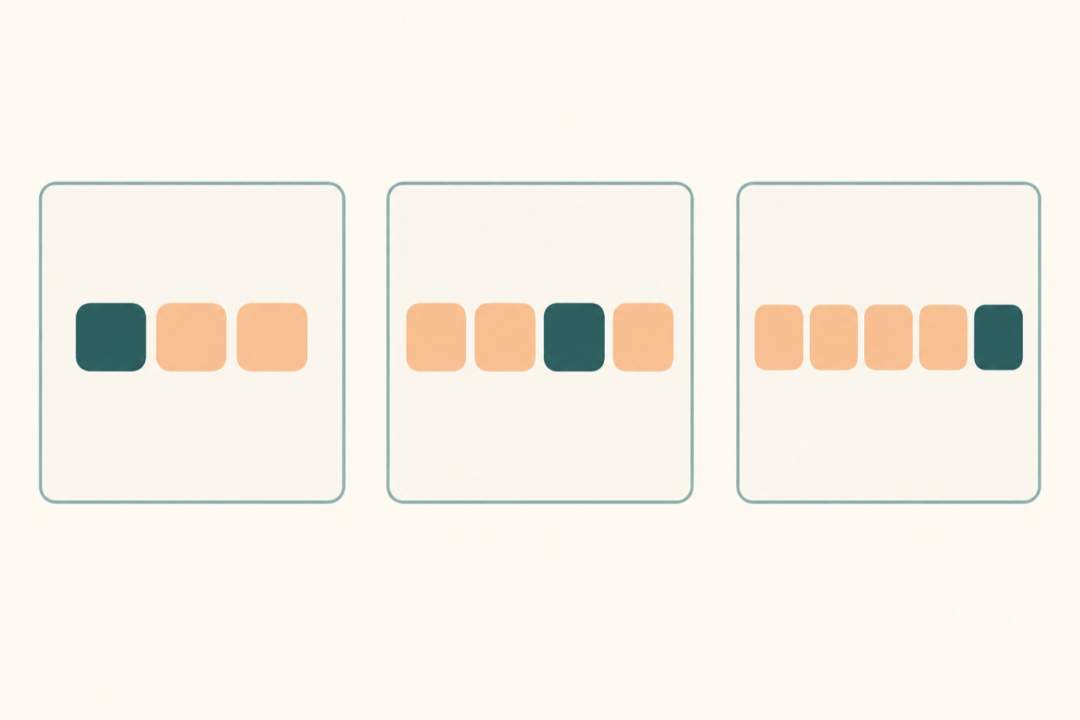
A listener can usually recover a mispronounced consonant from context. A word stressed on the wrong syllable is harder, because the stressed syllable is what the ear uses to find the word's boundary in a stream of speech. The British Council's word stress page lists what a stressed syllable actually does — it is longer, louder, higher in pitch, clearer in vowel quality (Word stress, accessed 28 October 2026) — and all four of those signals move together when you shift the stress by one syllable.
Why "Rules" Need a Warning Label
The same British Council page says plainly that it is dangerous to claim fixed rules, because exceptions can usually be found. That warning is the reason this guide gives you patterns plus an exception log rather than a rulebook. Patterns get you through most words you meet while speaking; the log stops you from re-learning the same exception twice.
British Council classroom material also offers a workable detection habit: for a three-syllable word, look at the ending before you guess, because some suffixes pull the stress to a predictable place (Stress on two and three syllable words, accessed 28 October 2026).
Four Suffix Patterns Worth Memorising
The patterns below describe endings that change where the stress sits, not endings that leave it alone. Treat the column on the right as examples to test, not as proof.
| Ending | Where the stress falls | Examples |
|---|---|---|
| -tion, -sion | the syllable just before the ending | eduCAtion, deCIsion, inforMAtion |
| -ity | the syllable just before the ending | aBIlity, seCUrity, possiBIlity |
| -ic, -ical | the syllable just before the ending | ecoNOmic, poLItical, speCIfic |
| -graphy, -logy | three syllables from the end | phoTOgraphy, biOlogy, geOgraphy |
| -eer, -ese, -ette, -esque | the ending itself carries the stress | engiNEER, JapaNESE, cigaRETTE |
Two habits make the table usable. First, count from the end, not from the start: a word can gain a prefix and keep its stress. Second, remember that the pattern predicts the position, not the vowel quality, so the syllable still has to be checked against a recording.
A fifth group behaves in the opposite direction: endings such as -hood, -ship, -ness, -able and -er usually leave the stress where the root had it (NEIGHbourhood, reLAtionship, WONderful). When a word keeps its stress across a family — TEACH, TEACHer, TEACHing — it is usually one of these neutral endings, not one of the four shifting ones.
The Vowel You Lose: Schwa in Unstressed Syllables
Once the stress moves, the vowels around it change. The unstressed syllables reduce towards schwa, the short neutral vowel written /ə/, which is why photograph has a full vowel in its first syllable and photography does not. This is not laziness and not a mistake: it is the same four-part signal in reverse, as the British Council page puts it — unstressed syllables take the opposite features of a stressed one.
Practically, this means you should not try to keep every vowel "correct". Aim for a clear stressed syllable and a genuinely reduced neighbour. A learner who pronounces every vowel at full length produces a word that sounds like four words.
A Ten-Word Marking Drill
Mark the stress before you say the word, then check one thing per word.
- photograph / photography / photographer
- economy / economical
- nation / national / nationality
- biology
- decision
- specific
- engineer
- Japanese
- ability
- geography
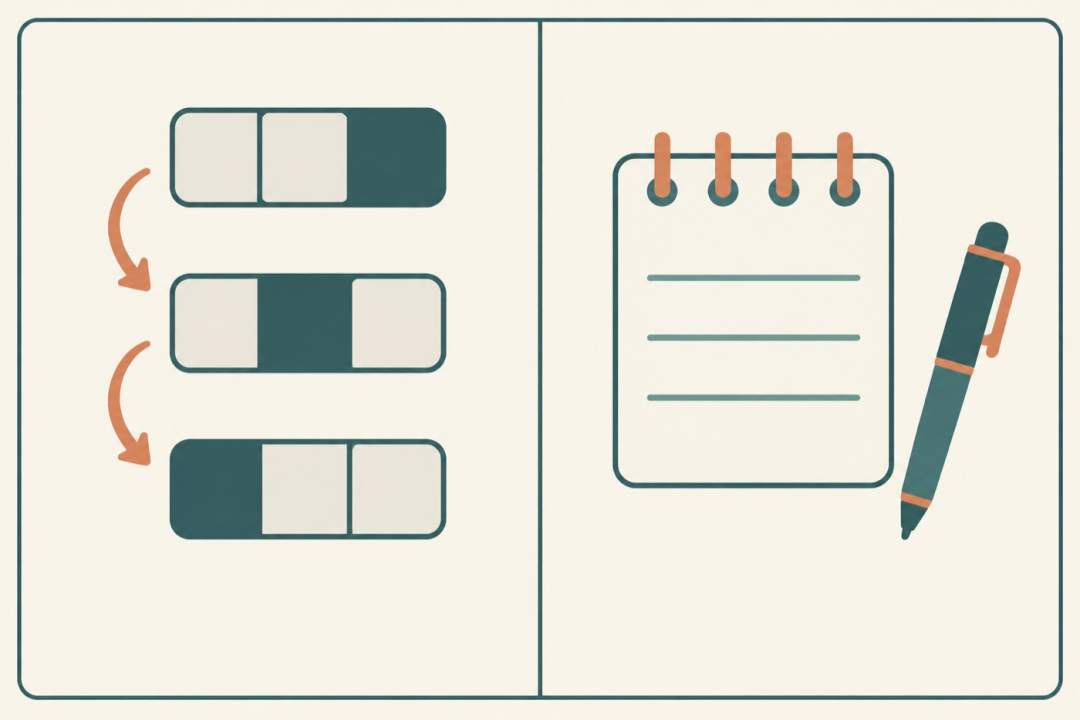
For each line: underline the stressed syllable, say the word once at normal speed, then play one dictionary recording and compare only the position of the stress. If the position matches, the word is done for now, whatever the vowel sounds like.
Words That Break the Pattern
Keep a two-line log for every exception you meet: the word, and where the stress actually sits according to the dictionary you used. Three examples worth logging early, because they are common in work talk, are development (stress on the second syllable), analysis (second) and committee (second). None of them follows the suffix patterns above.
The log matters more than the table over time. After a month you will have a page of words you actually use, which is a better use of practice time than a textbook list of two hundred.
How to pronounce English words correctly without looking up every form
The sequence that works is short: recognise the ending, predict the position, say the word, then verify once. If you do need to look something up, look up the form you are about to say rather than the base word, because related words often move their stress (PHOtograph, phoTOgraphy, phoTOgrapher).
A pronunciation app fits this sequence at the verification step: it keeps a stable reference, lets you slow the recording down, and stores your own attempt beside it. What it cannot do is decide for you whether the stress you produced is the stress you intended — that comparison is yours, made by listening to both.
Frequently Asked Questions
Does English word stress follow fixed rules?
Only partly. The suffixes in the table above shift the stress reliably enough to be useful, and the neutral endings leave it alone, but both groups have exceptions. Use the pattern as a first guess and one dictionary recording as the check; do not treat any rule as a guarantee.
How do I mark stress when I write a word down?
Write the word in syllable chunks and underline the stressed one, for example pho-TO-gra-phy. If you use phonemic script, a short vertical line before the stressed syllable does the same job. The mark is for your own revision, so consistency matters more than the notation you choose.
Should I learn IPA to get stress right?
You can place stress without knowing IPA, because the dictionary also shows syllable breaks and audio. IPA becomes worth learning when you want to record the vowel difference between photograph and photography precisely, or when you compare two dictionaries that use different respelling systems.