
Disagreeing With a Client in English, Politely
A client asks for two more screens two days before delivery. This guide shows how to disagree in English with a client in four moves - acknowledge the goal, name the constraint, offer two routes, commit to one - with spoken lines, a short email and escalation wording.


On this page
The scope email lands on Tuesday, two days before delivery, asking for two more screens by Friday. You want the work. You do not want that date. Most replies answer both questions in one sentence, and the client hears a supplier who has stopped trying.
Why a client request and a client constraint arrive welded together
A client rarely asks for one thing: the message carries a deliverable, a date, a price and a reason, and by the time it reaches you it is one object, the request. What you have is a fact with a number on it, such as six days of build for two screens.
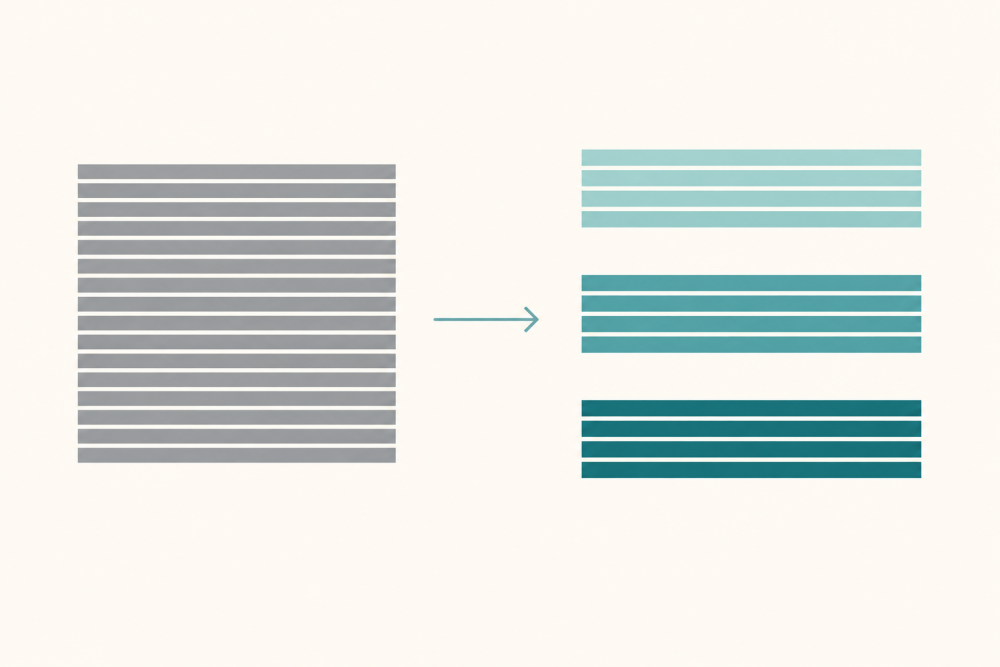
That asymmetry is the part most advice on how to disagree in English skips. That date is not possible refuses scope, date and price at once, so the client cannot tell which part you mean, assumes the worst, and the relationship takes damage that belonged to the schedule.
The repair is accounting, not eloquence: answer each part separately, keep the person out, and let the client decide what moves.
How to disagree in English without refusing the work
Four moves do the job. The lines are original practice material.
| Move | What it does | A line that does it |
|---|---|---|
| Acknowledge the goal | Names the outcome the client wants | You want the new checkout live before the campaign, and so do I. |
| Name the constraint | One fact, with a number, no judgement | Two more screens is six days of build, and we have two working days. |
| Offer two routes | Replaces your verdict with a choice | We keep Friday with three screens, or keep all five and go live on the twelfth. |
| Commit to one | Says what you do while they choose | Unless you tell me otherwise by noon tomorrow, I will hold Friday. |
The third move is the one people skip, and skipping it turns a disagreement into a refusal: a client offered two routes is asked to choose, while a client handed a constraint is told to accept one. The fourth removes the silence that stretches two days into two weeks.
Wording that separates the person from the decision
Harvard's Program on Negotiation summarises Getting to Yes in four elements: separate the people from the problem, and focus on interests rather than positions (accessed 4 November 2026). A client's Friday is a position; the launch it protects is the interest underneath, and naming it writes the two routes for you.
Cambridge's grammar reference describes politeness as two jobs: showing respect, and softening what you say so it is not too direct (accessed 4 November 2026). Hedges and past modals such as could and would do the second job. The trap is hedging the verdict instead of the difficulty: You changed the scope again. names a person, while The brief I have from the fourteenth has three screens. names a document, and only the second can be answered with a decision.
The short email and the one-paragraph version
Spoken disagreement has a voice; written disagreement has only its order, so the order must do what tone does in the room. This email is original practice material built from the four moves.
Subject: Checkout scope - Friday and five screens cannot both hold
Thanks for the extra screens; the page is stronger with them. Two more screens is six days of build against two working days.
Two routes: keep Friday with the three screens we have, or keep all five and go live on the twelfth.
I will hold Friday unless you tell me otherwise by noon tomorrow; the extra two can start on Monday.
A client on a phone sees the subject, the first line and the last, so put the choice and deadline where a preview shows them. Some never read four lines, so the same moves must fit one paragraph.
We can do the two extra screens, just not by Friday: six days of build against two working days. So either we keep Friday and ship three screens, or we keep all five and go live on the twelfth.
When the client insists: escalation that keeps the relationship
Insisting is normal. A client who repeats the date has not found who can move it, or carries a commitment you cannot see. Two more exchanges are worth having; a third repetition of the same sentence is not.
Can we spend ten minutes on the phone before Friday? I would rather not settle this in a thread.Who else needs to agree to this date? I am happy to join that call.If Friday stays, I need one line from you confirming that testing drops to a single day.
Escalation is not going over the client's head: if their manager needs the trade-off, say so in the same message. I think your director needs to see this; shall I copy her, or would you rather send it yourself? Going around a client costs more than the date.
Two worked scenarios: a scope change and a deadline pull-in
Both scenarios are original practice material. Say them aloud first; that is what your email will sound like.
Scenario one is the scope change, two days out, spoken on a call.
You want the checkout live before the campaign, and so do I.
Two more screens is six days of build and we have two working days.
So: Friday with three screens, or all five on the twelfth.

If the client takes the later date, close it in one line: Good - I will send the revised plan this afternoon and confirm the twelfth in writing. If they want five screens by Friday, name the cost once: Then testing drops to half a day, and I cannot promise the page holds.
Scenario two is the deadline pull-in, written: delivery moves from the twenty-first to the fourteenth.
We can move to the fourteenth if the reporting view leaves this release and follows on the twenty-first.
The development work fits; the review round does not, and that round caught the pricing error last time.
Which do you want: the earlier date without reporting, or the full release on the twenty-first?
Neither scenario asks the client to agree that you are right; both ask them to choose, which is all a client can do in reply.
Frequently asked questions
How do I say no to a client in English?
Say no to the part you cannot do and yes to the part you can, in one breath: I can do five screens, on the twenty-first. A no alone sounds like a closed door; a no with its own date sounds like a plan. If the answer really is no, name the constraint once, offer the alternative you would accept, and stop: a second explanation turns a decision into an argument.
What if the client insists after I explain the constraint?
Treat the second insistence as new information. Ask what the date is tied to, move to voice, and put the trade in writing: If Friday stays, testing drops to one day. If the client still holds the date, accept it with the risk recorded and give the team a checkpoint. Repeating the constraint a third time damages the relationship without moving the date.