
IELTS 口說評分標準:Band 6 與 Band 7 的差異
一個答案,兩份逐字稿:將 Band 6 答案與 Band 7 答案的每一句,對照官方公布的雅思口說評分標準,並說明讓第一版變成第二版的四處修改。


目錄
兩位考生用同一個故事、同樣的例子和同樣的細節份量,回答同一張提示卡。其中一位被評為 Band 6,另一位則是 Band 7。差別不在他們說了什麼,而在於考官聽他們怎麼說。
本指南把同一份答案與自身並置對照。逐字稿 A 是某個答案的 Band 6 版本,逐字稿 B 則是針對同一張提示卡、同一個答案的 Band 7 版本。兩份逐字稿的每一行都對應到考官實際依據的評分描述用語,讓你能看出是哪一項雅思口說評分標準在發揮作用——以及是哪四處修改把兩個版本區分開來。
為什麼同一個回答,可能被聽成兩種分數
IELTS 口說依四項評分標準計分——流利與連貫性、詞彙資源、文法廣度與準確度,以及發音——考官會針對每一項各給一個級別分數。官方公布的評分描述還加了一條關鍵規定:考生必須完全符合某個級別描述中的所有正面特徵,而且評分是依據考生在測驗各部分整體表現的平均值來決定。
由此可推出兩個結果。第一,答案並不是逐句評分;考官看的是整體表現是否符合某一個級別。第二,級別既是分數,也是上限:如果猶豫不斷打斷表達的流暢度,即使同一個回答裡的詞彙看起來有 7 分的水準,流暢這一項仍可能停留在 6 分。
這就是為什麼下面的比較是逐項評分標準進行,而不是逐句對照。再好的內容,也拉抬不了一項表達方式本身無法滿足的評分標準。
本指南引用的每一段文字,都出自學術組與一般訓練組共用的官方 IELTS 口說級別描述,查閱日期為 2026 年 10 月 29 日:IELTS 口說級別描述,ielts.org(PDF)。如果你想先了解完整的九個級別量表,請先閱讀IELTS 口說級別描述完整指南,再來比較逐字稿。
提示卡與兩份逐字稿
Describe a time when you had to explain something complicated to someone. You should say what you explained, who you explained it to, how you explained it, and how you felt about it.
兩份逐字稿說的都是同一個故事:第一份工作、一位新同事、一套報告系統、三個步驟,以及第二次嘗試終於奏效。資訊完全相同。改變的只有用字遣詞和表達方式,而這正是這項練習的重點。
逐字稿 A 和逐字稿 B 是刻意設計的教學範例,目的在於一次只聚焦一項評分描述指標。它們不是具名考生的錄音,也沒有任何官方考官評分過這兩個版本。
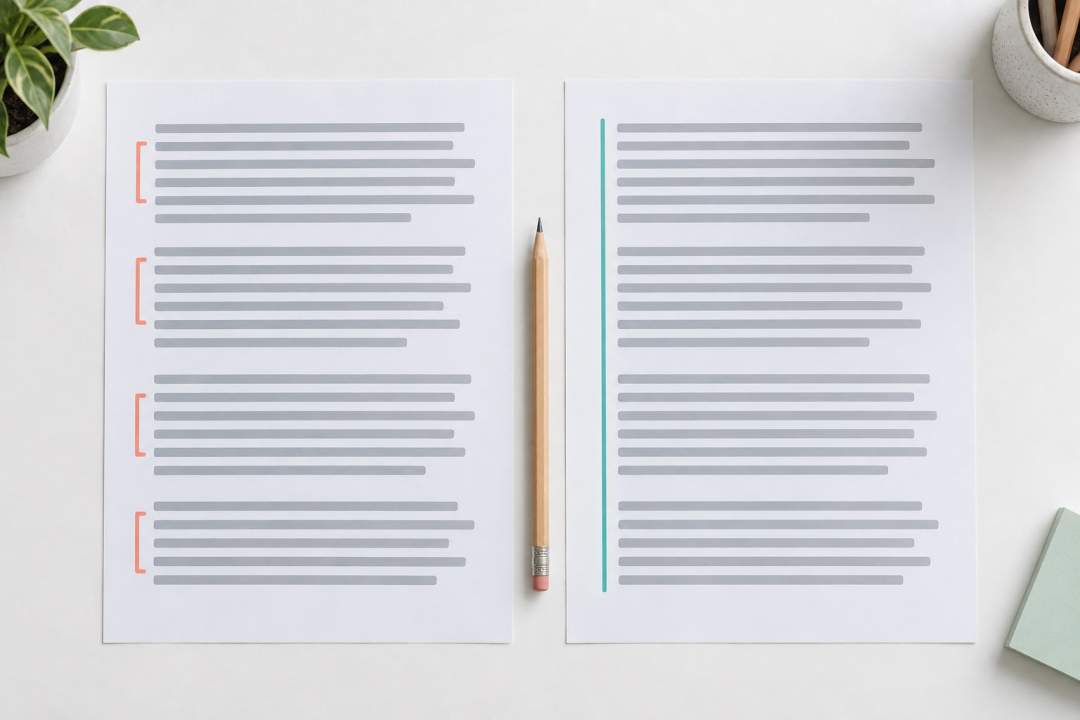
逐字稿 A:Band 6 版本
I want to talk about, um, a time when I explained something... it was about my first job.So my manager, he asked me to teach a new colleague about the reporting system, and I say yes.But the problem is, the colleague, she don't know anything about it, so I need to start from the beginning and, and explain very slowly.I show her the steps one, two, three, and she write down everything, but I think she is still confusing.So I decide to sit with her and do the same thing again on the computer, and then it is ok.I think I learn that it is important to be patient and to check if the person understand.
讀這個版本時,請著眼於評分標準所描述的特徵,而不是它的錯誤。講者持續說下去,也確實產出了長段發言,這正是 Band 6 流利度評分描述所要求的一點。它同時也在重複與自我更正堆疊之處失去連貫性,連接詞停留在 so、and、but 的層次,並把錯誤放在結構變得複雜的地方——she don't know、the person understand、she is still confusing。
逐字稿 B:Band 7 版本
I'd like to talk about the first time I had to train someone properly, which was in my first job.My manager asked me to bring a new colleague up to speed on our reporting system, and I agreed straight away.The thing is, she had never seen the tool before, so I had to start from scratch and take it slowly.I walked her through the three steps, and although she wrote everything down, she still looked a bit unsure.So at that point I sat next to her and we repeated the whole process on the computer together, which is what finally made it click.Looking back, I'd say that taught me to check understanding rather than assume it.
故事本身沒有改變。改變的是,說話者現在會標示論述的轉折,而不是用 and 把子句一路串接下去:The thing is、So at that point、Looking back。語域也轉向流利說話者會自然採用的片語——bring someone up to speed、from scratch、walked her through、made it click——而複雜句也順利出現,不再有中斷 A 版本的那些錯誤。
逐字稿 A 對照官方公布的 Band 6 措辭
| 評分標準 | 逐字稿 A 中的句子 | 官方公布的 Band 6 措辭 |
|---|---|---|
| 流利與連貫性 | I want to talk about, um, a time when I explained something... | Able to keep going and demonstrates a willingness to produce long turns. |
| 流利與連貫性 | so I need to start from the beginning and, and explain very slowly | Coherence may be lost at times as a result of hesitation, repetition and/or self-correction. |
| 詞彙資源 | I show her the steps one, two, three | Resource sufficient to discuss topics at length. 以及 Vocabulary use may be inappropriate but meaning is clear. |
| 文法廣度與準確度 | she don't know anything about it | Produces a mix of short and complex sentence forms and a variety of structures with limited flexibility. |
| 文法廣度與準確度 | I think she is still confusing | Though errors frequently occur in complex structures, these rarely impede communication. |
這裡的每一句都穩穩落在 Band 6 之內,而這正是 Band 6 答案需要的診斷:這項評分標準之所以未達標,不是因為答案太短或離題,而是因為下一個 Band 的正面特徵尚未完整呈現。
逐字稿 B 對照官方公布的 Band 7 描述
| 評分標準 | 逐字稿 B 中的句子 | 官方公布的 Band 7 描述 |
|---|---|---|
| 流利與連貫性 | I'd like to talk about the first time I had to train someone properly, which was in my first job. | Able to keep going and readily produce long turns without noticeable effort. |
| 流利與連貫性 | The thing is, she had never seen the tool before, so I had to start from scratch | Flexible use of spoken discourse markers, connectives and cohesive features. |
| 詞彙資源 | My manager asked me to bring a new colleague up to speed on our reporting system | Resource flexibly used to discuss a variety of topics. 以及 Some ability to use less common and idiomatic items and an awareness of style and collocation is evident though inappropriacies occur. |
| 文法廣度與準確度 | although she wrote everything down, she still looked a bit unsure | A range of structures flexibly used. Error-free sentences are frequent. |
| 文法廣度與準確度 | which is what finally made it click | Both simple and complex sentences are used effectively despite some errors. A few basic errors persist. |
同一個故事如今一舉符合三項評分標準的 Band 7 描述,而且不需要額外資訊。請注意表格沒有呈現的是:這裡沒有任何一點取決於提示卡變得更難、詞彙變得更罕見,或答案變得更長。改變的只有表達方式。
讓 A 變成 B 的四個修改
- 用言談標記取代填充詞。 版本 A 以
um開頭,還不斷重來;版本 B 則用I'd like to talk about the first time...帶出同一個想法,這符合 Band 7 對Flexible use of spoken discourse markers, connectives and cohesive features.的要求。 - 把自我更正移出句子中間。 在版本 A 中,重複落在子句裡——
and, and explain very slowly。Band 7 容許一些猶豫與重複,但只限於不影響連貫性的地方。 - 把一般動詞換成流利說話者會用的說法。
show her the steps變成walked her through the three steps,這正是詞彙資源評分描述中less common and idiomatic的那一邊。 - 把複雜句完整無誤地說出來。 版本 A 嘗試複雜結構卻失手——
if the person understand;版本 B 則乾淨俐落地說出which is what finally made it click,這就是把errors frequently occur變成Error-free sentences are frequent.的關鍵。
這四個修改都沒有增加任何事實。如果你照這個順序嘗試,你一次只改變一項評分標準,而這是唯一能聽出哪個改動真正讓 Band 移動的方法。
為什麼發音會打破這個模式
三項評分標準可以從書面資料檢查,第四項則不行。發音是根據錄音來評判,而不是根據逐字稿,而且它的描述用語也和另外三項不同:Band 7 的評分描述寫道 Displays all the positive features of band 6, and some, but not all, of the positive features of band 8.
這一句話點出兩件事。Band 6 的發音特徵仍保留作為基準——Uses a range of phonological features, but control is variable.——而 Band 6 以上的進步,則是以掌握部分 Band 8 特徵來衡量,例如:Can sustain appropriate rhythm. Flexible use of stress and intonation across long utterances, despite occasional lapses.
實務上的結論是:當你回聽自己的錄音時,不要問自己的發音好不好,而要問 Band 6 的哪一項特徵不穩定——語塊切分、節奏、重音節奏——並把那一項當成下一次嘗試的目標。每個分數級的完整描述文字,都收錄在官方評分描述文件中。
如何自行錄音做比較

- 相隔一天,把同一張提示卡錄兩次,中間不要重讀第一次的逐字稿。
- 把兩次嘗試都打成文字,只比較事實內容。如果第二次版本漏掉或憑空加入內容,先重新錄音,再比較用字遣詞。
- 按照評分標準的順序逐一檢視,順序與上方表格相同:先看流利與連貫性,再看詞彙資源,最後看文法廣度與準確度。
- 一次只改一個地方,然後再錄一次。挑出第一個還不符合 Band 7 描述的評分標準,改變其中一個特點,其餘部分保持完全相同,讓差異一聽就聽得出來。
- 保留一行紀錄:日期、評分標準、改了什麼,以及你在新錄音中是否聽得出差異。
用這種方式比較兩次嘗試,比十次未經檢視的錄音更有參考價值,因為每一組比較都回答同一個問題:是哪一項評分標準壓低了你的回答分數。
常見問題
如何把 IELTS 口說從 Band 6 提升到 Band 7?
找出第一個你的表現還不符合其文字描述的評分標準,然後只針對那一項加強。在上面的逐字稿中,切入點是流利與連貫性:故事本身有了,但重複和自我修正不斷打斷它。把同一個答案練到能讓言談標記發揮原本由 and 擔負的功能,接著再處理詞彙方面的評分標準,把兩個一般片語換成道地的說法。文法通常會因為你用更長、事先規劃過的發言回合說話,而不是一串串簡短的子句,而連帶進步。
同一份 IELTS 口說答案可能拿到 Band 6,也可能拿到 Band 7 嗎?
可以,而且官方公布的評分描述說明了原因。四項評分標準中的每一項,都是根據你的表現是否完全符合某個 Band 的文字描述來評判,而決定這點的是你的表達方式,不是答案裡的資訊。同一個故事,如果用會打斷連貫性的猶豫、一般詞彙和不穩定的複雜結構來說,就符合 Band 6;如果用靈活的言談標記、道地片語和經常出現的零錯誤句子來說,就符合 Band 7。它做不到的是同時符合兩者,因為這些評分描述所描述的,是相同內容的兩種不同表現。
讀完評分標準之後
Band 分數不是對你想法的最終評判。它描述的是你如何表達這些想法,而且是逐項評分標準來描述;這就是為什麼同一個答案可以改寫成更高的分數,即使你對這個主題沒有學到任何新東西。
練習時,請把這四項評分標準放在心上。相隔一天錄下同一張提示卡,將錄音與官方公布的評分描述相比,而不是跟範文答案相比,並且一次只改變一項評分標準。你的口說分數是四項評分標準的平均分,四捨五入到最接近的半個 Band,因此把一項評分標準從 6 拉到 7,會讓這個部分的分數變動 0.25——而第二項評分標準也朝同方向移動,通常就是讓整體分數跨越門檻的關鍵。四捨五入的規則載於 IELTS 評分詳細說明。