
Explaining an Injury at Urgent Care in English
A working script for how to talk with a doctor in English at urgent care: what to say at the desk, how to describe where it hurts, the six questions staff ask, and what to ask before you leave.


On this page
A wrist that has swollen since you fell, a queue behind you, and a receptionist asking a question you did not rehearse: this is where most learners freeze. The vocabulary is rarely the problem; the order is. People explain everything at once, then lose the thread at the second question.
This guide is a working script for that desk and the twenty minutes after it: how to talk with a doctor in English as a patient, how to describe pain so it means something, and the sentences that stop you agreeing to something you did not understand.
Check in at the desk before anyone examines you
The person at the desk needs three things: who you are, why you are here, and how urgent it is. One sentence carries all three.
I fell off my bike about an hour ago and my wrist is swelling. I have not taken anything for the pain.
Mechanism, time, visible change. Do not open with your medical history unless you are asked; it buries the reason you came.
In the UK, urgent treatment centres assess sprains, suspected broken bones and cuts, and they X-ray on site. You do not need to be registered with a GP or to have a fixed address. Bring your medicines or a prescription list, because one of the first questions is what you already take.
A nurse records observations such as your pulse and blood pressure. The most unwell patients are seen first, so a long wait is not proof that you were forgotten. If you are getting worse while you sit, say so at the desk.
How to talk with a doctor in English: lead with what happened
Staff build a picture from the mechanism before they touch you. Four patterns cover most injuries, one short sentence each.
| What happened | What to say |
|---|---|
| a fall | I fell off a ladder and landed on my left hip. |
| a twist | I twisted my ankle stepping off the kerb. |
| a cut | I cut my hand on a broken glass while washing up. |
| a blow | Something hit me above the eye ten minutes ago. |
The mechanism tells staff what force hit which tissue, and that decides what to check and how quickly. A fall onto an outstretched hand points attention at the wrist; a cut from glass raises the question of what went into the wound.
If you lost consciousness, hit your head, or cannot remember the moment of the injury, say so in your first sentence, because it changes how you are assessed.
Say where it hurts and what the pain feels like
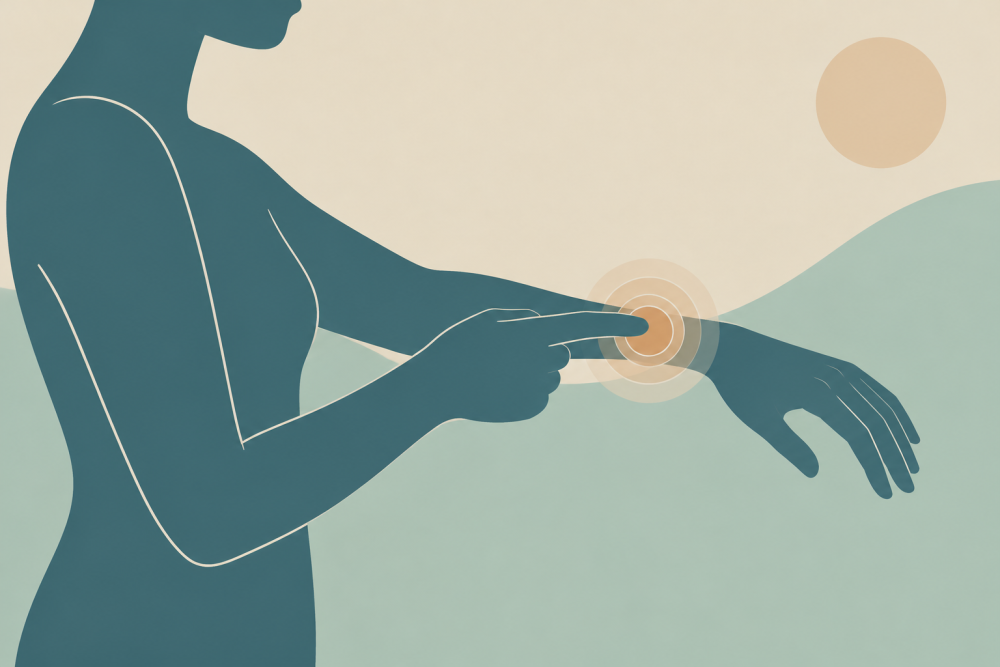
Two descriptions move you forward faster than any others: the exact place, and the quality of the pain. Point with one finger if you can; a flat hand over a whole arm tells staff very little.
Place is easiest with the body's own landmarks: the outer side, the inner side, above the bone, below the joint. Then say what the pain does.
The pain is on the outer side of my wrist, just below the bone, and it is sharp when I turn my hand.
The quality words are ordinary English: sharp, dull, throbbing, burning, aching, stabbing, tender. Tender means it hurts when pressed, not all the time.
You may be asked to score the pain from 0 to 10, where 0 is none and 10 is the worst imaginable. A bare number is weak on its own, because everyone fills the scale differently. Pair it with what you can still do.
It is about a six. I can hold a cup, but I cannot turn a door handle.
The six questions staff ask every time
You will not hear these in a fixed order, but a walk-in injury assessment almost always touches all six.
| Question | A short answer | Why it is asked |
|---|---|---|
When did it happen? | About two hours ago, around six. | Timing changes what staff look for. |
Did you lose consciousness? | No, I stayed awake the whole time. | Head injuries are assessed differently. |
Are you allergic to anything? | Penicillin. Nothing else. | It decides which painkiller is safe. |
What medication do you take? | Ramipril for blood pressure. | Some medicines affect bleeding. |
When was your last tetanus shot? | I am not sure. My records are abroad. | A dirty wound may need a booster. |
How are you paying today? | I have insurance through my university. | Payment is sorted at the desk. |
The most useful sentence in that table is the honest one. I am not sure. is a complete answer to the tetanus question, and staff would rather hear it than a guess. Tetanus is rare in the UK because vaccination is routine, the course is five doses, and a booster may be needed when the history is unclear. Saying you do not know lets them check.
X-rays, splints and what happens after
These are the sentences you are likely to hear.
We are going to send you for an X-ray.
The X-ray does not show a break, but you have sprained the ligament.
We will put a splint on it to keep it still.
Before you leave, ask three questions. What is the injury called in plain words. What should I watch for at home. Who do I contact if it gets worse tonight. Then ask for the instructions in writing; spoken ones disappear quickly in a second language.
Urgent care is the American term; the British equivalent is an urgent treatment centre. In the UK, NHS 111 online can direct you and may let you book an arrival time.
Ask about cost and insurance before treatment
Where care is billed, the cost conversation belongs at the desk, before the assessment, not at the door.
Before we start, could you tell me what this visit will cost with my insurance?
Is the X-ray covered, or will I get a separate bill?
Ask for the self-pay price in writing, and read anything you sign.
Could you explain what this form is for before I sign it?
If English is not your first language, ask at reception whether an interpreter is available, including British Sign Language in the UK.
A fifteen-line script for your phone
Copy these into a note before you need them. They run in the order the conversation happens.
I do not have an appointment. I hurt my wrist about an hour ago.I fell off my bike and landed on my hand.It is swelling and I cannot turn it without pain.The pain is here, on the outer side, just below the bone.It is sharp when I move it and dull when I rest it.About a six out of ten.I have no allergies.I take ibuprofen sometimes. Nothing else.I am not sure when my last tetanus shot was.I have insurance through my university.Sorry, could you say that again more slowly?What does that word mean?What should I watch for at home?Could you write the instructions down for me?Who do I contact if it gets worse tonight?
Then rehearse it aloud: a partner reads the six questions in a shuffled order and you answer without looking. When no partner is available, HiBay's app provides AI conversation practice with feedback on pronunciation, grammar and vocabulary, and its App Store description lists IELTS speaking practice.
When to say you do not understand
The expensive mistakes in a clinic are not grammar mistakes. They are the moments you nod at a sentence you did not follow. Agreeing to a treatment you misheard costs more than an awkward pause.
Sorry, I did not catch that. Could you say it again more slowly?
I do not know that word. What does it mean?
Can you write that down for me?
Staff repeat things all day; asking them to slow down is ordinary. What they cannot do is correct an answer you gave while guessing.
Frequently asked questions
What do I need for urgent care if I am not registered?
In the UK you can use an urgent treatment centre without a GP registration, a fixed address or an NHS number. Bring your medicines or a prescription list, plus something showing your name and date of birth. If you booked an arrival time through NHS 111 online, the centre already has your details; if not, expect to give your reason for visiting at the desk.
How do I describe where the pain is in English?
Point with one finger and name the landmark rather than the whole limb: the outer side of the ankle, just below the bone; the back of the hand. Then add a comparison, such as It hurts here and not on the other side. If the pain moves, say where it starts and where it goes, and mention numbness or tingling separately.