
Small Talk in English: Six Safe Topics and How to Leave Politely
Waiting time before a class or a meeting is english conversation practice free of scripts: six safe topics, four moves, ten opening questions and four exit lines you can rehearse in ninety seconds.

On this page
Why five minutes of waiting is harder than a whole lesson
You can answer questions in class all morning and still go quiet in a corridor. A lesson question has a task and a teacher listening; a corridor has neither, so there is nothing to aim at. Most learners get plenty of english conversation practice free of charge in class and still freeze here. Treat the wait as a small job: a topic for the place, four moves, keep it short, exit cleanly.
Six safe topics, and where each one works
Safe topics are already in the room: describe something you can both see, and the other person answers without deciding how much to reveal.
| Topic | Where it works | Why it stays safe |
|---|---|---|
| The setting | Corridors, waiting areas, lifts | The room, the queue, the noise |
| The journey | A taxi, a bus, the walk to class | Route and traffic are public |
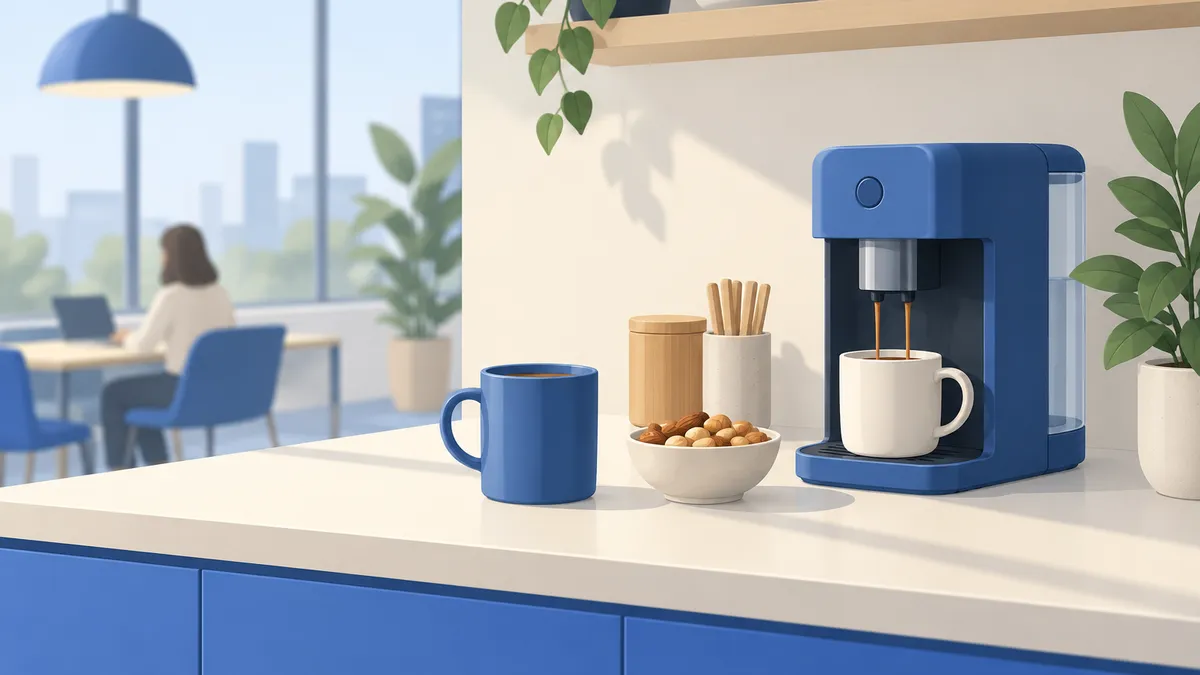
| Food and drink | Coffee machine, canteen, break room | Low stakes and easy |
| The weather | Doorways, taxis, outdoor waits | Shared, if thin in some cultures |
| The weekend | Monday and Friday | Plans only, no family detail |
| Shared work or study | Before a class or a meeting | You share the session |
Prefer what you both see. With no question ready, describe: It's busier than usual today.

Two topics to leave alone in English-speaking workplaces
Money and salary. British Council guidance lists money, personal beliefs and health among the topics to avoid, and BBC Learning English's Small Talk lesson shows why: a friendly catch-up stops once one person asks What's the salary? The same lesson offers the replacements, How are you finding your new job?, Are you enjoying it? and What are you doing in your new job?, all about the job, not the person's worth. US law differs from comfort: the National Labor Relations Board says covered employees may discuss wages and may also decline to, so a pay question can be lawful and still read as status. Let the other person raise it.
Health and family detail. That guidance puts health on the avoid list and keeps family safe only as a general topic. How's your family? is ordinary; How much did that treatment cost? or When are you having children? turns a colleague into an interviewer. Fine as volunteered background, risky as your opening question.
The four moves: open, react, add one line, hand it back
One question and one answer is not a conversation; four moves turn an answer into an exchange.
- Open with a question, not a statement.
How was your weekend?is easy to answer. - React before you add anything.
That sounds nice.Really? How was it?shows you heard it. - Add one detail about yourself, not three.
I had a quiet one, mostly cooking.One detail invites; five are a monologue. - Hand it back.
What about you?How was yours?makes the other person the next speaker.
The order matters more than the wording: react first, then hand it back.
Follow-up lines that keep the ball moving
A follow-up asks about the last answer, not a new topic. These are safe after almost anything a colleague or a stranger tells you:
Where did you go?How was the journey?How long have you been coming here?What did you get up to at the weekend?Have you eaten here before?What are you working on at the moment?Was it busy this morning?Did you have far to come?Is this your first time here?How's the new project going?Do you know anyone else in the group?Do you go there often?
Two in a row sounds interested; a third sounds like an interview, so add something about yourself, such as I've been meaning to try that., then ask again.
Ten opening questions, grouped by setting
Before a class or a meeting, nothing started yet:
How was your weekend?Have you been to one of these before?Do you know what time we're starting?Is it always this busy on a Monday?
In a taxi or on the way:
Have you had a busy morning?Is the traffic usually like this?Have you been driving long?
At the coffee machine or in the break room:
Is the coffee here any good?Have you tried the sandwiches here?How's your day going so far?
Every line uses one of four handles: what you both see, the calendar, the session ahead, or the other person's day, and all can be answered in three words.
Four exit lines for four different situations
Leaving is a skill, not a rejection. Naming a reason and thanking the person is how a short exchange ends well; the British Council guide offers lines such as Well, it's been lovely chatting with you.
- You have to go first:
I'd better get going, good to see you.Cambridge listsI'd better get goingas informal. - The session is about to start:
We're about to start, let's catch up after. - The pause has gone flat:
Anyway, it was nice talking to you. - The ride or the call is over:
This is me, thanks, have a good day.
Each exit has two parts: a reason, then a warm close.

A five-minute practice loop you can run alone
You need ninety seconds and your phone, not a partner.
- Write one 90-second exchange: three lines of your own, each with an answer you invent.
- Record it in one take without stopping to correct yourself.
- Play it back and count three things: how many questions you asked, your longest silence, and whether your last line was an exit.
- Fix one thing only: fewer than two questions, add a follow-up; a silence past five seconds, write a question about the room; an ending that trails off, say your exit three times.
A recording is english conversation practice free of an audience, the calmest place to hear where you go quiet.
Frequently asked questions
how to practice english conversation for free
Free practice works best when the material comes from your own day: you rehearse in minutes you already spend waiting. Build one exchange from a real situation, the corridor or the taxi or the coffee machine, and record it for ninety seconds. Next day, record it again with one better follow-up, keeping only the lines you used. When nobody is around to answer, a speaking partner that replies in text or voice takes the second turn on demand. Count your questions and your longest silence rather than rating your accent.
how to learn english conversation easily
Easily is fewer decisions, not more material. Take one setting a week and learn four lines for it: an opener, a reaction, one detail about yourself and an exit. Learn them as whole chunks, so the grammar is done by the time you need it. Then let the other person carry half the exchange: react, add one line, hand it back. Long scripts break the moment an answer is unexpected, while four lines bend around whatever the other person says.