
Pharmacy and Insurance English: Collecting a Prescription and Asking What You Will Pay
The counter script for collecting a prescription, three money questions in the order that works, plain-language copay and deductible, and what to ask when the answer is not covered — the part of how to talk with a doctor in English that happens after the appointment.


On this page
Most guides to how to talk with a doctor in English stop at the consultation. The harder conversation is often the next one: at the pharmacy counter, where a prescription becomes a price, and where "not covered" is a complete answer unless you know how to ask again.
The Pharmacy Counter Has Its Own Script
The counter is a queue, not a consultation, so the exchange has a fixed shape. Have these four things ready before you reach the front: the prescription or its reference number, your date of birth, whether you have collected this medicine before, and a phone number if the pharmacist needs to call.
The conversation then runs in three moves: what you are collecting, how long to wait, and what you will pay. If you are collecting for someone else, say so at the start: I'm collecting for my mother — her name is on the prescription.
Asking for a Generic Without Refusing Treatment
A generic medicine has the same active ingredient as the brand the prescriber wrote, but a different product name and usually a lower price (NHS medicines information, accessed 28 October 2026). Asking about it is a normal, routine question, not a refusal of care: Is there a generic version of this? The brand is fine too, I just want to know the difference in price.
Two more sentences complete the set. If you want to know whether the two are interchangeable: Would the pharmacist be happy to swap it for the generic? If you are worried about a reaction: I had a rash with another medicine last year — is this the same family? That last question belongs to the pharmacist, who can answer it, rather than to the internet.
The Three Money Questions
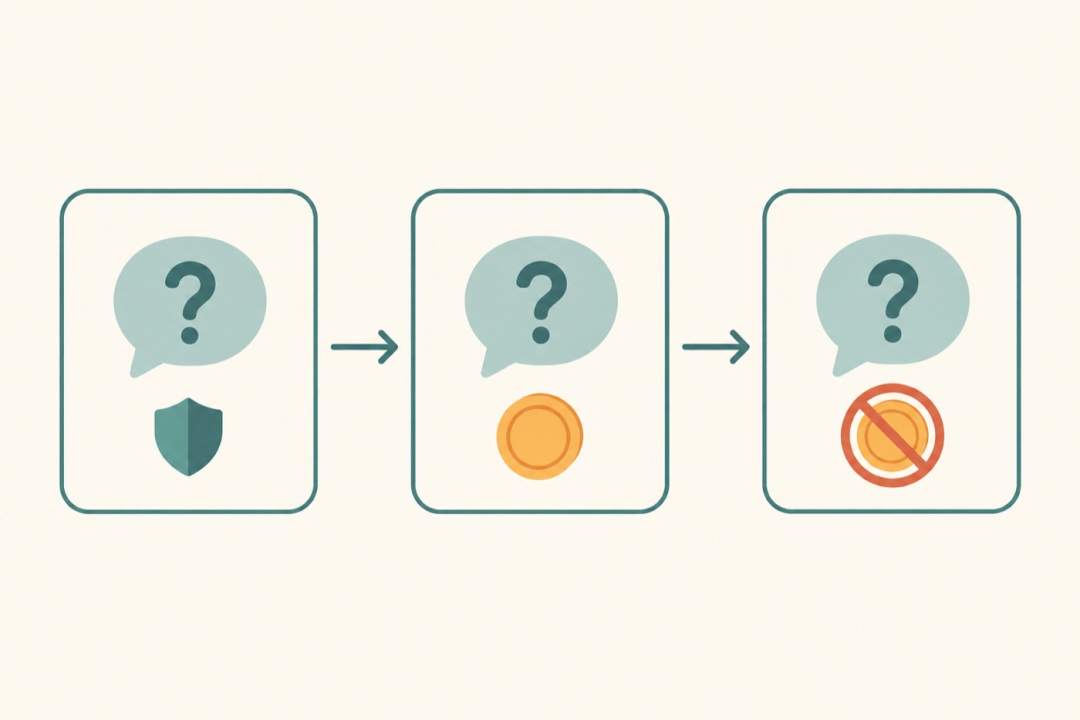
Ask all three, in this order, and write the answers down. The order matters because each answer changes the next question.
Does my insurance cover this medicine?What am I paying today?What would it cost without the insurance?
Question three is the one people skip and later regret. If the insurance price is higher than the cash price — which happens with some plans for cheap generics — you want to know before you pay, not afterwards.
Reading a Receipt: Four Words That Decide the Price
| Word on the receipt | What it means in practice |
|---|---|
| Copay | A fixed amount you pay for a covered medicine, set by your plan |
| Deductible | The amount you pay yourself before the plan starts paying its share (HealthCare.gov glossary, accessed 28 October 2026) |
| Out of pocket | Everything you actually paid, including amounts that do not count towards the deductible |
| Refill | A repeat supply of the same prescription, often allowed a few days before you run out |
If a receipt uses a term you do not recognise, ask at the counter while you are still standing there: Sorry — what does this line mean? I want to make sure I pay the right amount. Pharmacists answer this question every day, and public patient pages from MedlinePlus describe the same terms from the patient side (accessed 28 October 2026).
When the Answer Is "Not Covered"
"Not covered" is a statement about the plan, not about your treatment. Three questions move it forward: Is there a covered alternative in the same class?, Can the prescriber send a note explaining why this one? and Is there a cheaper version I could ask about?
What no pharmacist can do is change your prescription or advise you to stop a medicine. That belongs to the prescriber. Knowing which question belongs to whom is what keeps the conversation short and calm.
One Rehearsal, Two Situations
Rehearse the same six sentences twice: once as a counter conversation, once as a phone call, where you cannot point at anything and the background noise is on their side.
I'm here to collect a prescription for [name], date of birth [date].Is there a generic version of this?Does my insurance cover it?What am I paying today, and what would it cost without insurance?Is there a covered alternative in the same class?Could you write that amount down for me?
Sentence six is not a sign of weak English. It is what a careful person says in a second language, in a queue, with a card in their hand.
Frequently Asked Questions
Can I ask the pharmacist about cost in front of other people?
You can, and you can also avoid it. Most pharmacies have a quieter end of the counter, and you can say Could we do this part over here? Asking about price is ordinary; you are not disclosing anything unusual. If you would rather not ask aloud, write the three questions on your phone and show the screen.
What if I cannot understand the answer about coverage?
Ask for the number rather than the explanation: What is the amount I pay today? and Could you write it down? A written figure is unambiguous even when the explanation is not. You can then ask the insurance company about the reasoning later, with the receipt in hand.
Is it rude to ask for a cheaper medicine?
No. Asking about a generic or a covered alternative is a standard question that pharmacies answer constantly, and in many countries the pharmacist is expected to offer the cheaper option when one exists. The only thing to avoid is asking the pharmacist to overrule the prescriber, which is a different request and belongs to the clinic.