
IELTS Speaking Part 3: Answering Past-and-Present Comparison Questions
How to answer ielts speaking part 3 sample answers for past-and-present comparison questions when you have no memory of the past you are asked about.

On this page
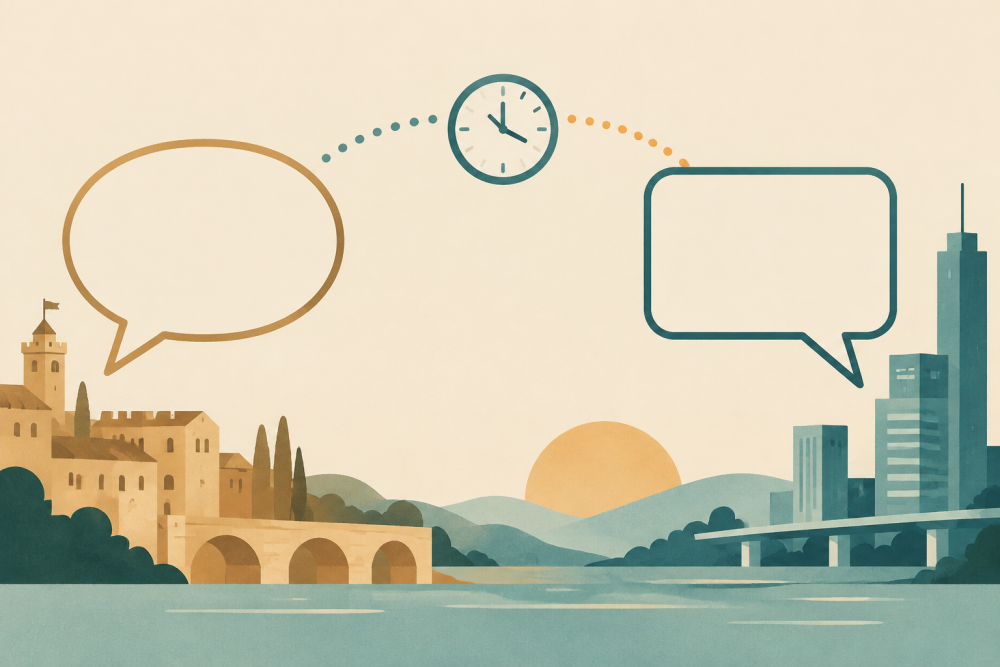
Do you think people communicate differently now than in the past? It is a fair question and an impossible one: you were not alive for the comparison. Most candidates answer it with a single sentence, then wait, and the examiner moves on.
Comparison questions are the most common shape in Part 3, and they are not asking for history. They are asking whether you can hold two states in your head and say what separates them. There are three sources of evidence available to you, and none of them requires lived experience of the past.
What a comparison question is scoring
Part 3 lasts four to five minutes and is where lexical range and grammatical range have room to show. A comparison answer that uses only now it is better scores badly on both.
The descriptors reward development and appropriate phrasing rather than accuracy of historical claim. A candidate who says I can only go by what my parents describe is doing something sophisticated: naming the limit of their knowledge and continuing anyway.
That sentence is also a hedge you can reuse in almost any Part 3 answer, which is why it belongs in your preparation rather than your improvisation.
The three sources you are allowed to use
Seen change. Something you have watched shift inside your own lifetime: how your family books travel, how your school sends messages, how a shop takes payment.
Reported change. What older relatives, teachers or colleagues describe, attributed honestly.
Published change. Anything you can point to as public knowledge: that most adults now carry a phone, that letters take days, that cash use has fallen.
I can only speak from what I've seen and what my parents describe, but the biggest change is that plans are made in a group chat now, where they used to be made by one person phoning round.
That answer names its source, makes one claim, and gives one concrete difference. It takes fifteen seconds and belongs in a band 7 answer.
The four-move answer
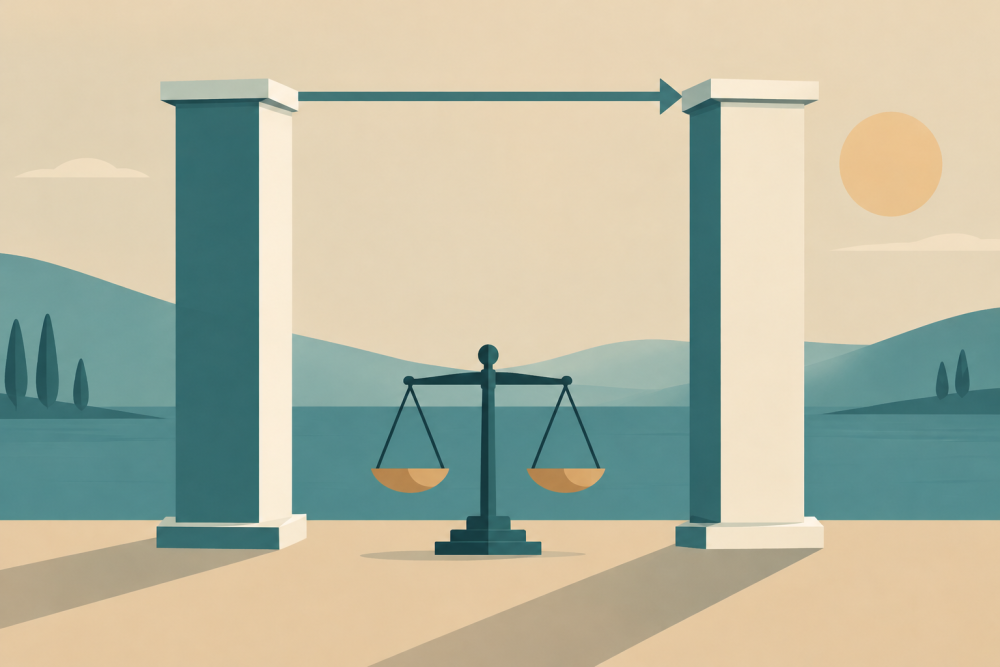
Move one: name the change in one clause.
Move two: name the source, briefly.
Move three: name the cost or the benefit, not both.
Move four: name the exception, because an exception proves you are thinking rather than reciting.
The change is speed. I know that from my own family: my grandmother still writes letters and my cousins have never sent one. The cost is that we expect an answer immediately, so silence feels like bad news. The exception is anything formal, where a letter still carries weight.
Four sentences, four moves, about thirty seconds. If the examiner wants more, they will ask, and you have material left.
Language that keeps a comparison honest
now, compared with twenty years ago it used to be that people of my parents' generation I wouldn't know from experience, but the difference I notice most is that has changed less than people think in practice, not much has changed the same thing happens, just faster
Two of these in an answer is plenty. More turns into a list of connectives, which the descriptors do not reward.
Two worked comparisons
How people keep in touch. The obvious change is the number of channels. My mother had one phone line for a whole street; I have four ways to reach the same person. What hasn't changed is the awkward part, which is deciding who to contact first, and I think that's why group chats feel stressful.
How children play. When my parents were children, play happened outside and was organised by whoever was oldest. Now it's often indoors and organised by an adult, or by a game. I'd say the freedom changed more than the technology, and the exception is sport, which still works the old way.
Both answers use the same four moves and neither claims knowledge it does not have.
Eight prompts to plan in one line each
Do people read more or less than before? Is it easier to make friends now? Has family life changed in your country? Do children today spend too much time indoors? Is travel different from how your parents travelled? Has the way people shop changed? Are people more polite now than in the past? Do young people work harder than their parents did?
For each, write one line: the change, the source, the cost, the exception. Ten minutes of this covers more ground than reading twenty model answers.
Frequently asked questions
Do I need facts to compare past and present?
No, but you need to name where your impression comes from. From what my parents describe and from what I've seen in my own city are both enough, and they are more honest than a statistic you half remember. If you do cite a figure, say plainly that you are not certain of the number, because a wrong figure costs more than no figure.
How long should a Part 3 comparison answer be?
Three to five sentences is usually right: the change, the source, the cost and one exception. Part 3 answers that run to a minute tend to repeat themselves, and the examiner will interrupt, which costs you the chance to finish a thought. If you have more to say, say it in the follow-up rather than in the first answer.