
Best English Speaking App Review: Run Your Own Twenty-Minute Comparison
Skip the affiliate lists: a fixed task, one recording and four anchored criteria make a best english speaking app review you can run yourself in twenty minutes.
On this page
Two apps, two free trials, one evening. You speak into both, both give you a number, and you have no idea which number means anything. Review articles will not settle it, because they are usually comparing features rather than feedback.
You can settle it yourself in about twenty minutes with a controlled test. What follows is a method for a best english speaking app review that you run on your own mouth, with the same script and the same recording both times.
What a review article cannot tell you
A feature list tells you what an app contains, not what it does with your speech. Two apps can both claim instant pronunciation feedback and behave completely differently: one names the sound you missed, the other reduces your sentence to a percentage.
Affiliate pages also have a structural bias: they are written once and rarely re-tested, so the pricing and the free tiers in them are often a year old.
What you need to know is narrower: does this app hear my error, name it, show the fix, and let me try again. That is testable in one sitting.
The control: one task, one script, one recording
Choose one sentence that contains a sound you know you struggle with. Write it down.
Record yourself saying it once, on your phone, before you open either app. That recording is your reference, and it stops the test becoming a comparison of two different performances.
Then do exactly this in both apps: same sentence, same room, same phone, no re-recording, one attempt each.
Four criteria to score, one to five
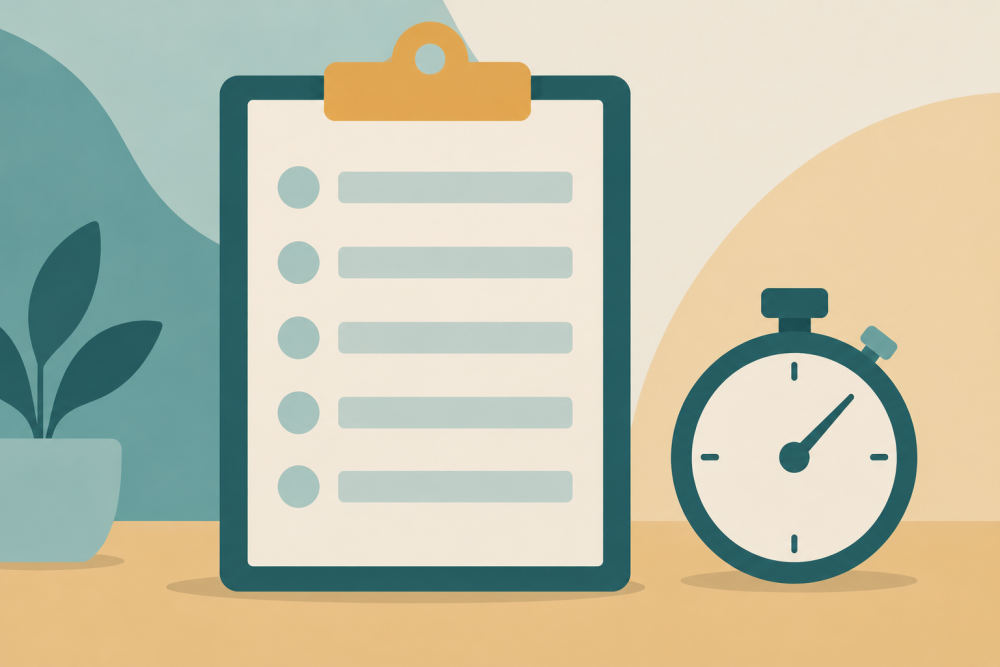
Criterion one, detection. Did the app identify that something was wrong at all? A score with no error named is worth one point.
Criterion two, naming. Did it tell you which sound, syllable or word was the problem, in words you can act on?
Criterion three, the fix. Did it show what to do differently, with a mouth position, an example word, or a slowed model?
Criterion four, retry. Did it let you record again immediately and tell you whether the second attempt was better?
Score each from one to five. Four criteria, twenty points, and the shape of the answer is usually obvious by criterion two.
What the two feedback messages look like
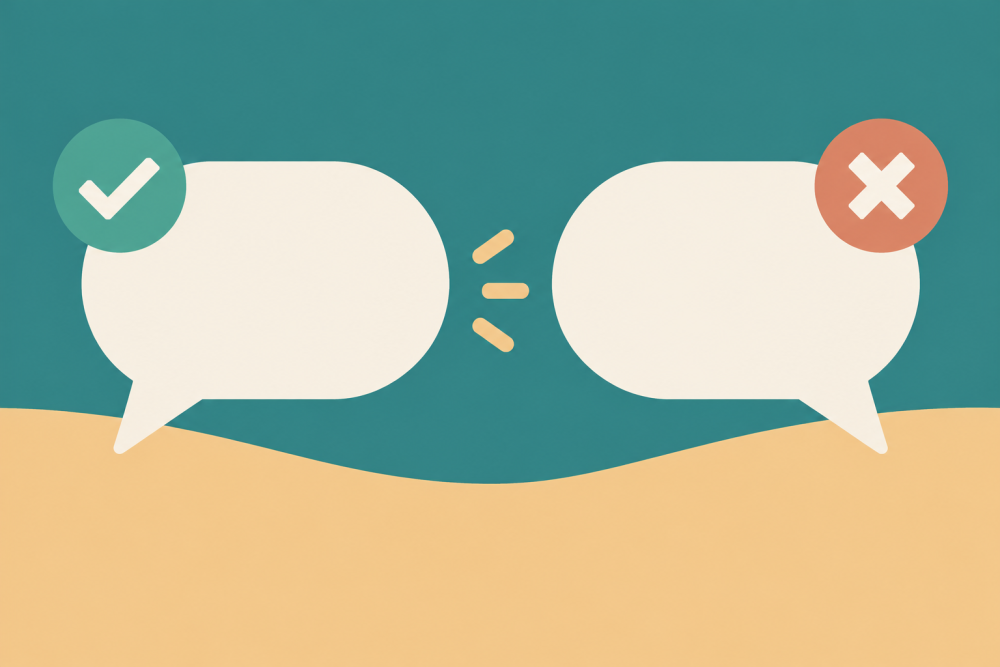
Useless: Pronunciation 72%. Good job! Try again for a higher score.
Useful: The /θ/ in "think" came out as /t/. Put your tongue between your teeth and push air. Compare: think, sink, tink. Record again.
Both messages come from real products. The first gives you a number to chase; the second gives you a change to make. Only one of them teaches.
The test is not whether the app is encouraging. Encouragement is cheap to generate and easy to mistake for feedback.
What to write on the sheet
A single page with four rows and four columns: criterion, app A, app B, note. Fill it during the test, not afterwards, because the details blur within ten minutes.
Then one line at the bottom: which app told you something you did not already know about your own speech.
That line is the result. If neither did, both trials can end now, and the answer is not to pay for either.
Two results that should end a trial early
The app that scores you highly on a sentence you know is wrong. If your reference recording has an obvious error and the app reports 94 percent, the scoring is not measuring what you need.
The app that will not let you retry without a subscription step. Retry is the only part of the loop that builds change, and gating it turns practice into assessment.
What to do with the winner
Use it on one sentence a day for two weeks, always recording the attempt before and after the app's feedback. Keep both recordings.
After two weeks, compare your first and last recording of the same sentence. That comparison, not the app's score, tells you whether the subscription is worth another month.
Frequently asked questions
How do I compare two speaking apps fairly?
Use one scripted sentence, record both attempts in the same room on the same phone, and score four things: detection, naming, the fix and the retry. Anchored criteria matter more than a long feature list, because features describe the product while the four criteria describe what it did to your speech.
What feedback should a speaking app give me?
It should name the specific sound, word or syllable that went wrong, show a correction you can physically perform, and let you record again immediately with a comparison. A percentage on its own is a number, not feedback, however accurate the underlying model happens to be.